Palau de la Música Catalana: Visit Guide & Tickets 2026
The Palau de la Música is the only concert hall in Europe lit entirely by natural light. You can visit without attending a concert, but you should book a week ahead.
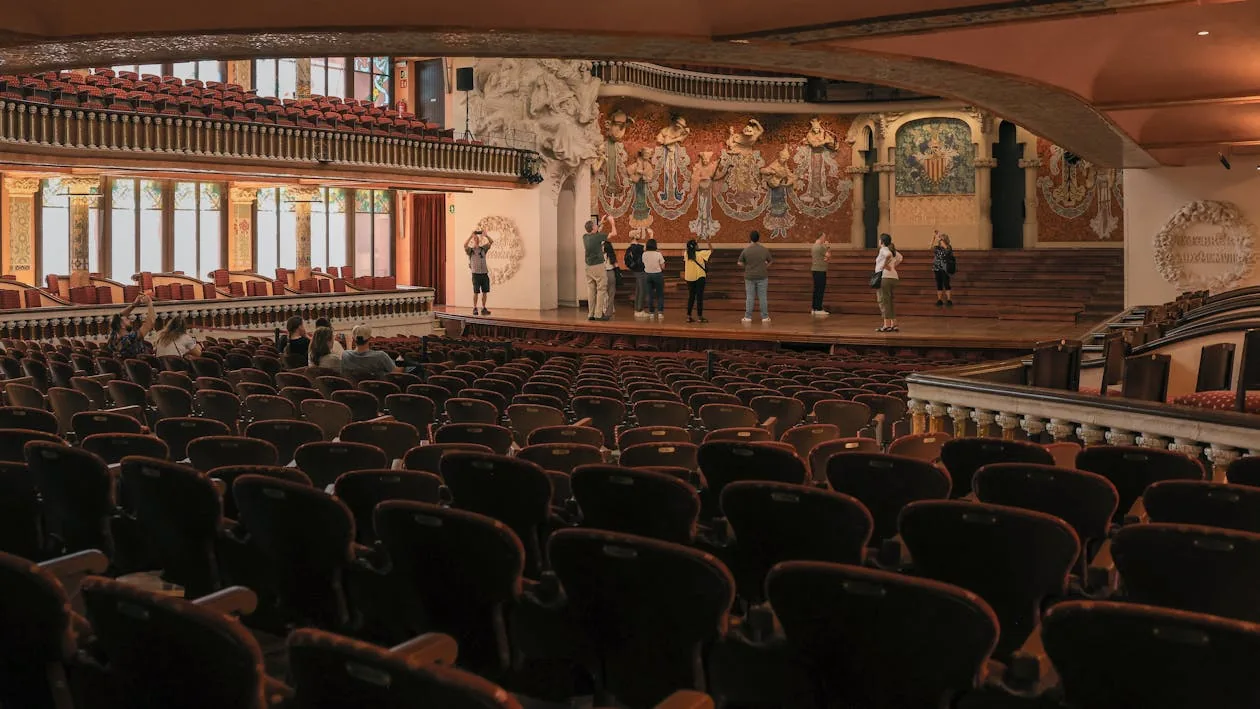
Most people discover the Palau de la Música by accident — they come for a concert and never see the building. That's the trap. The architecture here matters more than the performance.
Built between 1905 and 1908 by Lluís Domènech i Montaner, the Palau is a UNESCO World Heritage site (since 1997) and a masterpiece of Catalan Modernisme. Unlike Gaudí, who twisted forms from nature's curves, Domènech extracted colours. The Palau glows. Its main concert hall is the only one in Europe lit entirely by natural light — no electrical lighting was needed when it opened. That fact alone tells you everything: Domènech didn't design a room to hold sound. He designed a room to hold light.
The building was commissioned by the Orfeó Català, a choral society founded in 1891. They needed a home that would announce Catalan music as a force equal to any European tradition. They got that and more. Every surface — the foyer arches, the stage sculptures, the ceramic columns, the inverted stained glass dome — works as both decoration and argument. Nature belongs on stage. Catalan identity belongs in Europe.
The Palau de la Música guide — ready in 3 minutes
- The exact spot to stand for the best view of the stained glass dome
- Morning vs afternoon light — which hour changes the ceiling completely
- The free foyer trick most visitors don't know about
What should you see at the Palau de la Música?
Start outside. The corner column with Saint George — patron saint of Catalonia — is by Miquel Blay, one of the finest pieces of Modernista sculpture in the city, and the mosaic panels along the first floor show the Orfeó Català singers. Give the façade five minutes before you walk in.
The foyer sets the tone. The grand staircase has glazed ceramic arches that catch light and throw it around the room. Mosaic columns with floral capitals rise from the floor — roses, lilies, orange blossoms in materials that shouldn't work together but do. Free entry lets you explore here without booking a tour.
The main concert hall is the centre. Look up at the inverted stained glass dome by Antoni Rigalt. It drops into the room instead of rising, concentrating light downward. The colours shift from warm golds at the centre to deep blues at the edges — a ceiling that changes colour depending on the hour. At 10 AM it's golden. At 2 PM it's blue. No two visits are the same.
The stage sculptures divide the hall's philosophy in half. On the left, Wagner's Valkyries ride through clouds — classical European music elevated to mythology. On the right, a tree grows with Catalan folk figures in its branches — Anselm Clavé's willow, symbol of Catalan choral music. The comparison is not subtle. It's an oath.
The Lluís Millet Hall balcony offers a view you won't find from the street. The corner of the building has a cascading sculptural group that represents Catalan popular music — figures flowing down from allegory into real musicians and children. From ground level you see mass. From the balcony you see individual faces and instruments.
The floral columns throughout demand a second look. They appear structurally impossible — decorated to the point where decoration becomes load-bearing. That's Domènech's signature. In his hands, ornament is not surface. It's logic.
Is a guided tour worth it, or should you go to a concert?
Both are valuable, but they give you different things.
A guided tour (€24, 55 minutes) covers the foyer, main hall, Lluís Millet Hall, and exterior. A guide explains the stained glass mechanism, the sculptural program, the historical context. You walk at a pace that lets you notice details. Photography is allowed. Most tours run at 10 AM, 11 AM, 12 PM, 1 PM, 4 PM — book at least one week ahead. Weekday mornings have smaller groups.
A concert (€30–120+) is an immersive experience. You sit for 2–3 hours in that light, listening to live music in a room designed for the Orfeó Català's voice. But you won't learn how the building works. You'll feel how it works, which is different. No photos, no tour explanation, no access to the Lluís Millet Hall or other spaces.
Most architecture-focused visitors do both if time allows. A morning tour, then dinner in Born, then a concert in the evening. The tour gives you the logic. The concert gives you the emotion.
If you have one slot, choose the tour. The Palau is a building first, a concert hall second.
Where to book
Our take: Same 55-minute tour either way — book whichever has the 10 AM or 11 AM slot you want. The stained glass dome shifts from gold to blue through the day; morning is the light every photograph you've seen was taken in. Free foyer access doesn't show you any of it.
- Address
- Carrer Palau de la Música 4–6, Sant Pere, Barcelona
- Metro
- Urquinaona (L1, L4)
- Hours
- Daily tours: check palaumusica.cat for schedules. Foyer: free access (no event)
- Price
- €20 (self-guided) / €24 (guided or audio tour) / €30–120+ (concerts)
- Book at
- Palau de la Música official site
- Website
- palaumusica.cat
- Time needed
- 1–1.5 hours (tour + foyer)
- Nearby
- Museu Picasso (5 min walk) · Mercat Santa Caterina (2 min) · Santa Maria del Mar (5 min)
Barcelona Architecture Capital 2026
The Palau gets extra attention this year. Barcelona holds the UNESCO/UIA World Capital of Architecture title for 2026, with over 1,500 events running February to December. The UIA World Congress of Architects (28 June–2 July) uses the Palau as a venue, bringing 10,000+ professionals to the city — expect higher demand for tours and concerts during that window, so book early.
If you want Modernisme beyond Gaudí, pair the Palau with Domènech i Montaner's other masterpiece, the Hospital de Sant Pau, a 10-minute walk away.
Frequently asked questions
Can you visit the Palau de la Música without a concert?
Yes. Guided tours (€24, 55 minutes), audio-guided visits (€24), and free visits with brochure (€20) run daily. Tours cover the foyer, main hall, Lluís Millet Hall, and exterior sculptures. Book at least one week in advance — tours sell out.
Is the Palau de la Música tour worth it?
If you care about architecture, absolutely. The guided tour explains details you'd miss on your own — how the stained glass ceiling works, why the columns are floral, what the facade sculptures mean. For €24, it's one of the best-value cultural experiences in Barcelona.
When is the best time to visit the Palau de la Música?
For photos, the morning slots (9-11 AM) catch lateral light through the stained glass. Early afternoon (1-3 PM) gives zenithal light through the central dome. Weekday mornings are quieter than weekends.
Is the Palau de la Música near the Picasso Museum?
Yes, a 5-minute walk through the Born neighborhood. You can combine both in one morning. Mercat Santa Caterina and Santa Maria del Mar are also within 2 minutes.
Last verified: April 2026
The Palau is the building that convinced me Barcelona's Modernisme isn't just Gaudí. Domènech i Montaner had something different to say about light and music and Catalonia, and this is where he said it best. If you're visiting during Gaudí Year 2026, the Palau is the perfect counterpoint.
Already subscribed? Open the room-by-room guide →
- Picasso Museum Barcelona: What to See & How to Visit
- Best Art Museums Barcelona
- Barcelona Museum Opening Hours 2026