Where Light Becomes Music
A room-by-room guide to Barcelona's most dazzling Modernisme interior
Get your free guide
Enter your email to unlock the full room-by-room guide. One email unlocks all Barcelona museum guides.
Free · No spam · Unsubscribe anytime
Most Modernisme buildings show you what an architect built. The Palau shows you what Domènech believed — that music and nature are the same thing.
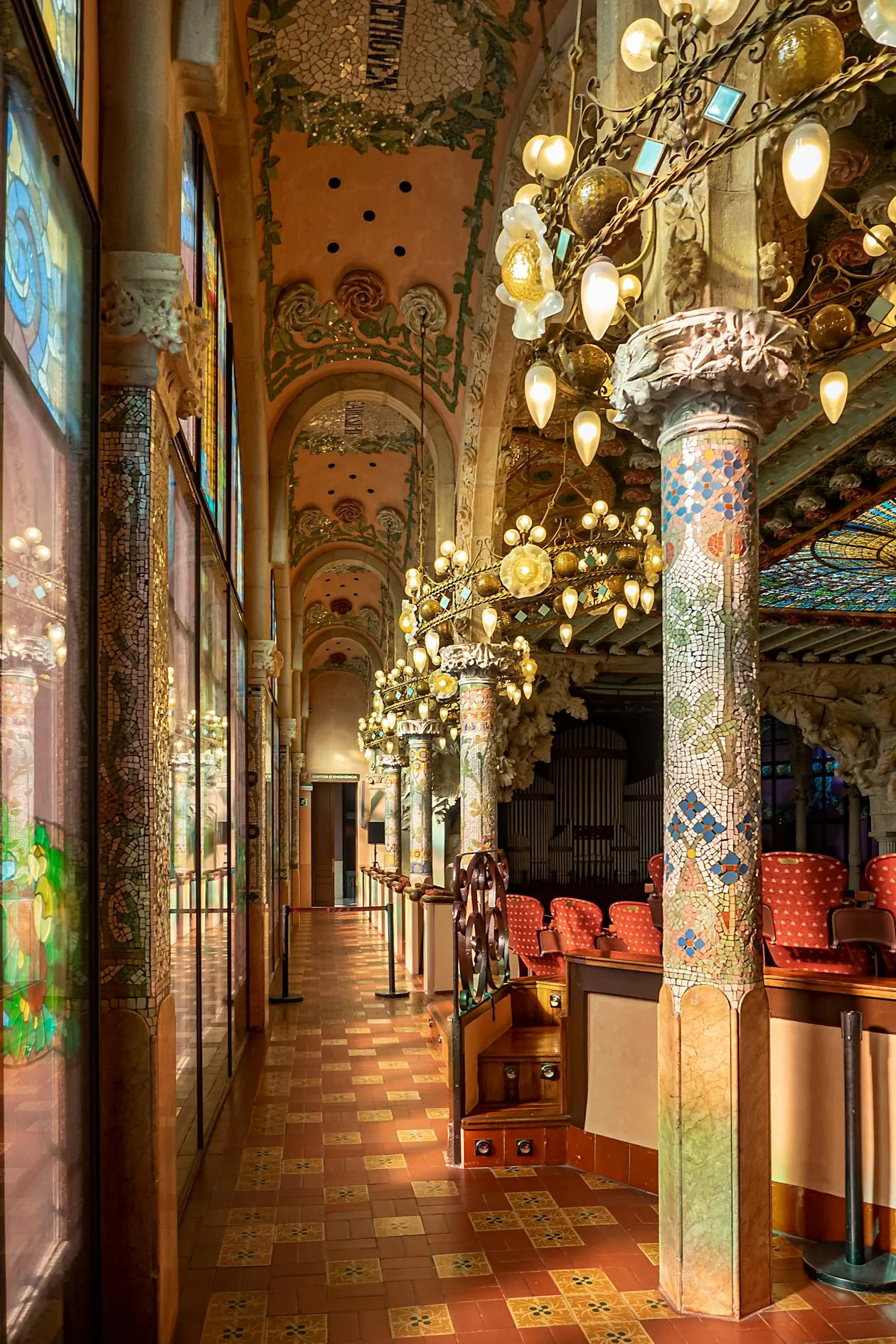
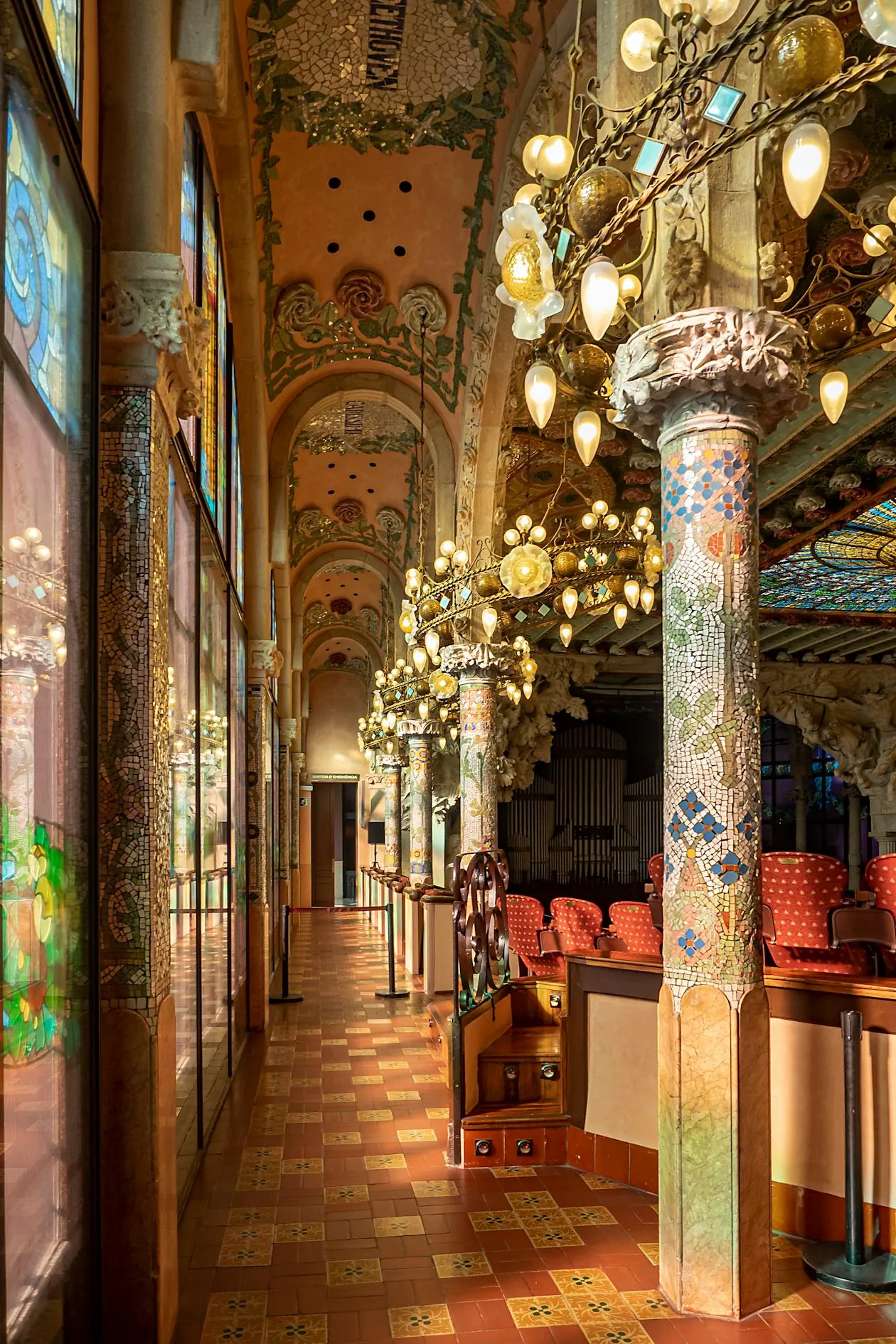
The foyer is free to enter (when no event). Look up at the glazed ceramic arches and the floral mosaic columns. The grand staircase has banister details that preview the explosion of decoration in the main hall.
This is the centrepiece. The inverted stained glass dome by Antoni Rigalt fills the room with natural light. No artificial lighting was needed when it opened in 1908. Look at the stage: Wagner's Valkyries ride on the left, Catalan folk music on the right. The ceiling is best between 10-11 AM or 1-2 PM.
Named after the Orfeó Català founder. The balcony gives you the best view of the exterior sculptural group on the corner — a cascading composition of popular Catalan music figures. This spot gets the best light in the late morning.
Tours sell out, especially weekends and mornings. The official site has the widest selection. Book the earliest available slot for smaller groups.
The stained glass dome looks completely different depending on the hour. Morning (9-11 AM) gives warm lateral light. Early afternoon (1-3 PM) gives direct zenithal light through the centre.
You can walk into the ground floor foyer without a ticket or tour booking. The ceramic arches and mosaic columns are worth seeing even if you don't tour the main hall.
Museu Picasso (5 min walk), Mercat Santa Caterina (2 min), Santa Maria del Mar (5 min). Do the Palau tour in the morning, then explore Born for lunch.
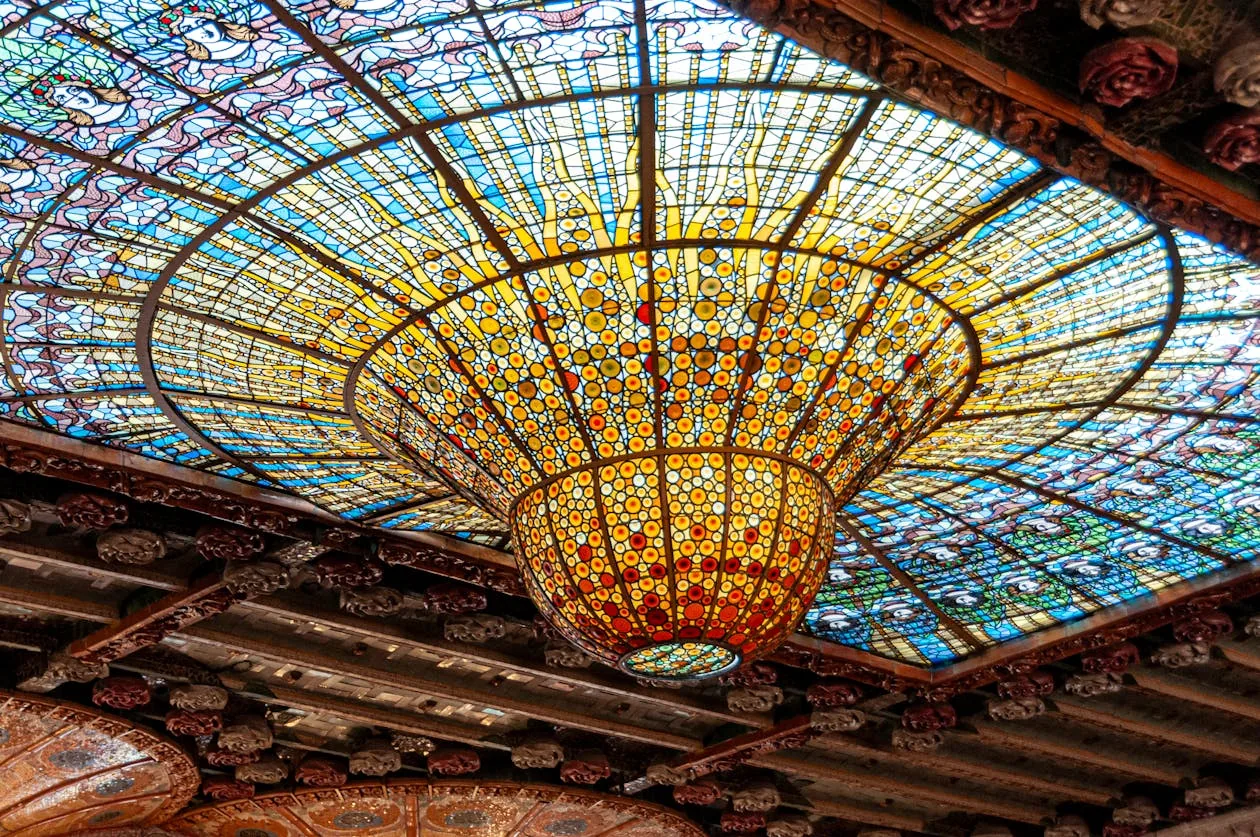
Why it matters: The only concert hall ceiling in Europe made entirely of stained glass. When it was built, the hall needed no electric lights during daytime concerts.
What to notice: Look at how the colours shift from warm golds at the centre to deep blues at the edges. The dome is inverted — it drops into the room instead of rising — which concentrates the light downward.
Why it matters: The cascading sculptures on the corner represent Catalan popular music. At the top, an allegory of Catalan song flows down into real folk figures, musicians, and children.
What to notice: The best view is from the Lluís Millet Hall balcony, not from the street. From below you see mass; from the balcony you see individual faces and instruments.
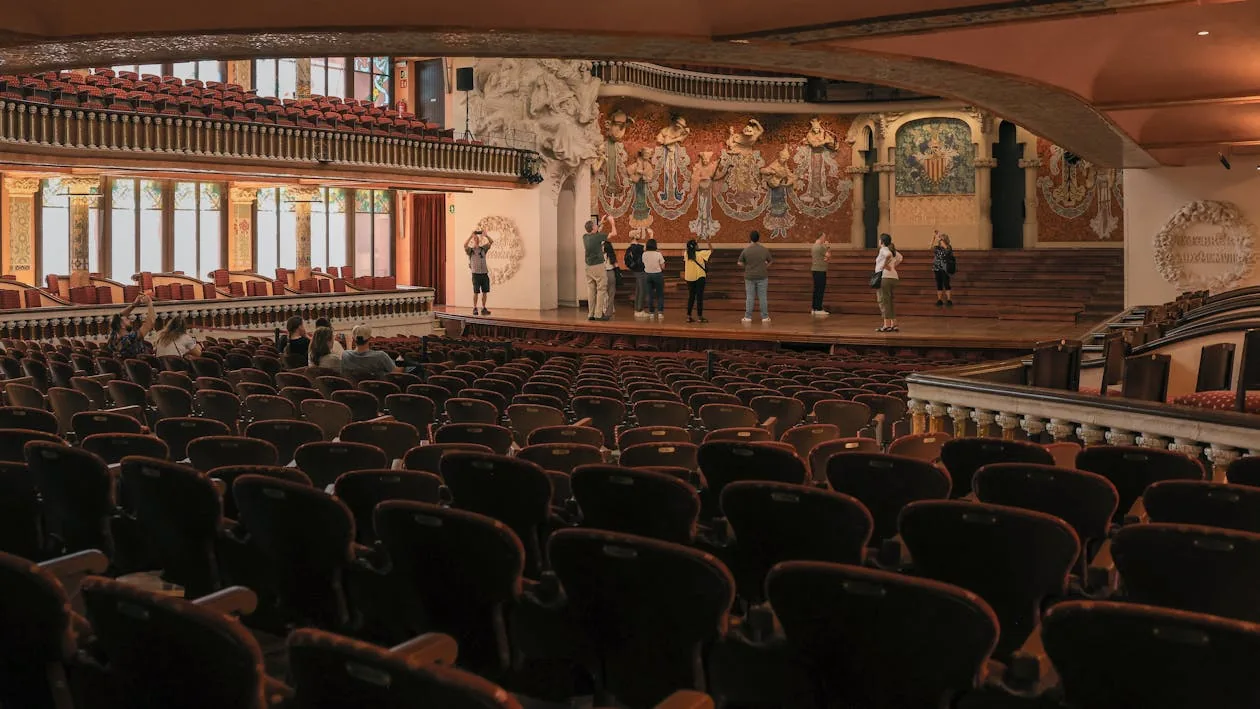
Why it matters: The left side of the stage shows Wagner's Valkyries riding through clouds — international classical music. The right side shows a tree with Catalan folk figures — local popular song. It's a visual manifesto: Catalan music belongs alongside the greatest European traditions.
What to notice: The tree on the right side is Anselm Clavé's willow, a symbol of Catalan choral music. The flowers growing from it are real botanical species, not generic decoration.
How well did you look?
3 quick questions about what you just saw
Visit complete!
Share your visit or save it for later
Your collection