Joan Miró: Circles — The Fundació's New Collection You Haven't Seen Yet
The Fundació Joan Miró just reorganized its entire collection. 'Circles' replaces the old chronological route with ten thematic strands, 102 works, and a garden that's been closed for 50 years.
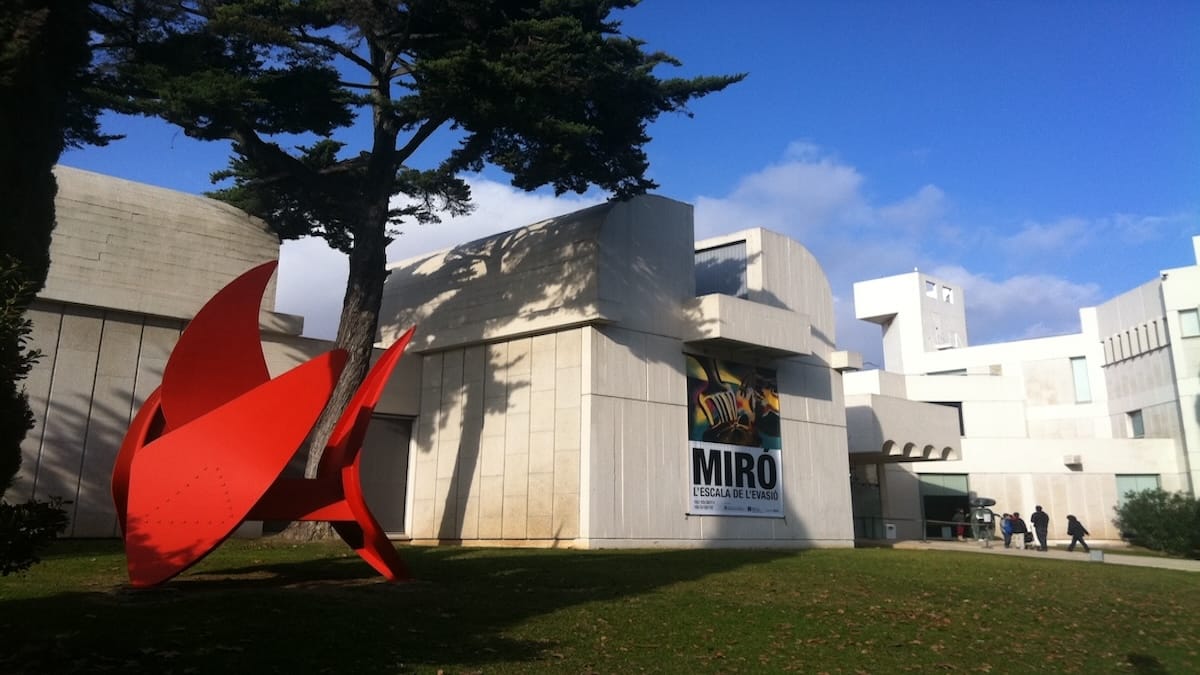
Walk into the Fundació Joan Miró this month and the museum you remember is gone. Same building, same Sert skylights, but a different collection. In March 2026, the Fundació reopened its galleries with "Joan Miró: Circles" — a complete reorganization of 102 works that throws out the old chronological route and replaces it with something more ambitious.
The idea started with Miró himself. In the 1950s, he kept a working folder marked "Circle" — around 150 images and drawings linking the cosmos to circular shapes found across cultures. Stars, planets, and ancient symbols collected while thinking about form, repetition, and the connection between sky and earth. Curators Teresa Montaner (head of collections) and Marta Ricart (artist and researcher who won the Pilar Juncosa Prize in 2016) used that folder as their blueprint, after years of studying Miró's creative processes in his Palma and Mont-roig workspaces.
In 3 minutes
-
The permanent collection has been completely reorganized around Miró's creative process, not chronology. Ten thematic strands structure the route: place, balance, doing and letting things happen, circles, open and closed, rhythm, near and far, up and down, large and small, inside and outside. 102 works total.
-
The Cypress Garden (Jardí dels Xiprers) is open to visitors for the first time since 1975. Miró's bronze "Woman" (1970, 310 × 65 × 50 cm) is now displayed outdoors.
-
Six works on loan from the Museo Reina Sofía plus Alexander Calder pieces join the collection, and the presentation will evolve every six months over the next two years.
What changed with Circles?
The old route walked you through Miró's life: early works, Paris years, Civil War, late canvases. It made sense, but it also made every gallery feel like a chapter in a textbook. Circles abandons that.
Now the galleries are organized through ten thematic strands drawn from how Miró worked: place, balance, doing and letting things happen, circles, open and closed, rhythm, near and far, up and down, large and small, inside and outside. Some are opposing pairs, others are standalone concepts. Each groups paintings, sculptures, and works on paper that share a creative process, regardless of when they were made. A 1920s landscape might sit next to a 1970s monumental canvas because both explore the same tension.
The relationship between Miró's work and Josep Lluís Sert's architecture is central to the concept. Natural and indirect light, the different levels, the flow between patios and terraces — the building becomes an active part of the experience in a way that feels intentional for the first time. You'll notice connections you missed before.
Six works on loan from the Museo Reina Sofía add depth — including Painting (The Music-Hall Usher) (1925), a long-term loan from the Government of Catalonia that helps contextualize a pivotal moment in Miró's visual language. Alexander Calder pieces from the museum's own holdings (the result of exchanges between Miró, Calder, and Sert) establish a dialogue between the two artists. Plus scientific documents from RACAB, the Fabra Observatory, and the ICGC link Miró's cosmos imagery to real astronomical research. The collection also includes up to 20 works on long-term loan from private collections.
The Miró guide — updated for Circles
- New room-by-room route through the Circles layout
- The 10 thematic strands that organize the collection — and which rooms match which
- Cypress Garden: where to find Miró's 1970 bronze 'Woman' outdoors
Is the Cypress Garden worth visiting?
Yes — and you couldn't visit it before. The Jardí dels Xiprers has been closed to the public since the Fundació opened in 1975, even though Josep Lluís Sert designed it as an integral part of the building. It was meant to connect interior and exterior, art and nature. For 50 years, that connection existed only on paper.
Now it's part of the visitor route. Miró's bronze sculpture "Woman" (1970) stands outdoors here, where light and landscape change how you see it compared to a gallery wall. If the weather is good, this may be the best pause in the entire visit.
What else is on at the Fundació in 2026?
The 50th anniversary programme runs all year. From April 29, Kapwani Kiwanga's "Changing States" brings the 2025 Joan Miró Prize winner's first Spanish retrospective. In June, "Painting the Sky: 50 Years of Stories" opens. And from October, a Charlotte Perriand architecture retrospective and "Miró and the United States" — an intergenerational dialogue with Pollock, Rothko, Bourgeois, and Frankenthaler.
This is the most ambitious year in the Fundació's history. If you're visiting Barcelona in 2026, the question isn't whether to go — it's how many times. Your ticket includes free guided tours every hour.
Frequently asked questions
What is Joan Miró: Circles at the Fundació Joan Miró?
Joan Miró: Circles is a new presentation of the Fundació's permanent collection, curated by Teresa Montaner and Marta Ricart and opened in March 2026. 102 works are organized through ten thematic strands — place, balance, doing and letting things happen, circles, open and closed, rhythm, near and far, up and down, large and small, inside and outside. It also includes six works on loan from the Museo Reina Sofía and Alexander Calder pieces.
Is Joan Miró: Circles a temporary exhibition?
Not exactly. It's a full reorganization of the permanent collection designed to evolve over two years. Every six months, works will be moved, added, and reinterpreted within the same framework. Your regular ticket covers it — no separate entry needed.
Can you visit the Cypress Garden at the Fundació Joan Miró?
Yes, for the first time since the museum opened in 1975. The Jardí dels Xiprers is now part of the visitor route. It features Miró's bronze sculpture "Woman" (1970, 310 × 65 × 50 cm) displayed outdoors, reinforcing the dialogue between art, architecture, and nature that Sert and Miró intended.
How much does the Fundació Joan Miró cost in 2026?
General admission is €18, reduced €12 for ages 15-30. Free for under 15. Free guided tours run every hour, included with your ticket. The museum is also covered by the Articket Barcelona pass (€38 for 6 museums).
Verified facts
Hours and prices can change. Confirm on the official site before you go.
Last verified: August 2026
If you haven't been to the Fundació since before 2026, this is a different museum now. The Sert building hasn't changed, but what happens inside it has. For the full practical guide — routes, tips, key works — see our Fundació Joan Miró guide. And if you're combining museums on Montjuïc, the Montjuïc route maps Miró + MNAC in one afternoon.
Already subscribed? Open the room-by-room guide →
- Fundació Joan Miró: 5 Must-See Works & Tips
- Picasso vs Miró: Which One Should You Visit?
- Montjuïc Museum Route: Miró + MNAC
- Articket Barcelona: Is It Worth It?

Or skip the planning: I'll do it for you
Send me your dates. I’ll plan which museum goes on which day, around closures, free days and timed entries, and check every date against the official museum sites myself. In your inbox the same day.
 Planned by Adrià, who writes these guides