Fundació Joan Miró Barcelona — 5 Must-See Works & Visitor Tips
Guide to the Fundació Joan Miró. Key works, what to look for, rooftop terrace, best time to visit, and insider tips most visitors miss.
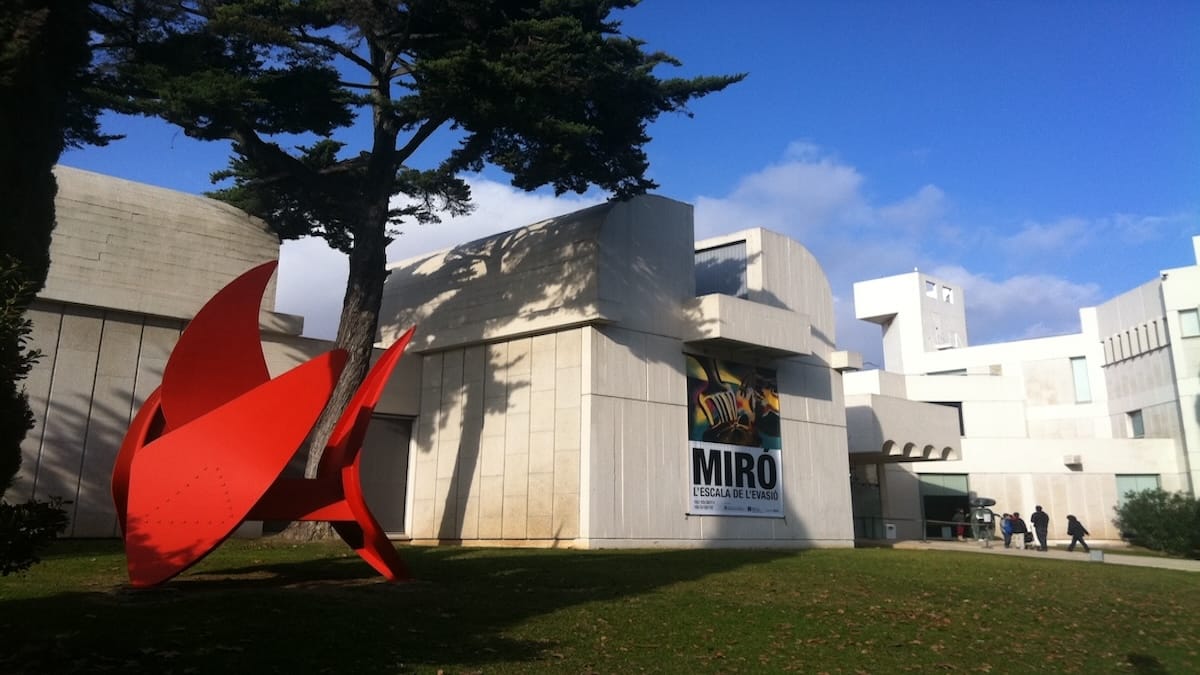
Most visitors walk into the Joan Miró Museum Barcelona expecting colourful, childlike paintings. They're not wrong, but they're missing the point. Miró spent 70 years building a private visual language — stars, eyes, birds, moons — that looks simple until you realise every shape means something.
New in March 2026: The entire collection has been reorganized under the title Joan Miró: Circles. 102 works are now organized through ten thematic strands (place, balance, circles, rhythm, and six opposing pairs) instead of chronology. Six Reina Sofía loans and Calder pieces join the collection, and the Cypress Garden is open for the first time since 1975. If you've been before, it's worth going back.
If you arrive knowing what to look for, this becomes one of the best museum visits in Barcelona. If you arrive cold, you'll enjoy the building and the views but miss what makes Miró extraordinary.
In 3 minutes
- Miró's "childlike" paintings are a sophisticated visual alphabet he built over seven decades — stars, birds, moons, eyes all mean something specific
- The museum holds over 10,000 works in a building designed by his close friend Josep Lluís Sert, with Mediterranean light that frames everything
- The collection was reorganized in March 2026 under "Circles." Afternoons are calmer than mornings
Context
Joan Miró (1893–1983) was born in Barcelona and spent his life between Catalonia, Paris, and Mallorca. Unlike Picasso, who left Spain and never came back, Miró kept returning. This museum exists because he chose Barcelona as the home for his legacy.
The Fundació opened in 1975 in a building designed by his close friend Josep Lluís Sert. Sert built it with Mediterranean light in mind: white walls, open courtyards with orange trees, and terraces that blur the line between indoors and outdoors. The architecture doesn't compete with the art. It frames it.
The collection spans over 10,000 works — 217 paintings, 178 sculptures, 9 tapestries, and nearly his entire graphic output. You won't see all of it in one visit, but you'll see enough to understand how a man who started painting Catalan farmhouses ended up creating one of the most recognisable visual languages in modern art.
The Miró guide — ready in 3 minutes
- Optimised room-by-room route with timing
- The 3 works that change how you see Miró
- Afternoon trick that avoids school groups
What to look for
-
Learn his personal alphabet. Stars, moons, eyes, birds, women — these shapes repeat across decades. Once you start recognising them, every painting becomes a sentence you can read. The star always means escape. The bird always means freedom. The eye is always watching.
-
Watch what happens in the 1930s. The playful colours darken. The forms become aggressive, distorted. Spain was falling apart, and Miró's paintings became a visual scream. Compare any 1920s work to Man and Woman in Front of a Pile of Excrement (1935) and the shift is visceral.
-
Find the Mercury Fountain. Alexander Calder built it for the 1937 Paris Expo as a protest against the siege of Almadén. It runs on actual mercury — toxic and mesmerising. It sat next to Guernica at the Spanish Pavilion. Now it's here, behind glass.
-
Notice how the building controls the light. Sert designed skylights and courtyards so natural light changes how you see the work throughout the day. Afternoon light is warmer, softer. This isn't accidental — the architecture is part of the exhibition.
-
Don't rush the late works. The monumental canvases from Miró's seventies and eighties look like he stopped caring. He didn't. He was stripping everything down to pure gesture. Stand back from the large triptychs and let the scale work on you.
Tips most sites won't tell you
-
Go in the afternoon. School groups fill the museum in the mornings during term time. Multiple reviewers warn about "a zoo of teenagers." Afternoons are noticeably calmer, especially Tuesday through Thursday.
-
The funicular is out of service. Your best option: Metro to Espanya (L1/L3), then a 15-minute uphill walk through the park. Comfortable shoes matter. Bus 55 and 150 also stop nearby.
-
The restaurant is better than you'd expect. A proper restaurant (not just a café) with a garden terrace in the central courtyard. Food is served on Miró-designed plates. One of the only decent lunch spots on Montjuïc. Book ahead on weekends.
-
Combine it with MNAC. They're a 10-minute walk apart on Montjuïc. We mapped the full Montjuïc museum route — start with Miró in the early afternoon and move to MNAC for the free Saturday entry from 3 pm. The restaurant terrace here is good enough to have lunch between the two.
-
Download Bloomberg Connects before you go. Free app that replaces the audio guide. It works well and saves you €5. Do it on Wi-Fi — Montjuïc signal is patchy.
Practical info
Hours and prices can change. Confirm on the official site before you go.
Last verified: March 2026
Frequently asked questions
Is the Fundació Joan Miró the same as the Joan Miró Museum in Barcelona?
Yes — same place, different names. The official name is Fundació Joan Miró, but it is widely referred to as the Joan Miró Museum Barcelona or the Miró Foundation. The institution is located on Montjuïc hill and holds the world's largest collection of Miró's work, donated by the artist himself.
How much does it cost to visit the Fundació Joan Miró?
General admission is €18, with reduced tickets at €12 for students aged 13-25 and over 65. Entry is free for children under 12. The museum is also included in the Articket Barcelona pass (€38 for 6 museums).
Is the Fundació Joan Miró included in the Articket Barcelona?
Yes. The Articket (€38) covers 6 major museums including Miró and provides skip-the-line access. A single ticket saves €35 if you visit all six venues.
How do I get to the Fundació Joan Miró?
Take the Metro to Espanya (L1 or L3) and walk uphill for 15 minutes through Montjuïc park. Bus 55 and 150 also stop nearby. Check the funicular status before you go — it has had periods of closure.
What is the best time to visit the Fundació Joan Miró?
Afternoons are calmer than mornings, especially Tuesday through Thursday, as school groups fill the museum in the mornings during term time. The rooftop terrace is particularly beautiful in afternoon light.
Does the Fundació Joan Miró offer free audio guides?
Yes. The Bloomberg Connects app is free and covers major works, the building, and temporary exhibitions. Download it on Wi-Fi before arriving — Montjuïc signal is patchy.
Miró is the opposite of Picasso in almost every way. Where Picasso shows you his skill, Miró shows you his freedom. The Fundació is where that freedom lives — in a building designed by a friend, on a hill above the city he kept coming back to. The 2026 Circles reorganization makes this connection between art and architecture even more visible. If you're deciding between them, we compared both in our Picasso vs Miró guide. Visiting with children? See our Miró with kids guide. Planning lunch? Our Miró + Montjuïc food guide covers La Font del Gat, Poble Sec pintxos, and what else to do on the hill.
Already subscribed? Open the room-by-room guide →
- Picasso vs Miró: Which One Should You Visit?
- Picasso Museum Barcelona Guide
- MNAC Romanesque Collection Guide
- Museu Tàpies Barcelona Guide
- Best Art Museums in Barcelona