
Circles: A New Way to See Miró
102 works organized through 10 thematic strands, a reopened garden, Reina Sofía loans, and Calder pieces. Curated by Teresa Montaner and Marta Ricart.
Get your free guide
Enter your email to unlock the full room-by-room guide. One email unlocks all Barcelona museum guides.
Free · No spam · Unsubscribe anytime
Since March 2026, the collection is organized by how Miró worked — not when. Ten thematic strands (place, balance, circles, rhythm, open and closed, near and far, and more) replace the old chronological route. 102 works, evolving every six months.
The galleries are organized through ten strands: place, balance, doing and letting things happen, circles, open and closed, rhythm, near and far, up and down, large and small, inside and outside. Don't look for chronology — look for connections between works from different decades.
The Jardí dels Xiprers is open for the first time since 1975. Find Miró's bronze Woman (1970) outdoors — the natural light changes how you see it. Sert designed this space as a bridge between art and landscape.
The rooftop sculptures and courtyard with the Mercury Fountain. Calder built the fountain for the 1937 Paris Expo with actual mercury — it sat next to Guernica. The Montjuïc views are part of the experience.
Included with your ticket. Useful for understanding the new Circles layout, especially if the concept pairs feel abstract at first.
School groups fill mornings during term time. Afternoons — especially Tue–Thu — are calmer. The Cypress Garden is best in afternoon light.
Six works from Madrid's Reina Sofía join the collection, plus Alexander Calder pieces from the museum's own holdings. Look for Painting (The Music-Hall Usher) (1925) — a key early Miró.
Free audio guide replacement. Download on Wi-Fi before arriving — Montjuïc signal is patchy.
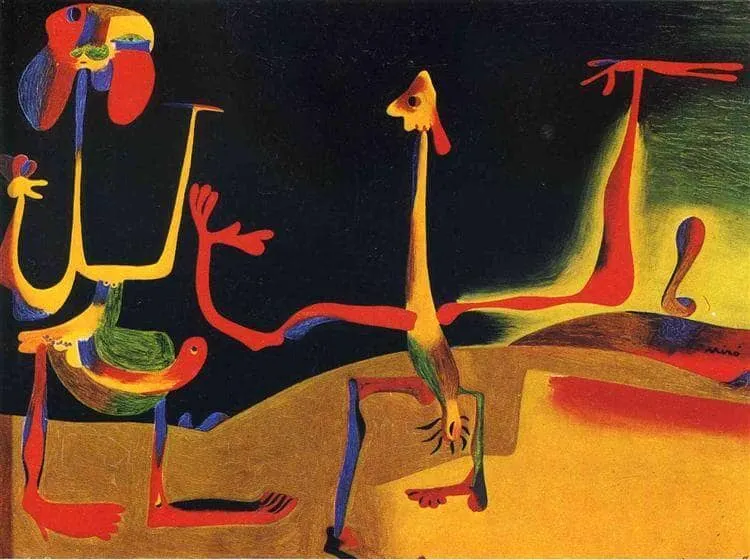
Why it matters: Part of the 'Wild Paintings' series. Distorted figures and violent colours reflect Spain before the Civil War. In the Circles layout, it sits within the tension between doing and letting things happen.
What to notice: Compare the aggressive forms with any nearby 1920s work. The thematic strand grouping makes this contrast sharper than the old chronological route did.
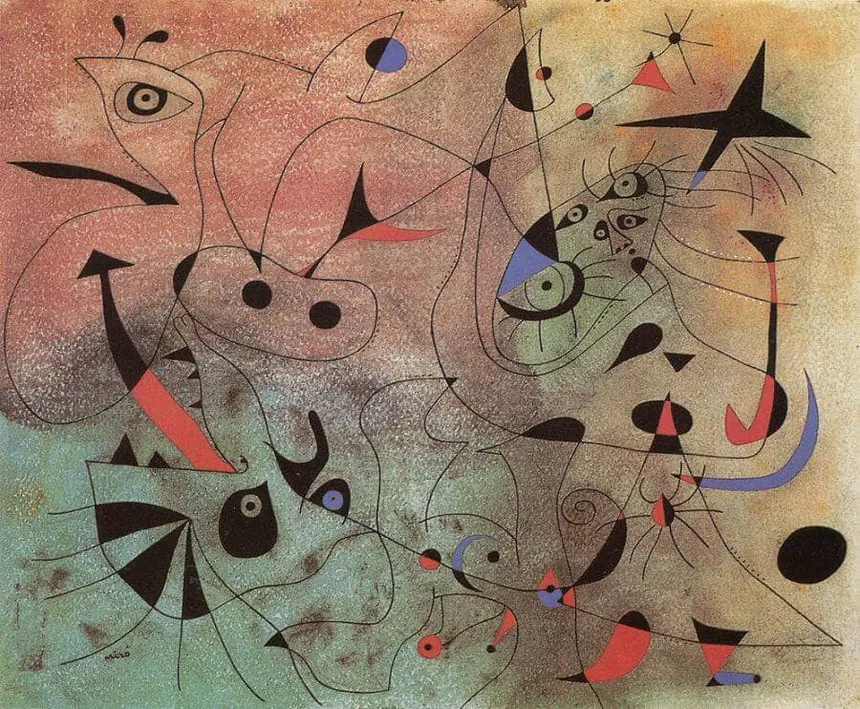
Why it matters: Created during WWII. Stars, moons, and organic forms became an escape from violence — a private cosmos on paper. Dense symbols creating rhythmic patterns across the entire surface.
What to notice: Each element relates to others across the surface. In the Circles layout, notice how the 'near and far' strand applies — the cosmos as both intimate and infinite.
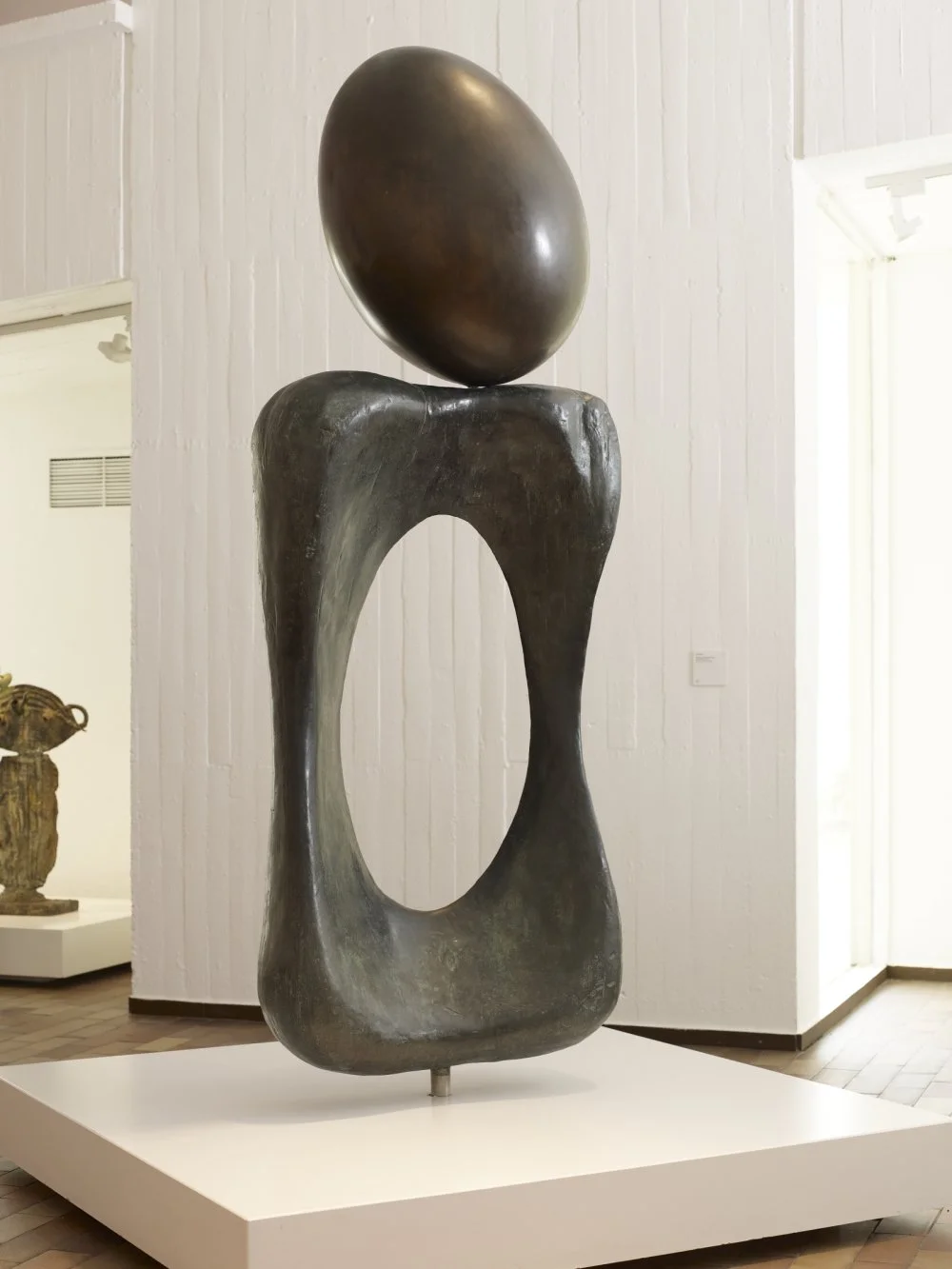
Why it matters: Now displayed outdoors in the reopened Cypress Garden for the first time. Natural light and the surrounding landscape transform how you read this piece compared to an indoor gallery.
What to notice: Visit in the afternoon when the light is warmer. The dialogue between sculpture, cypresses, and Sert's architecture is what Miró and Sert planned but visitors couldn't experience until 2026.
How well did you look?
3 quick questions about what you just saw
Visit complete!
Share your visit or save it for later
Your collection