MNAC in 2 Hours: The Best Route Through Barcelona's Biggest Museum
MNAC is massive. Most visitors get lost or exhausted. This is the 2-hour route that covers the best of each collection — Romanesque frescoes, Gothic altarpieces, Modernisme masterpieces, and the rooftop — without the overwhelm.
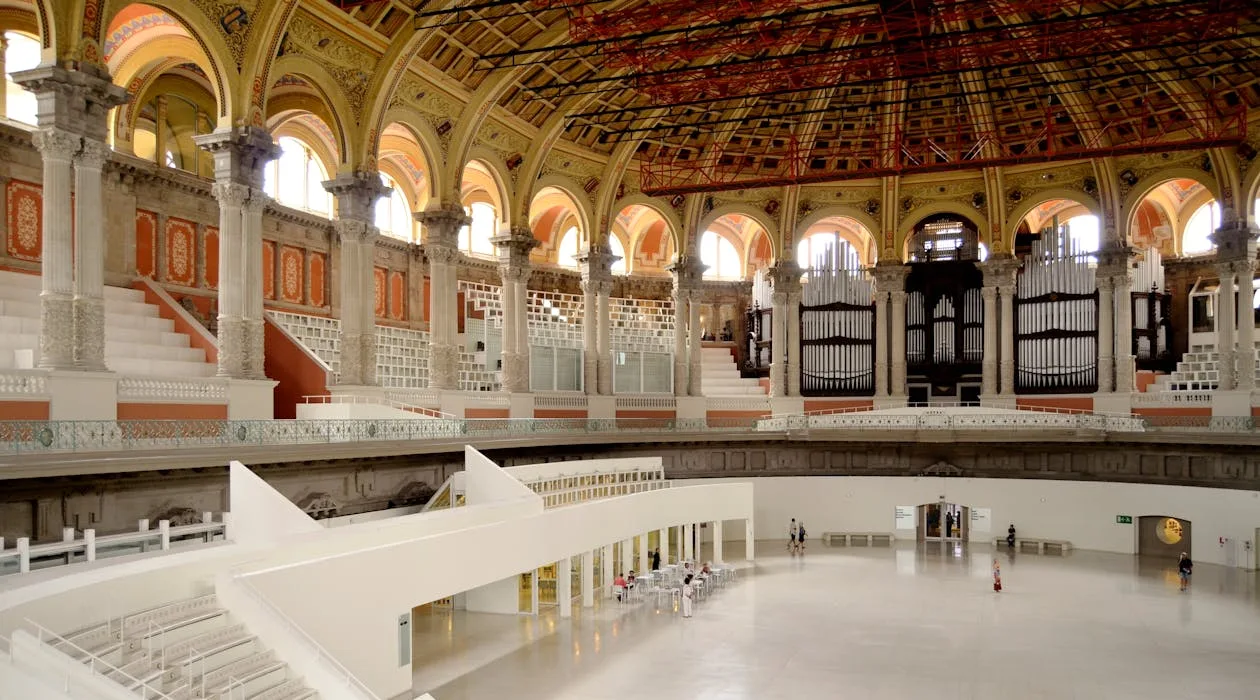
MNAC is Barcelona's biggest art museum. Over 32,000 square metres spread across a palace that was built for the 1929 World Exposition. The collection spans a thousand years of Catalan art, from 11th-century Romanesque frescoes to 20th-century avant-garde. If the Romanesque is what you came for, the room-by-room MNAC Romanesque guide covers that floor on its own. Most visitors walk in without a plan and either spend four hours exhausted or leave after one hour having missed the best parts.
You don't need four hours. Two hours with the right route covers every collection that matters. Here's how.
The 2-hour route, step by step
Minutes 0–40: Romanesque collection (ground floor)
This is why MNAC exists. In the 1920s, teams of conservators removed medieval frescoes from abandoned Pyrenean churches before American art dealers could ship them to the U.S. The murals were transported to Barcelona and rebuilt at full scale inside apse reconstructions. The result is the finest Romanesque fresco collection in the world.
Walk past the entrance hall and head left to the Romanesque rooms. The collection spans 21 rooms, but you don't need all of them.
Room 7 — Apse of Sant Climent de Taüll. The centerpiece. A Christ in Majesty (Pantocrator) painted around 1123, staring down from a half-dome with piercing asymmetrical eyes. Stand directly below the center and look up. The eyes follow you. This single fresco is worth the admission price. A projection shows how the original church looked before the murals were removed.
Room 5 — Santa Maria de Taüll. Compare this with Room 7. Same village, same era, different painter. The style here leans French, while Sant Climent shows Italian influence. You can see the difference in the faces — softer, less geometric.
Room 9 — The Batlló Majesty. A 12th-century wooden crucifix where Christ wears a tunic and looks triumphant rather than suffering. This is rare in European medieval art and it catches everyone off guard.
Don't try to see all 21 Romanesque rooms. Rooms 5, 7, and 9 are the highlights. Glance into others as you pass through. For the full deep dive, see our MNAC Romanesque collection guide.
Where to book
Our take: Same €12 either way and MNAC virtually never sells out — the booking choice barely matters. The choice that does: avoid Saturday afternoons (Modernisme floor jams up) and the free first Sunday (1-hour queue from 9 AM). A weekday morning gets you the Romanesque collection almost to yourself.
Minutes 40–60: Gothic collection (ground floor)
From the Romanesque rooms, continue along the ground floor into the Gothic galleries. The transition from flat Romanesque figures to lifelike Gothic faces is dramatic — you're watching 200 years of artistic evolution in 50 metres.
Bernat Martorell's altarpieces. Look for the detail in the fabrics and faces. Martorell is the best painter of 15th-century Catalonia, and the gold leaf work is extraordinary.
Jaume Huguet's panels. The other master of Catalan Gothic. His work shows the shift from pure Gothic toward Flemish realism — faces become individual, expressions complex.
Spend 15–20 minutes here. The Gothic collection is large, but the two names above represent the peak. If gold altarpieces aren't your thing, move quickly to the next floor.
Minutes 60–85: Modernisme and modern art (first floor)
Take the stairs or lift to the first floor. This section covers Catalan art from the mid-1800s to the 1940s, organized in five areas. You need three.
Ramon Casas — "Ramon Casas and Pere Romeu on a Tandem." One of the most reproduced paintings in Barcelona. Casas was the Catalan Toulouse-Lautrec — wealthy, talented, and embedded in the bohemian scene that defined turn-of-century Barcelona.
Gaudí's Casa Batlló sofa. Yes, Gaudí designed furniture. This double sofa has no right angles anywhere. It was made for Casa Batlló and it's a miniature of his architectural philosophy. In Gaudí Year 2026, this piece gets extra attention.
Early Picasso works. Before Paris, before Cubism, Picasso was a teenager in Barcelona. The MNAC holds pieces from this early period that show raw skill before the famous experiments began. For more Picasso, the Picasso Museum is a 20-minute walk away.
Skip the Noucentisme and Civil War rooms unless they specifically interest you. They're important historically but not where visitors tend to linger.
Minutes 85–105: Rooftop terrace
Ask at reception for rooftop access if the signs aren't clear. Take the lift. The terrace gives you 360-degree views: Sagrada Família to the northeast, the sea to the south, Montjuïc's gardens behind you. On a clear day you can see Mallorca.
This is included in your €12 ticket. There's a cafe up here if you need a break. Most visitors never find the terrace because the signage is minimal.
Minutes 105–120: The Oval Room and exit
On your way out, pass through the Oval Room — the grand ceremonial hall with frescoed ceilings. The upper balcony here offers a different angle on Barcelona without the crowds of the main terrace.
The museum shop near the exit is decent for art books. The bookshop is better than average for a museum this size.
Visitor tips for MNAC
Best time for this route: Tuesday or Wednesday at 10 AM. Fewest visitors, best natural light in the Romanesque galleries. The ground floor galleries face east, and morning sun brings the frescoes to life.
Getting there: Metro to Plaça d'Espanya (L1, L3). Walk up the avenue toward the palace — there are escalators most of the way, so you won't arrive tired. The Montjuïc museum route combines MNAC with the Miró Foundation in one morning.
Tickets: €12 general admission, valid for 2 consecutive days within a month. That means you could do Romanesque + Gothic on day one, Modernisme + rooftop on day two. Book on GetYourGuide (free cancellation). Included in the Articket Barcelona (€38 for 6 museums). Free every Saturday from 3 PM and the first Sunday of every month — see our MNAC free admission guide.
What to skip if you're short on time. The Numismatic Collection (coins), the Thyssen-Bornemisza Photography Collection, and the basement-level library. All interesting, none essential for a first visit.
MNAC is the kind of museum you think you'll come back to. Some visitors do. But if you have one shot, this route gives you the Romanesque frescoes that put Barcelona on the art history map, the Gothic masters of Catalonia, the furniture and paintings that defined Modernisme, and a view of the city that earns its reputation. Two hours. No backtracking.
Last verified: August 2026
Frequently asked questions
Can you see MNAC in 2 hours?
Yes, if you follow a prioritized route. The museum has over 32,000 m² of exhibition space, but the standout pieces are concentrated in a few key areas. Two hours covers the Romanesque frescoes, the best Gothic altarpieces, the Modernisme highlights, and the rooftop terrace.
What should I see first at MNAC?
Start with the Romanesque collection on the ground floor. The Apse of Sant Climent de Taüll is the museum's masterpiece and the reason MNAC exists. Spend 30-40 minutes here, then move to Gothic, Modernisme, and the rooftop.
Is the MNAC rooftop included in the ticket?
Yes. The rooftop terrace with panoramic Barcelona views is included in the €12 general admission. You can also access just the building and rooftop for €2 without seeing the collections.
When is the best time to visit MNAC for 2 hours?
Tuesday or Wednesday morning at 10 AM opening. Fewest visitors, best natural light in the Romanesque galleries. Avoid Saturday afternoons (free entry, crowded) and first Sundays.
- MNAC Romanesque Collection: Full Guide
- MNAC Free Admission: When & How
- Articket Barcelona: Is It Worth It?
- Montjuïc Museum Route: Miró + MNAC
- Free Museum Days in Barcelona 2026