Barcelona History Museum (MUHBA): Your Visit Guide to the Roman Underground
Pay €7, take the elevator down 8 meters, and you're walking Roman streets built in 30 BC. MUHBA is the best-value museum in Barcelona nobody talks about.
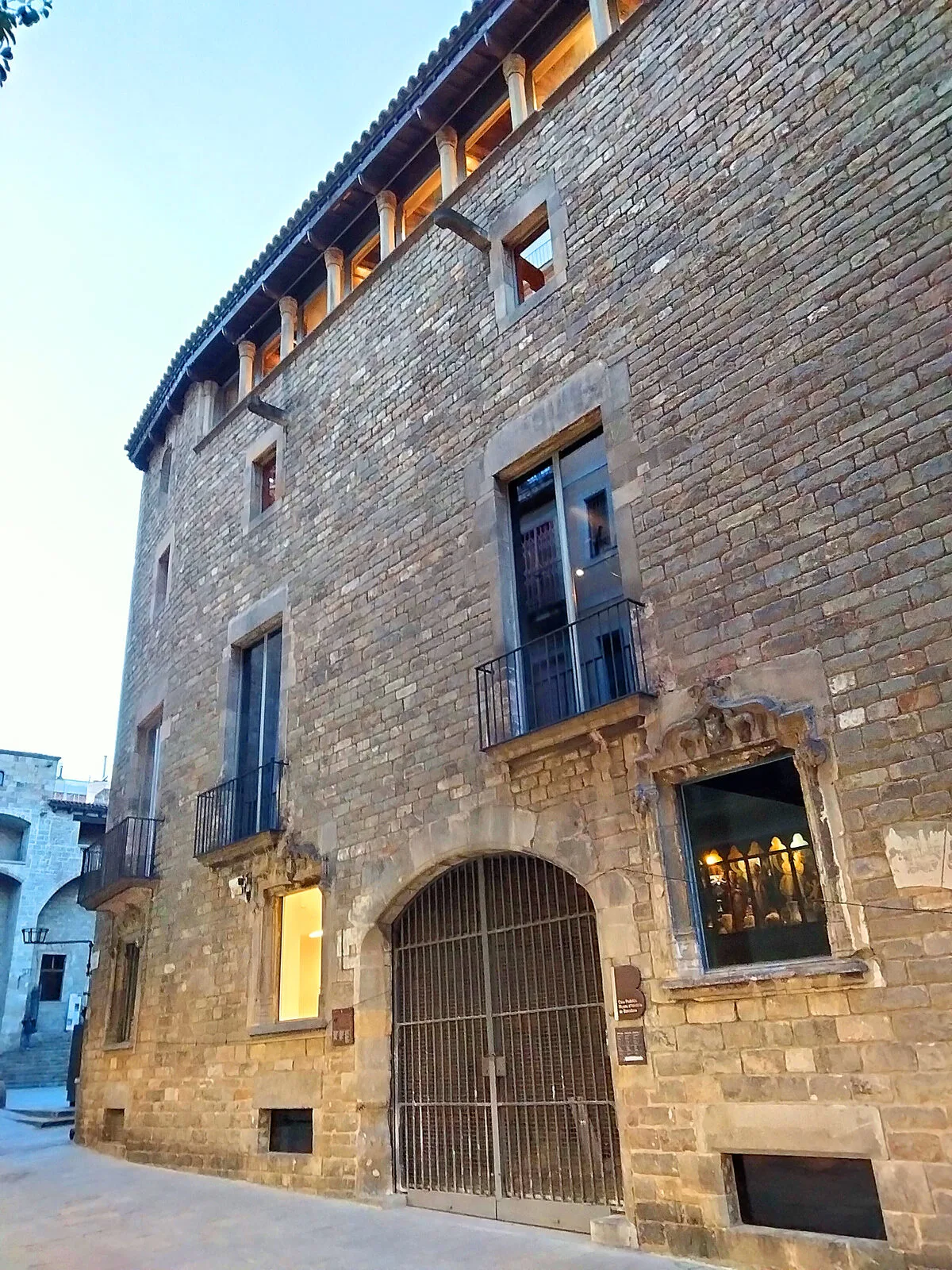
Most tourists walk across Plaça del Rei without knowing they're standing on top of an entire Roman city. MUHBA puts that city under your feet. Pay €7, take the elevator down 8 meters, and you're walking Roman streets built around 10 BC.
In 3 minutes you'll know:
- What to look for in the underground Roman city of Barcino — streets, a fish sauce factory, a wine press, all in situ
- The medieval Tinell Hall, where the Catholic Monarchs received Columbus in 1493
- Which sections most visitors skip, and why that's a mistake
Why MUHBA is worth your time
Barcelona has been built on top of itself for two thousand years. Barcino, the Roman colony, covered just 10 hectares — a rectangle barely 800 by 400 meters. In the 1920s, when workers dug up a section of the Gothic Quarter to build Via Laietana, they broke through the floor of the city's history. What they found became MUHBA.
The museum's main site at Plaça del Rei covers 4,000 square meters of archaeological remains: streets, houses, workshops, a bathing complex, and a fish sauce production facility. You don't look at these through glass. You walk on the actual paving stones. The drains are still in the floor. Column bases sit in their original positions.
Above the ruins, the medieval Palau Reial surrounds you. The Saló del Tinell, the great throne room built in 1369, is where Ferdinand and Isabella received Columbus on his return from the Americas in 1493. The scale of the room is deliberately imposing.
Unlike the Picasso Museum or MACBA, MUHBA rarely has a line. Reviews consistently mention the quiet atmosphere and the feeling of having genuine history to yourself. One visitor described it as "a hidden treasure that provides a real break from the crowded streets."
The MUHBA guide — ready in 3 minutes
- Which section of the underground most visitors exit too early (save 20 min of backtracking)
- The exact spot where the Roman street aligns with a street you walked this morning
- Why Tuesday morning is the quietest day — and which free Sunday to avoid
What to look for at MUHBA
Notice the floor levels as you descend. The Roman street is 8 meters below today's Gothic Quarter pavement. Every layer above you is a different century.
Look for the dolia: the large terracotta storage vessels embedded in the floor of the production area. Some still show scorch marks. These held garum, the Roman fish sauce that supplied the entire Mediterranean.
Stand in the garum production area and read the English panel. Barcelona had one of the few confirmed garum factories in Roman Spain. It's not glamorous — it smells of history, not fish — but it's specific and real in a way most museums aren't.
Compare the Cardus Maximus (the main Roman street running north-south) with the alley above it. The alignment is almost identical to Carrer del Bisbe today. Two thousand years, same grid.
Walk to the far end of the circuit before turning back. Most visitors reverse too early and miss the bathing complex and the large domus with mosaic floor sections still in place.
Go upstairs to the Tinell Hall. Many visitors exit through the shop after the underground and miss the medieval rooms entirely. The Tinell is free with your ticket and takes 15 minutes.
What do most visitors wish they knew about MUHBA?
The audio guide is included in the €7 ticket price and worth using. The underground has almost no staff, and the audio fills the gap where signage is thin. Pick it up before you descend.
The first Sunday of the month is free all day — but crowded. A Tuesday or Wednesday morning gets you the underground nearly to yourself, which changes the experience entirely.
Refuge 307, a Civil War air-raid shelter under Montjuïc, is a separate MUHBA site with a separate €3.50 ticket. Tours run Sundays only and are guided. Book weeks in advance if you want it — they sell out. It is not included in the free Sundays policy.
MUHBA is not part of the Articket pass, so if you're planning a pass-based art tour, budget the €7 separately.
- Hours
- Tue–Sat 10:00–19:00 · Sun 10:00–20:00 · Closed Monday
- Price
- €7 (audio guide included) · Under 29, students, disabilities: reduced
- Free entry
- Sundays from 15:00 · First Sunday of month all day (except Refuge 307)
- Metro
- Jaume I (L4) · 5 min walk · Address: Plaça del Rei, s/n, Barri Gòtic
- Audio guide
- Included in ticket · English, Spanish, Catalan available
- Lockers
- Available at entrance (coin return)
Hours and prices can change. Confirm on the official MUHBA website before visiting.
Last verified: August 2026
Frequently asked questions
How long do you need at MUHBA?
Most visitors spend 1.5 to 2 hours — about 40 minutes underground and 20 minutes in the medieval rooms upstairs. Add 15 minutes if you visit the Chapel of Santa Àgata separately.
Is MUHBA worth visiting in Barcelona?
Yes, particularly if you want to go beyond the standard Barcelona itinerary. The underground Roman city is one of the best preserved in Europe, and at €7 it is the best-value major museum in the city. Visitor reviews consistently rate it highly for authenticity and atmosphere.
When is MUHBA free?
Admission is free every Sunday from 15:00 until closing, and all day on the first Sunday of each month. Refuge 307 (a separate MUHBA site) is not included in the free Sunday policy and requires its own ticket.
After MUHBA, walk five minutes into El Call, the old Jewish quarter, or continue to the Cathedral courtyard. The Roman, medieval, and modern city sit within the same 500 meters — MUHBA is the foundation under all of it.
If the underground Roman forum left you wanting more, Tarragona's outdoor Roman city is the 35-minute extension by AVE: amphitheatre on the sea, intact walls, and the MNAT collection.
Already subscribed? Open the room-by-room guide →
- Articket Barcelona: Is the Museum Pass Worth It?
- MACBA Barcelona: Visit Guide
- Museu Picasso Barcelona: Tickets and Visitor Guide
- Best Art Museums in Barcelona
- Barcelona Museum Itinerary: 2-Day and 3-Day Plans

Or skip the planning: I'll do it for you
Send me your dates. I’ll plan which museum goes on which day, around closures, free days and timed entries, and check every date against the official museum sites myself. In your inbox the same day.
 Planned by Adrià, who writes these guides