Tarragona Day Trip from Barcelona: Roman Ruins + Sea (2026)
A UNESCO Roman city 35 minutes from Barcelona by AVE — the amphitheatre overlooks the Mediterranean, the seafood is at the port, and the tour buses go to Montserrat instead. The day trip most travel guides skip.
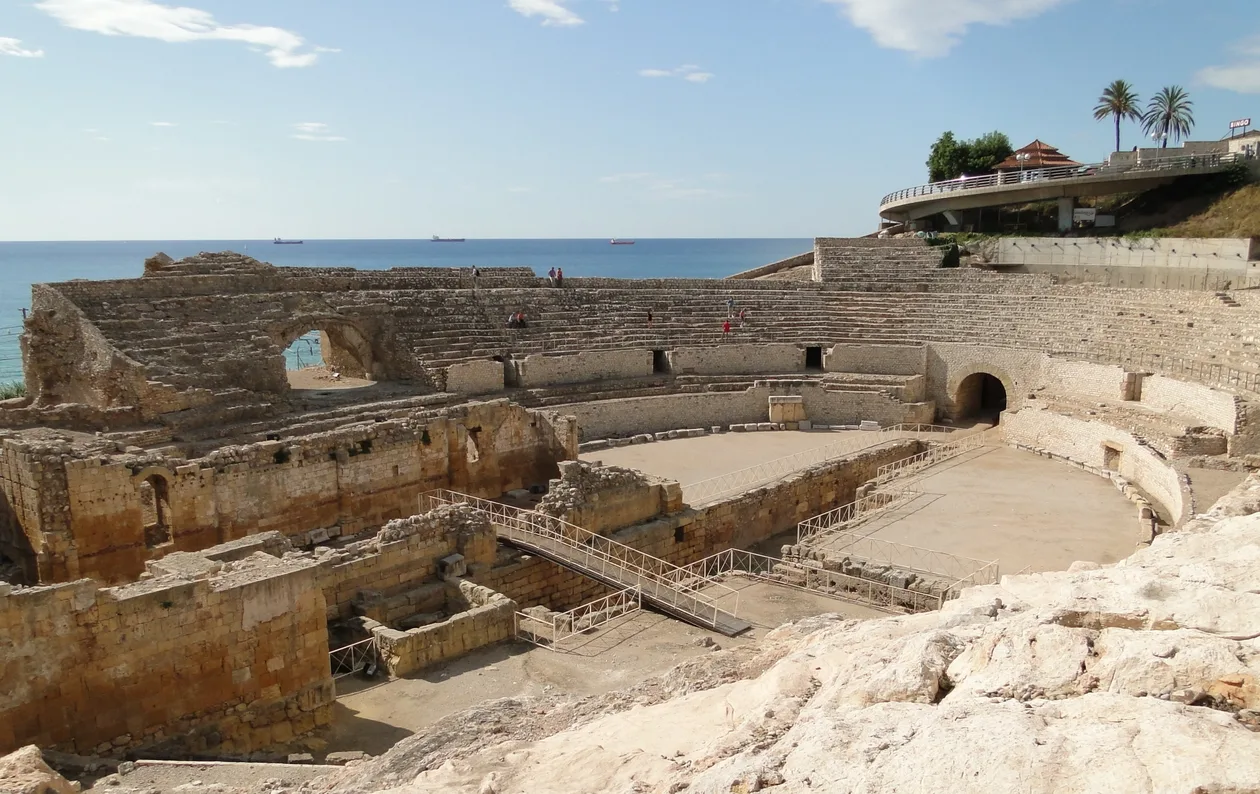
Tarragona is the day trip from Barcelona that most travel guides leave for the last paragraph. It shouldn't be. The Roman amphitheatre sits directly above the Mediterranean — gladiator arena on one side, container ships on the other. The old town has 2,000-year-old walls you can still walk. Lunch is grilled prawns at the fishing port, three streets back from the tourist seafront. And the AVE gets you there in 35 minutes, faster than the metro to some Barcelona neighbourhoods.
It's a UNESCO World Heritage site (since 2000) and one of the most important Roman cities in the western Mediterranean. Yet on most days you'll see fewer tour buses than at Girona or Montserrat. That's the whole pitch.
In 3 minutes
- Transport: AVE high-speed train, 35 min from Barcelona-Sants (~€20-30); or regional R16 Rodalies train, 1h 15 min (~€8.40)
- Cost on the ground: amphitheatre €5, combined 5-site ticket €15, cathedral around €11, MNAT at Tinglado 4 €4
- Time needed: 5-6 hours for the core, 7-8 for a relaxed full day
- Top stops: Roman amphitheatre, Cathedral, Roman walls (Passeig Arqueològic), Pont del Diable aqueduct, El Serrallo for lunch
- Avoid: Mondays — most Roman sites and the cathedral are closed
How to get there
The AVE high-speed train from Barcelona-Sants reaches Camp de Tarragona in 35 minutes. Tickets cost €20-30 each way (down to €15 if booked 2-3 weeks ahead on Renfe). The catch: Camp de Tarragona is 10 km outside the city, so add a 15-minute bus or taxi.
The regional Rodalies R16 train takes 1 hour 15 minutes for €8.40 each way and runs more often. It drops you at central station, a 5-minute walk from the amphitheatre.
The pragmatic version: AVE out, R16 back. Under €30 total, under 2 hours of travel.
Suggested 5-6 hour itinerary
9:30: Arrive at Tarragona station. Walk uphill into the old town (10 min). Coffee on Plaça de la Font.
10:00: Roman amphitheatre. 45 minutes inside, 15 minutes above for the photo from the Balcó del Mediterrani.
11:15: Cathedral and cloister. The Romanesque-Gothic mix sits on the highest point of the city. Allow 60-75 minutes.
12:45: Roman walls (Passeig Arqueològic). 30-40 minutes along the 1 km path between the inner and outer walls.
1:30: Lunch at El Serrallo. The working fishing neighbourhood, three streets back from the tourist seafront. Better fish, lower prices.
3:30: One of: the Roman circus and Pretori tower (in the old town, included in the combined ticket), or bus 5 north to the Pont del Diable aqueduct.
4:30-5:00: Train back. R16 from central station, or back to Camp de Tarragona for the AVE.
What to see
Roman amphitheatre: the photograph you came for. The only major Roman amphitheatre in Europe directly above the sea, 2nd century AD, with the Christian basilica ruins built into the centre in the 6th century. €5, or included in the €15 combined 5-site ticket.
Tarragona Cathedral: built from 1171 on the site of a Roman temple to Augustus, finished in the 14th century. The shift from Romanesque to Gothic is unusually visible. The cloister is the calmest spot in the old town.
Roman walls (Passeig Arqueològic): a 1 km path between the inner and outer wall layers. The original walls date to 218 BC, the oldest Roman walls outside Italy.
MNAT at Tinglado 4: the main MNAT building at Plaça del Rei has been closed for renovation since 2018, scheduled to reopen at the end of 2026. Part of the collection is shown at Tinglado 4 in the port until then, including the famous Roman mosaics from the Villa dels Munts. Entry €4 (€2 reduced; free under 16, unemployed, ICOM members, and the first Sunday of each month). Closed Mondays. Confirm on mnat.cat before going.
Pont del Diable (Les Ferreres aqueduct): a 217-metre Roman aqueduct on two tiers of arches, 4 km north of the city. Free, and you can walk along the top (no railings). Bus 5 from Imperial Tarraco, around €1.55. Allow 1 hour with transport.
Plaça del Fòrum and the Roman circus: the Plaça sits on top of the old Roman forum and is the best square in town for a break. The Roman chariot-racing circus lies underground beneath the modern streets, with one excavated section open as part of the Pretori tower complex.
El Serrallo: the working fishing neighbourhood between the port and the station. Lower prices, better fish, no picture menus. The lonja (afternoon fish auction) still runs.
Where to book
Our take: The GetYourGuide walking tour is the easiest way to see the Roman walls, amphitheatre and circus together with context — from €15 for 2 hours, same price as the DIY combined ticket but with a guide. If you'd rather wander on your own, the €15 combined 5-site ticket from Tarragona Turisme covers the same monuments without commentary.
Insider tips
For the photo, go above the amphitheatre, not into it. The signature shot — arena, sea, container ships in the bay — is taken from the Balcó del Mediterrani viewpoint and the path that runs along Avinguda de Catalunya, looking down. Do this before going inside, the light is better in the morning.
Pont del Diable is worth the bus. Most day-trippers skip the aqueduct because it sounds like a detour. It's a short city-bus ride (line 5, around €1.55) and entry is free. Walking on top of a 2,000-year-old Roman aqueduct, with no railing, is the kind of thing that doesn't happen in Barcelona.
Eat in El Serrallo, not on the promenade. The wide seafront avenue Passeig Marítim has the obvious-looking seafood places. They're fine, not great, and overpriced. Three streets inland, El Serrallo's smaller restaurants serve what came in that morning. Look for places without picture menus.
Don't go on a Monday. The amphitheatre, the Roman circus, the Pretori, and the cathedral cloister all close on Mondays. Tinglado 4 and the Pont del Diable stay open, but you'll miss most of the city's reason to visit.
Frequently asked questions
Is Tarragona worth a day trip from Barcelona?
Yes, especially if you've already done Montserrat or Girona. Tarragona is a UNESCO World Heritage city with one of the best-preserved Roman amphitheatres in Spain, set directly above the Mediterranean. The high-speed train takes 35 minutes from Barcelona-Sants. There are far fewer tour buses than at Girona or Montserrat, and the seafood at the port is worth the train fare alone.
How do you get from Barcelona to Tarragona?
Two options. The AVE high-speed train from Barcelona-Sants takes 35 minutes (around €20-30 each way, cheaper if booked ahead on Renfe). The regional Rodalies R16 train takes 1 hour 15 minutes for about €8.40, and runs more often. For a tight day trip, take the AVE there and the regional back, or vice versa.
How long do you need in Tarragona?
Most visitors spend 5 to 6 hours, which covers the amphitheatre, the cathedral, the Roman walls, lunch at the port, and one extra site (the Pont del Diable aqueduct or the Roman circus). A full day with no rush is 7 to 8 hours. You can be back in Barcelona for dinner.
Is the Museu Nacional Arqueològic de Tarragona open?
Not the main building. The MNAT's main site at Plaça del Rei has been closed for renovation since 2018 and is scheduled to reopen at the end of 2026. Until then, part of the collection is shown at Tinglado 4, in the Port of Tarragona. Check mnat.cat for the current state before you go.
Practical info
- Train from
- Barcelona-Sants (AVE 35 min) or Passeig de Gràcia (R16 regional, 1h 15)
- Book trains
- Renfe — 2-3 weeks ahead for AVE deals
- Amphitheatre entry
- €5 individual · €15 combined 5-site ticket
- Closed
- Mondays (most Roman sites and the cathedral)
- Tourist office
- tarragonaturisme.cat
- Guided tours
- Roman Heritage walking tour on GetYourGuide
Train times and ticket prices change. Confirm on the official tourism site before going.
Last verified: April 2026
If you're choosing between several day trips, see the full list of day trips from Barcelona — Tarragona is the one most repeat visitors pick. If you've still got museum days to fill, the Barcelona museum itinerary and best art museums in Barcelona cover the city itself. For the Roman side of Barcelona before heading down to Tarraco, the Barcelona History Museum guide covers MUHBA's underground forum.
- Best Day Trips from Barcelona
- Barcelona Museum Itinerary: 2-3 Day Plans
- Best Art Museums in Barcelona