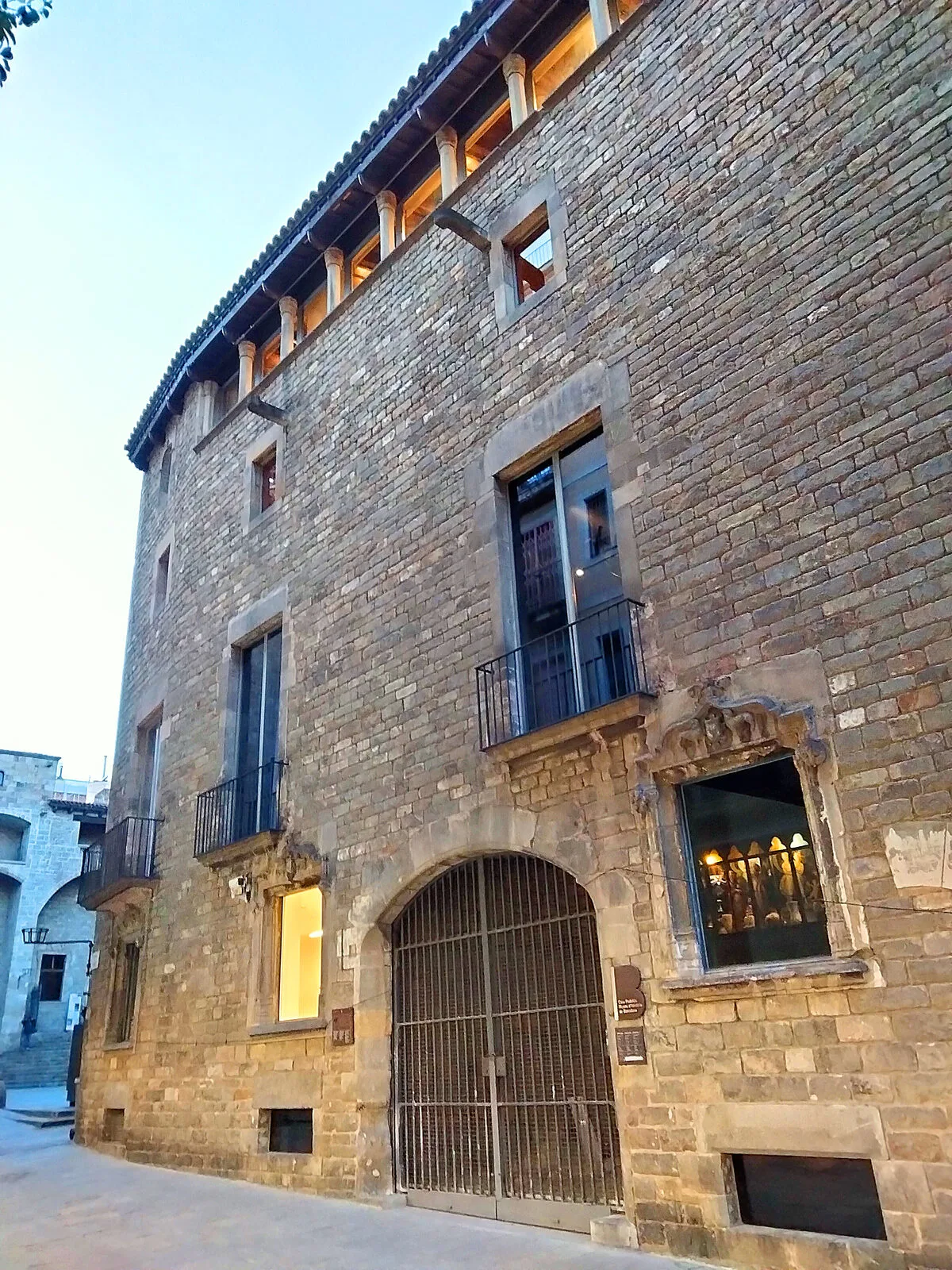
Walk the streets of Roman Barcelona
An optimized route through 2,000 years of city history — from Barcino to Columbus
Get your free guide
Enter your email to unlock the full room-by-room guide. One email unlocks all Barcelona museum guides.
Free · No spam · Unsubscribe anytime
The Gothic Quarter sits on top of the Roman city. MUHBA is the only place in Barcelona where you can step off the elevator and onto a 2,000-year-old street — still paved, still drained, still legible.
Take the elevator down and turn left immediately. The circuit runs counterclockwise — follow the Decumanus (east-west street) first, then branch into the production quarters: garum factory, wine press, laundry. The bathing complex and the domus with mosaic floors are at the far end. Do not turn back early — this is where most visitors cut the visit short.
Exit the underground and climb to the Saló del Tinell, built in 1369. The room measures 33 meters long with arches spanning 17 meters — built without columns, which was structurally extraordinary for the period. Columbus stood here in 1493 after his first voyage. Read the English panel on the right wall before looking up at the arch construction.
The chapel houses a 15th-century altarpiece by Jaume Huguet — The Constable's Epiphany — painted in 1465. The gold backgrounds are gilded panel, not paint. Exit to Plaça del Rei: the tower to your right is the Mirador del Rei Martí (1555), five stories, free to observe from the plaza. The bookshop in the exit corridor has decent Catalan history titles.
Pick up the audio guide at the entrance desk before descending — it's included in your €7 ticket. The underground has almost no staff, and signage is sparse in sections. Without it, you'll miss context on the production areas.
Many visitors walk through the Roman section and leave via the shop without seeing the Tinell Hall or the Chapel. Both are included in your ticket and are 15–20 minutes combined. The Tinell alone justifies going upstairs.
Tuesday and Wednesday mornings before 12:00 are the least crowded. The first Sunday of the month is free but significantly busier. Sunday afternoons after 15:00 are free and quieter than mornings.
Refugi 307 (a Civil War air-raid shelter under Montjuïc) is a separate MUHBA site with a €3.50 ticket. Tours run Sundays only and sell out weeks in advance. It is not covered by the free Sunday policy. Book separately if you want it.
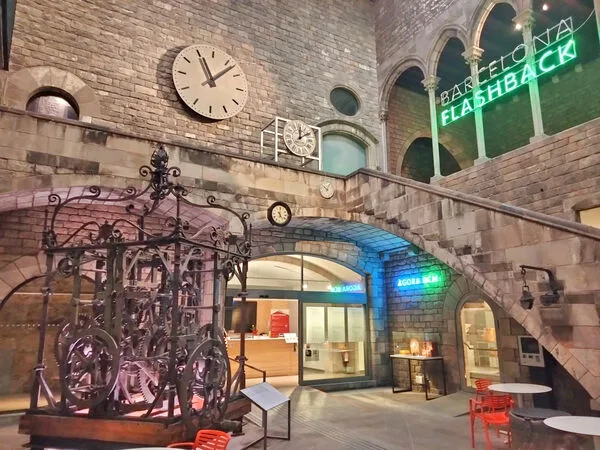
Why it matters: Garum was Rome's most traded condiment — fermented fish sauce used across the entire Mediterranean. This is one of the few confirmed garum factories excavated in Roman Spain, and it's intact enough to see the production vessels in situ.
What to notice: Look for the dolia — large terracotta vessels embedded in the floor. Some still show the dark staining from extended use. The size of the facility suggests industrial-scale production, not domestic.
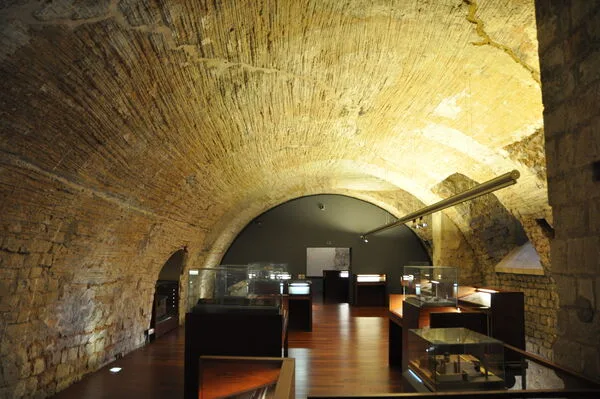
Why it matters: A private Roman home preserved below a medieval palace. The mosaic floor fragments still in position show the geometric patterns typical of a prosperous Barcino household — tesserae hand-laid 2,000 years ago, still readable.
What to notice: The floor is under glass panels in places, allowing you to look directly down at the mosaic surface. Notice the transition from opus signinum (crushed terracotta) in service areas to the finer mosaic work in the reception room.
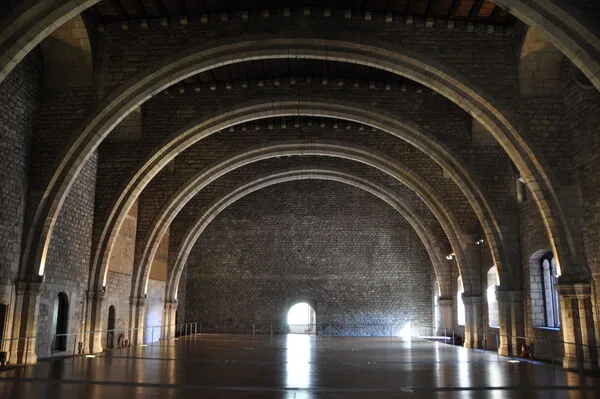
Why it matters: This is where Ferdinand and Isabella received Christopher Columbus in 1493 after his first voyage to the Americas. The room's six arches spanning 17 meters were built without interior columns — structurally ambitious for 1369 and still intact.
What to notice: Stand at the far end and look back toward the entrance arch. The proportions were designed to make whoever stood at the far wall appear elevated by the perspective. Columbus would have presented his discoveries from approximately that position.
How well did you look?
3 quick questions about what you just saw
Visit complete!
Share your visit or save it for later
Your collection