Palau de la Música Catalana: Tours, Concerts & Tickets (2026)
How to visit the Palau de la Música — guided tour vs concert, ticket prices, what to look for, and why this is Domènech i Montaner's masterpiece. Updated April 2026.
Every visitor to Barcelona knows Gaudí. Far fewer know Lluís Domènech i Montaner — and that's a shame, because the Palau de la Música Catalana is one of the most thrilling interiors in Europe. It opened in 1908 as a concert hall for the Orfeó Català choral society and has been in continuous use for over a century.
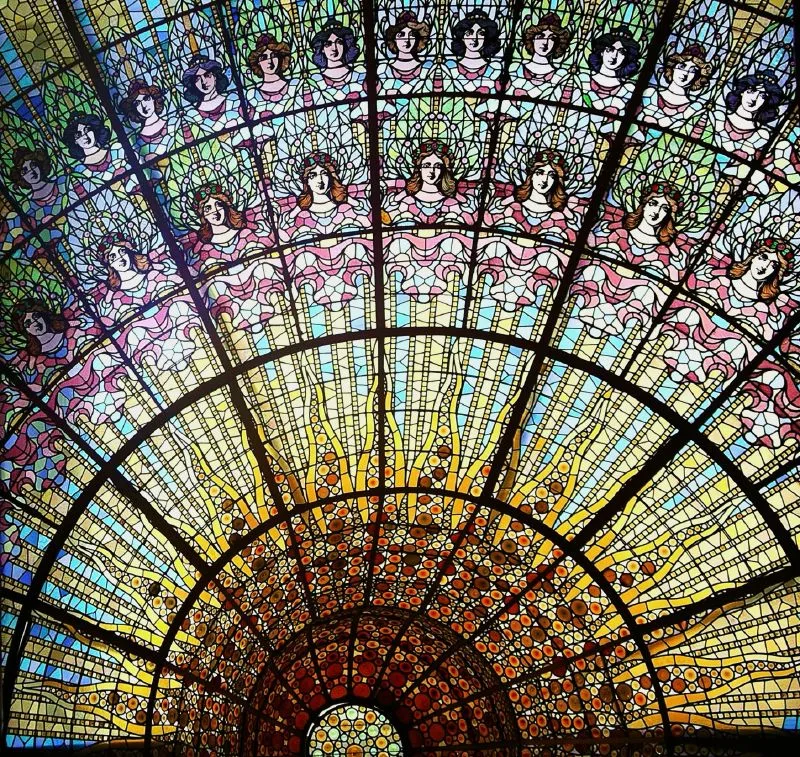
The building doesn't have a single straight surface. Stained glass, mosaics, ceramics, and sculpture cover every wall and ceiling. On a sunny morning, the Concert Hall's inverted dome — a stained-glass skylight — floods the room with colour. Domènech i Montaner called it "a garden for music." That's not poetic licence. The columns are shaped like trees. The mosaics show flowers. The ceiling opens to the sky.
UNESCO agreed. It's been a World Heritage Site since 1997.
How to visit
Two options: a guided tour or a concert.
Guided tours run daily, roughly every hour from 9:00 to 15:30 (English tours on the hour, 9:00-13:00 plus 14:00). The tour lasts about 50 minutes and covers the façade, the Grand Staircase, the Lluís Millet Hall, the Rehearsal Hall, and the Concert Hall. You'll hear the organ played briefly — worth it.
Self-guided tours with an audio guide are also available (around €24).
Concerts are the best way to experience the building. The acoustics are exceptional, and the lighting at night brings out details you won't see during the day. Programmes range from classical and flamenco to jazz. Ticket prices vary widely (€15-150+) depending on the performance.
Ticket prices
Guided tour: €22-26 depending on season and timeslot. Under 10 free. Groups (15+): €20 per person.
Self-guided + audio guide: approximately €24.
Concerts: From €15 for smaller performances to €100+ for headline events. Check palaumusica.cat for the current programme.
Book tours in advance — they fill up, especially morning slots and weekends.
Where to book
Our take: The guided tour is the better option — the Concert Hall's symbolism lands with a guide explaining each surface. GYG adds free cancellation if your Barcelona plans are still flexible.
What to look for
The façade is worth 5 minutes before you enter. The corner column with Saint George (patron saint of Catalonia) is by Miquel Blay — one of the finest pieces of Modernista sculpture in Barcelona. The mosaic panels along the first floor show the Orfeó Català singers.
The Concert Hall is the highlight. The inverted stained-glass dome at the centre of the ceiling looks like a drop of light. Around it, the ceiling transitions from daylight tones to musical-instrument motifs. Look at the stage: the sculptural group on the right represents Catalan popular music; on the left, a bust of Beethoven under a Valkyrie ride represents universal classical music.
The Lluís Millet Hall on the upper floor has a balcony with naturalistic columns covered in floral mosaics. On a clear day, the light through the stained glass here is as good as the Concert Hall.
The Grand Staircase uses double balusters in ceramic and glass — a detail most visitors walk past. Slow down.
Barcelona Architecture Capital 2026
The Palau benefits from extra attention this year. Barcelona holds the UNESCO/UIA World Capital of Architecture title for 2026, with over 1,500 events running February to December.
The UIA World Congress of Architects (June 28 - July 2) uses the Palau as a venue, bringing 10,000+ professionals to the city. Expect increased demand for tours and concerts during this period.
If you're interested in Modernisme beyond Gaudí, combine the Palau with the Hospital de Sant Pau (same architect, 10-minute walk), and the Gaudí Year 2026 events happening across Barcelona.
Tips most sites won't tell you
Go on a sunny morning. The Concert Hall's stained-glass dome relies on natural light. On a grey day, it's beautiful. On a sunny day, it's extraordinary. The difference is real.
Evening concerts reveal different details. The artificial lighting picks out gold mosaics and ceramic surfaces that the daylight washes out. If you can do both a tour and a concert, you'll see two different buildings.
The neighbourhood is worth exploring. The Palau sits at the edge of the Born district — one of Barcelona's best for walking, eating, and gallery-hopping. The Picasso Museum is 5 minutes away.
Photography is allowed during tours, no flash. The stained-glass dome photographs best from the centre of the Concert Hall, looking straight up.
- Address
- Carrer Palau de la Música 4-6, 08003 Barcelona
- Tour hours
- Daily 9:00–15:30 (English tours hourly 9:00–13:00 + 14:00)
- Tour price
- €22-26 guided · ~€24 self-guided
- Concert tickets
- From €15 · palaumusica.cat
- Book tour at
- GetYourGuide (free cancellation) · official site
- UNESCO
- World Heritage Site since 1997
- Architect
- Lluís Domènech i Montaner (1905-1908)
- Time needed
- 50 min (guided tour) · 1-1.5h (self-guided)
- Metro
- L1, L4: Urquinaona (3-minute walk)
Frequently asked questions
How much does a Palau de la Música tour cost?
Guided tours cost €22-26, depending on time slot and season. Self-guided visits with audio guide are around €24. Under 10 enter free on guided tours.
Is the Palau de la Música worth visiting?
Yes. It's one of the most extraordinary interiors in Barcelona. The stained-glass dome, the sculptural columns, and the Concert Hall ceiling are unlike anything else in the city. A concert is the best way to experience it, but the daytime tour is worth the price.
Should I do a tour or go to a concert?
Both if you can. The guided tour (50 minutes) shows you the architecture in detail and includes the organ demo. A concert lets you experience the acoustics and lighting at night. If you must choose one, a concert with a good seat gives you both the music and the building.
What is Barcelona World Capital of Architecture 2026?
Barcelona holds the UNESCO/UIA World Capital of Architecture title in 2026, with 1,500+ events February to December. The UIA World Congress of Architects takes place at the Palau in late June, bringing 10,000 professionals to the city.
The Palau pairs well with the Picasso Museum (5-minute walk) and the Barcelona museum itinerary. For more Modernisme, see our Gaudí Year 2026 guide.
Last verified: April 2026