10 rooms. All of them Catalan.
Your room-by-room guide through the installations — from street art to AI to fire
Get your free guide
Enter your email to unlock the full room-by-room guide. One email unlocks all Barcelona museum guides.
Free · No spam · Unsubscribe anytime
Every room at White Rabbit is a Catalan festival, a tradition, or a symbol — translated into light, VR, graffiti, or mirrors. You don't need to know Catalan culture to feel it here. But you'll leave knowing more of it.
The circuit opens with OVERALLS by TVBOY — street art at the entrance, setting the tone: irreverent, colorful, Catalan. Move through XIVARRI (Mina Hamada's tribute to Catalan folk festivals, all noise and color), CAPGROSSOS (the giant papier-mâché heads that lead Barcelona's festival processions), CAGANER (the subversive Nativity figure every Catalan family hides in their Christmas scene), and L'OU COM BALLA (Enric Planas's dancing egg — a real Corpus Christi tradition that only happens once a year, reproduced here daily). These five rooms go fast. Slow down at XIVARRI — there are layers of imagery to read.
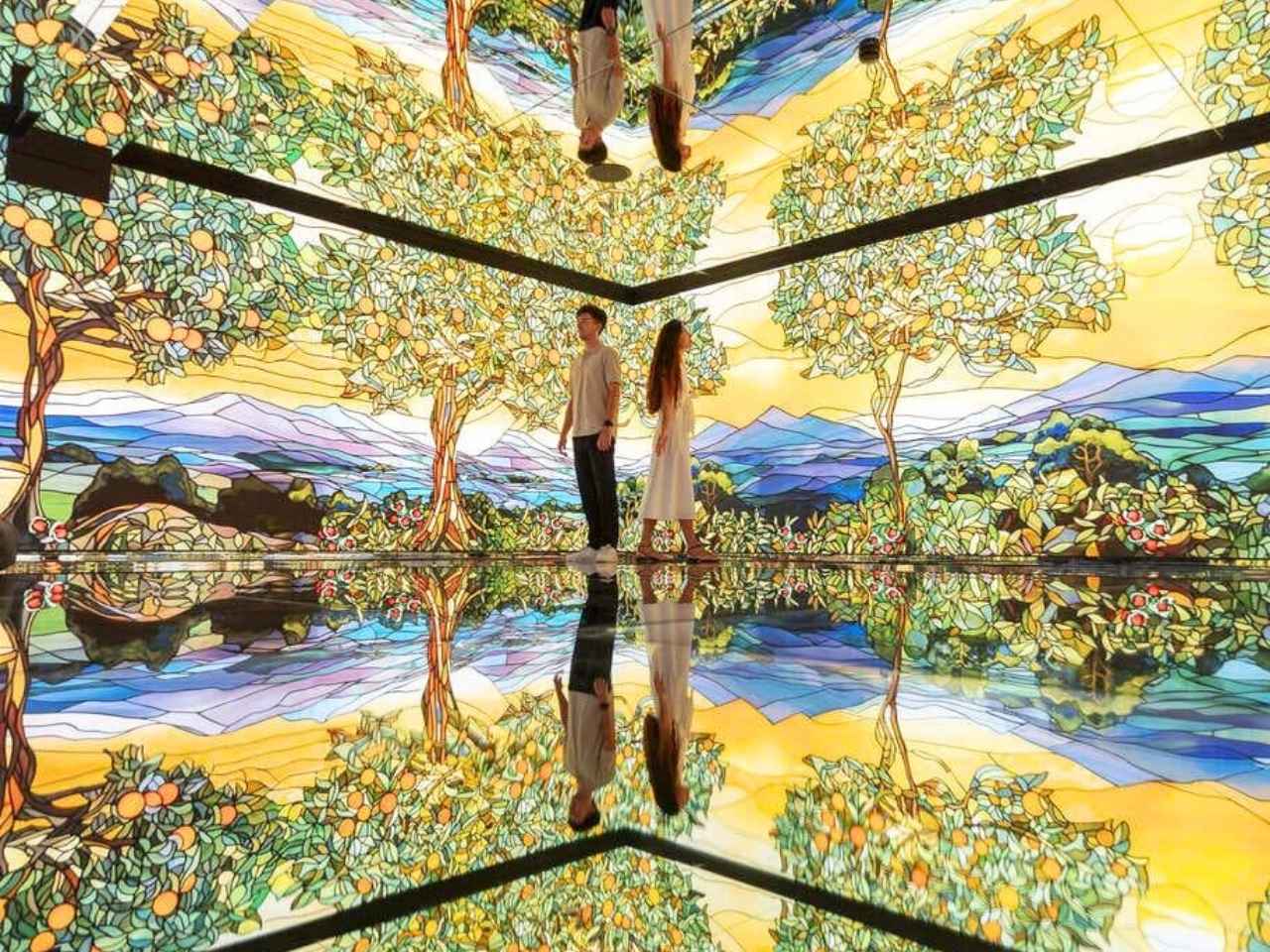
FARRA by PLAYMODES is the transition room — a celebration without fixed form, sound-reactive, participatory. Then ESCLAT (ONIONLAB): the centerpiece of the museum, an AI audiovisual projection that reinterprets Gaudí's mosaics, Barcelona's stained glass, and the Montjuïc fountains simultaneously. Give it at least 10 minutes — the projection runs in cycles and most visitors leave before seeing the full sequence. ENXANETA (SEEDS XR) is the VR room: you join a human tower (castell) as the top climber. Minimum age 8 for the headset. Queue here if the room is full — it's worth waiting.
BOCABADAT by La Fura dels Baus (the theatre company known for spectacular, sometimes overwhelming sensory work) is designed to stop you in your tracks — bocabadat means open-mouthed, and the installation delivers. The circuit ends with F.O.C. (VITAMIN STUDIO): a mirrored room where strings of lights pulse and shift color like burning embers. FOC means fire in Catalan. It references the Sant Joan festival bonfires and the Correfoc — fire as celebration, not danger. Stand in the center for the full infinity mirror effect.
Multiple visitors report no wait and near-empty rooms arriving around 19:00. The museum is open until 20:00 (last entry 19:00). Morning and early afternoon are busier, especially on weekends with tourist groups.
The ENXANETA room uses VR headsets. The minimum recommended age is 8, both for headset fit and safe experience. Adults with any VR sensitivity should take the shorter session option offered at the entrance to the room.
Most visitors spend 2-3 minutes in ESCLAT and move on. The AI projection runs a full cycle of roughly 8-10 minutes that covers all three referenced traditions (mosaics, stained glass, fountains). Staying for the complete cycle is the difference between seeing a transition and understanding the concept.
Tickets start at €14.50 online via the official site. The on-site price is typically higher. There's no skip-the-line benefit (no queues outside peak times) but the price difference alone makes online booking worth it.
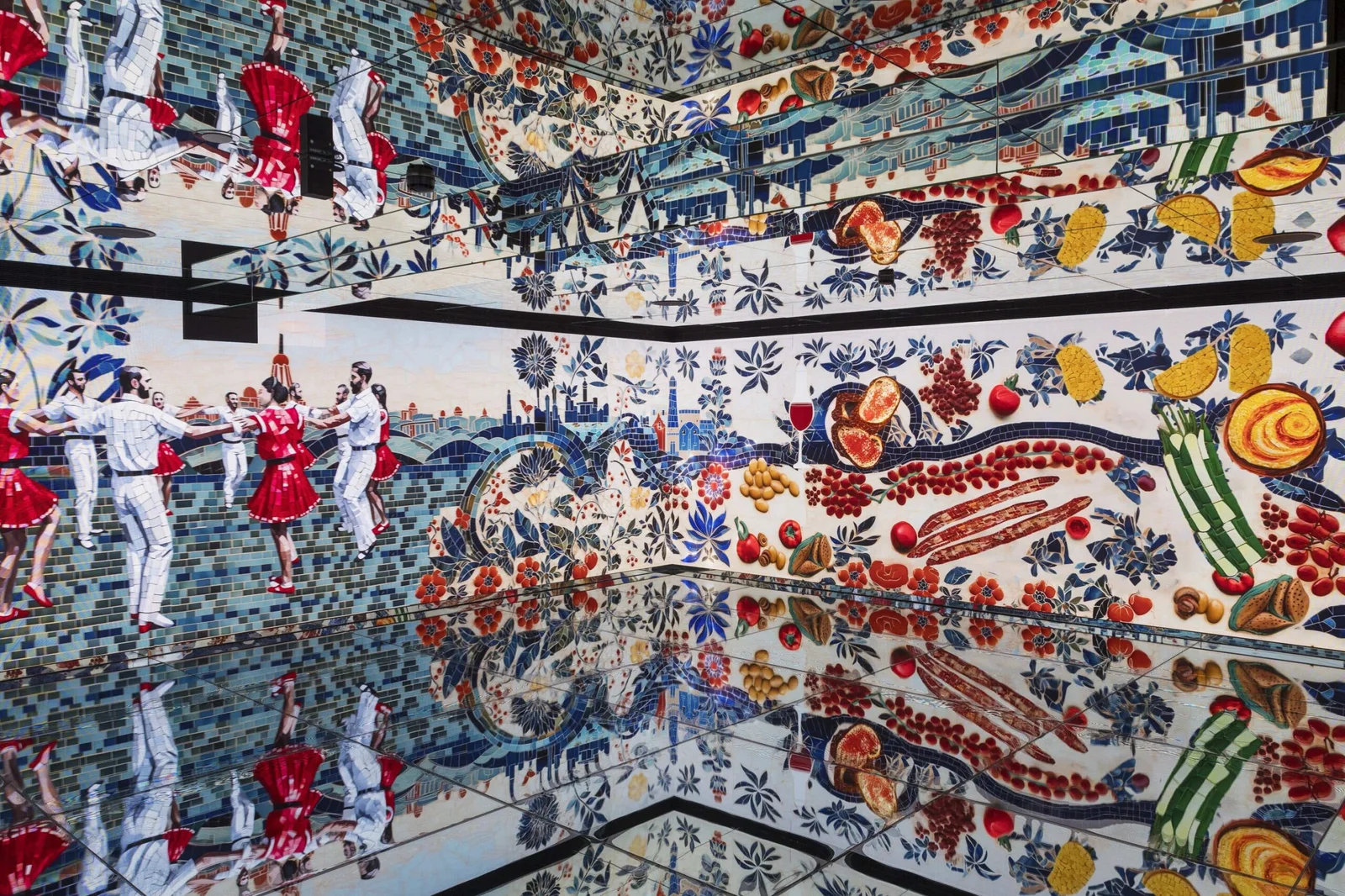
Why it matters: The museum's centerpiece. ONIONLAB used AI to analyze three defining visual languages of Barcelona — Gaudí's ceramic mosaic (trencadís), the stained glass of Modernista buildings, and the choreography of the Montjuïc Magic Fountain — and recompose them into a single continuous audiovisual piece. It's the most technically ambitious room and the one visitors most frequently cite as the highlight.
What to notice: The projection covers all four walls and the ceiling. Sit or stand at the center and look up at the transition points where one visual language dissolves into another. The AI-generated transitions are not cuts — they're morphological changes, which is where the technology is most visible.
Why it matters: Castells — the human towers built at Catalan festivals — are UNESCO-listed as intangible cultural heritage. The enxaneta is the child at the very top who signals completion. This VR experience puts you in that position, looking down from a tower of human bodies over a festival crowd. It's the most embodied way to understand what castellers actually feel like.
What to notice: Before putting on the headset, look at the physical room — the layout of the entry points and the floor markings map the base of an actual castell. The spatial design is part of the installation, not just a waiting area.
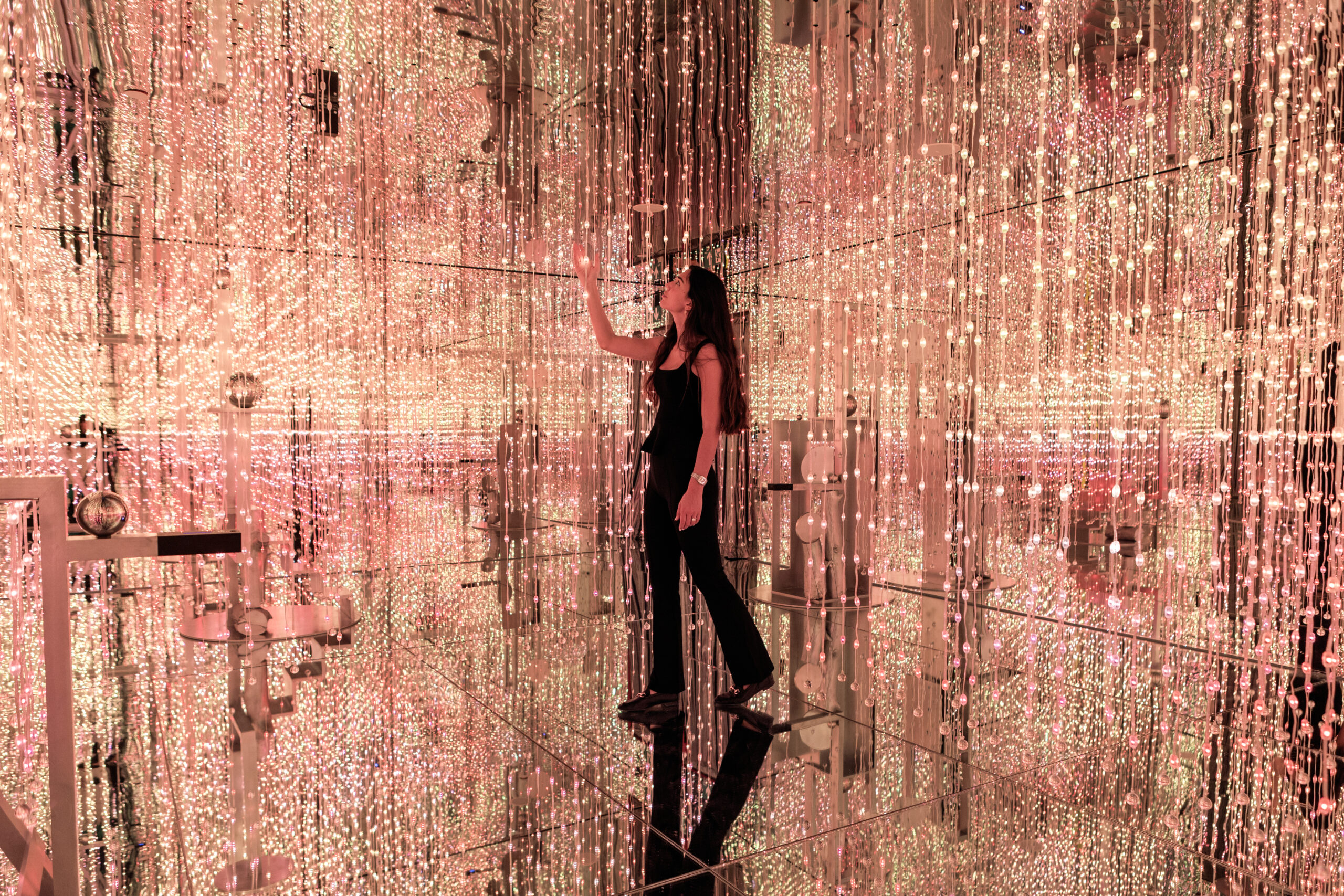
Why it matters: The final room. FOC (fire) references the two great Catalan fire festivals: the Sant Joan bonfires on midsummer night and the Correfoc, where groups carry fire-breathing dragons through the streets. The infinity mirror and pulsing light create the visual rhythm of flames without any actual fire. It's a deliberate last impression — Catalan culture burns through and regenerates.
What to notice: Walk to the geometric center of the room before looking at the mirrors. The infinity effect is calibrated from that point. From the edges, you see the mechanism. From the center, you see only the infinite repetition.
How well did you look?
3 quick questions about what you just saw
Visit complete!
Share your visit or save it for later
Your collection