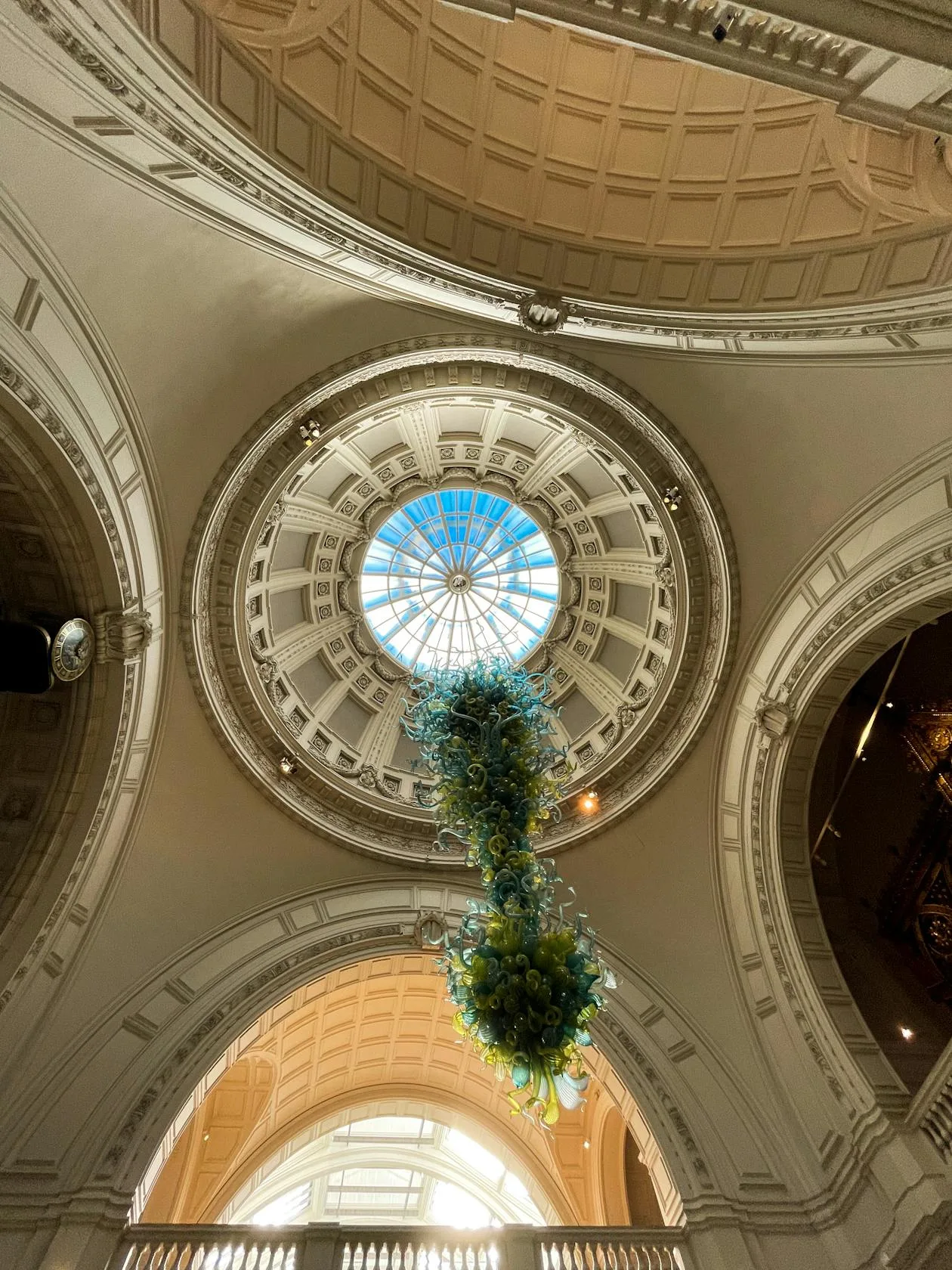
145 galleries, no map, no rush
Cast Courts to Raphael Cartoons to Jewellery Gallery — your room-by-room route through the V&A with timing and what to actually look at
Get your free guide
Enter your email to unlock the full room-by-room guide. One email unlocks all London museum guides.
Free · No spam · Unsubscribe anytime
Entry is free. The permanent collection runs from ancient Egypt to last year. Most people spend two hours and leave having seen about 4% of it — here's which 4% to choose.
Enter from the main Cromwell Road entrance and walk straight through to Rooms 46a and 46b. The Cast Courts were built in 1873 to house monumental plaster casts of sculptures the museum couldn't acquire directly. The centrepiece of Room 46a is Michelangelo's David at full scale — 5.2 metres, displayed at eye level so you see the proportions as they were intended. A plaster fig leaf hangs on the wall beside it: added in 1857 on a hook so it could be fixed in place before royal visits, removed after. Room 46b holds a reproduction of Trajan's Column from Rome, cast in two halves to fit the ceiling. The column stands 30 metres in its original form; each half here is still taller than the room that houses it.
Follow signs through the Medieval and Renaissance galleries toward Room 48a. The Raphael Cartoons are seven full-scale preparatory paintings made by Raphael in 1515–16 as designs for tapestries to hang in the Sistine Chapel. They are originals, not reproductions — on loan from the Royal Collection since 1865. Most visitors walk past assuming they're copies. They are among the most significant Renaissance works in Britain. The scale (the largest is over 5 metres wide) and the detail of the figures read completely differently in person than in any reproduction.
The British Galleries trace British design from 1500 to 1900 across six rooms. In Room 57, look for the Great Bed of Ware: an oak bed from around 1590, 3.4 metres wide, documented in three Shakespeare plays and several Jonson comedies. The bed was a celebrity object in its own time — people paid to see it at inns across England. From the British Galleries, continue to Rooms 91–93 for the Jewellery Gallery: 3,500 pieces spanning 3,000 years, from ancient Egyptian pieces to contemporary work. The chronological display is one of the clearest in the museum.
The V&A opens until 22:00 on Fridays. Most visitors arrive by 11:00 and leave by 18:00. After 19:00 on a Friday evening, the Cast Courts and Raphael Cartoons room are often nearly empty. The café closes at 17:30, so eat beforehand.
The Schiaparelli: Fashion Becomes Art exhibition (28 March – 1 November 2026) is separately ticketed at £28 weekday and £30 weekend. The first six weekends sold out immediately. Weekday slots remain but go quickly. Book on vam.ac.uk — GYG guided tours do not include access to the exhibition.
The Fashion Gallery (Room 40) is closed until Autumn 2028. The South Asia Gallery (Rooms 41–42) is closed until Spring 2028. If either was a specific reason for your visit, check the current gallery status on vam.ac.uk before traveling.
The Refreshment Room — the world's first museum café, commissioned in 1868 — fills from 11:30. The Morris, Gamble, and Poynter Rooms that make up the dining space are themselves significant Victorian interiors. Go early or at 16:00 when the lunch crowd clears.
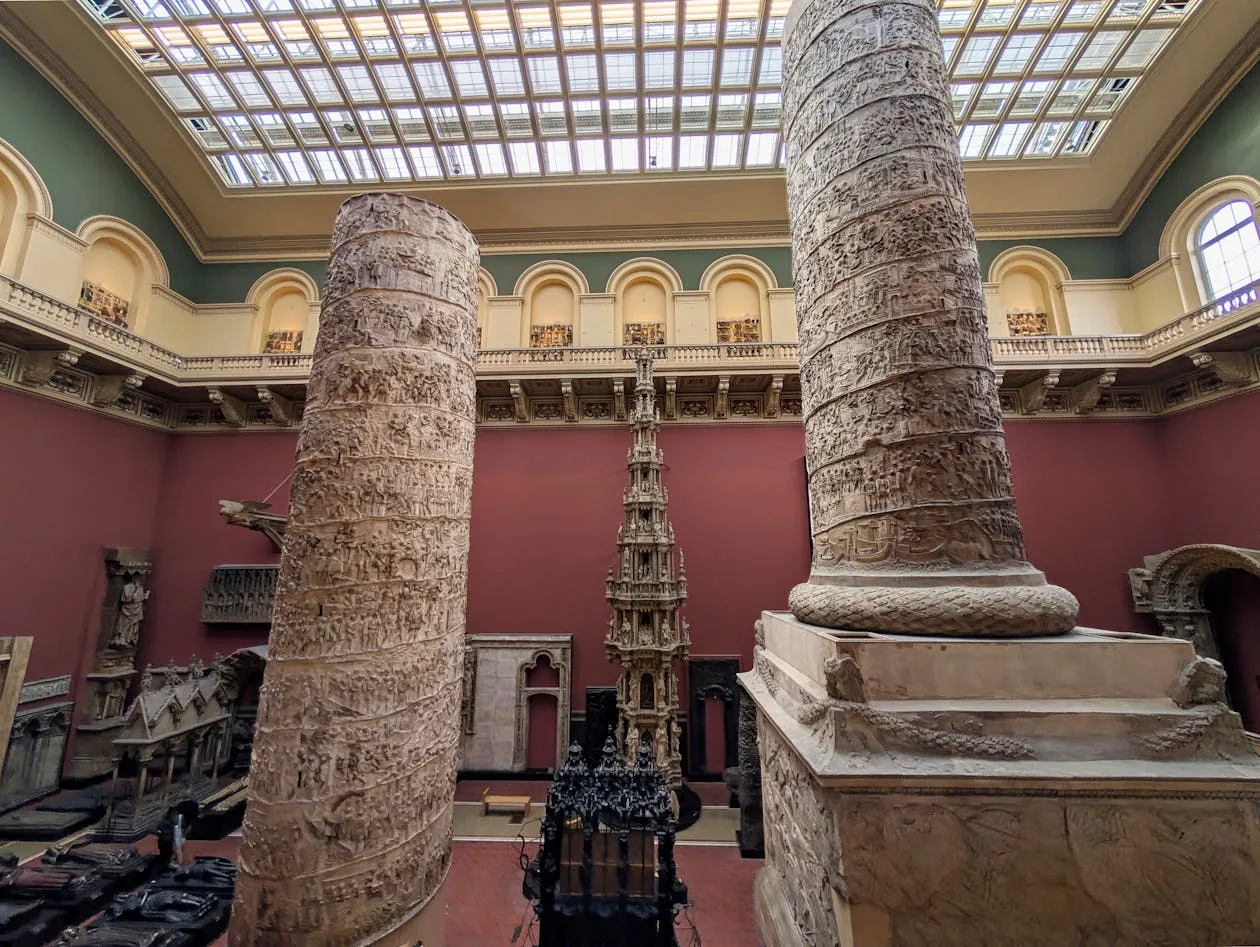
Why it matters: The V&A's cast is one of the earliest full-scale plaster casts ever made of the David, acquired four years after the Cast Courts opened. Displayed at floor level rather than on a pedestal, as Michelangelo intended, the proportions — oversized hands, elongated neck — make visual sense at this angle in a way they don't in photographs.
What to notice: The fig leaf on the adjacent hook was made in 1857 for royal visits. Queen Victoria had requested it. It was fitted before she arrived and removed after. The museum kept it. It lives on the wall when not attached.
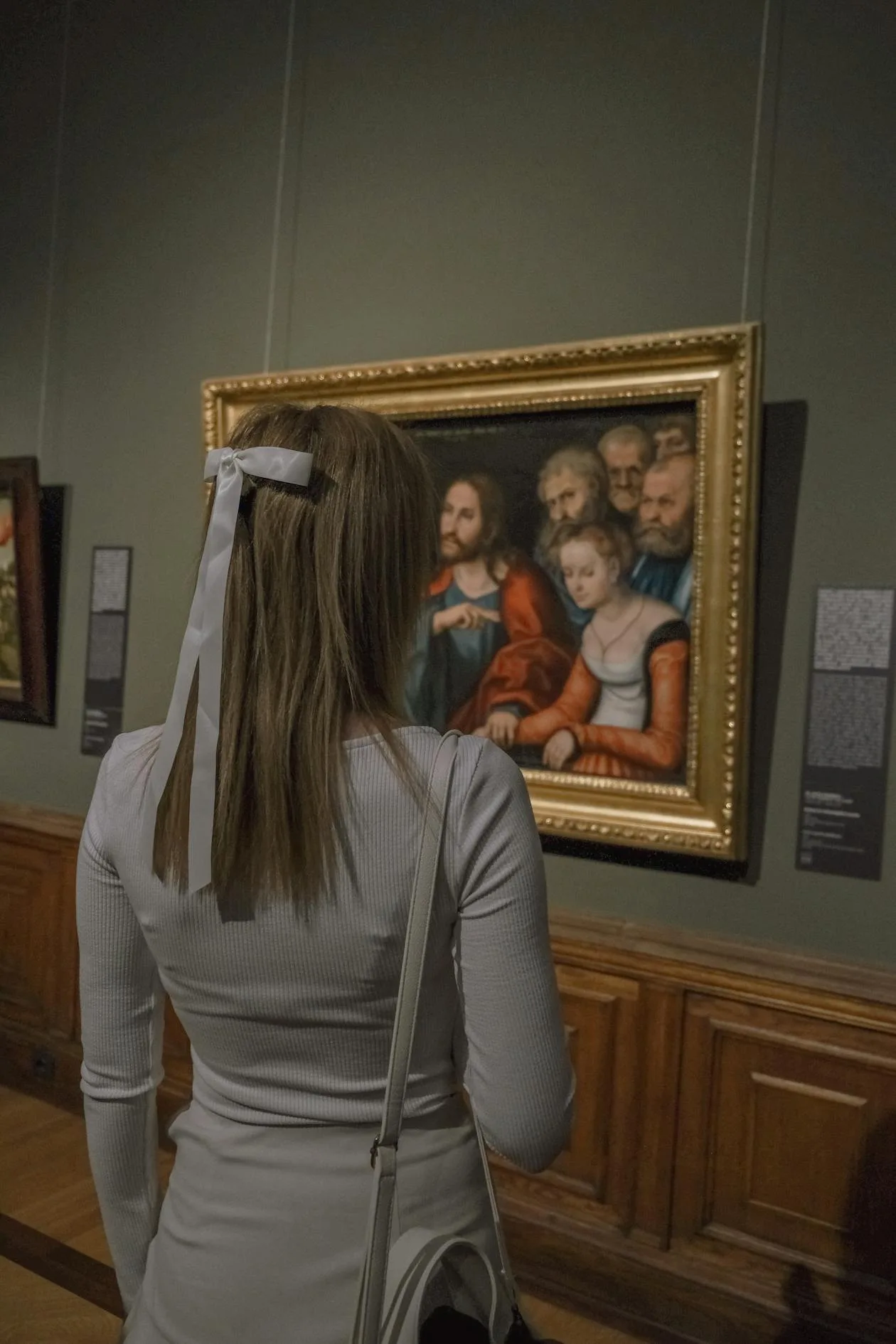
Why it matters: Seven preparatory paintings for the Acts of the Apostles tapestries commissioned by Pope Leo X for the Sistine Chapel. Of the original ten cartoons, seven survive — all seven are here. They were acquired by the future Charles I in 1623. On loan to the V&A since 1865.
What to notice: Look at the figures' expressions and hands. Raphael designed these as production documents — the weavers would work from them directly — so each gesture and gaze is technically precise in a way decorative paintings often are not. The scale (up to 5.5 metres wide) only becomes apparent in the room.
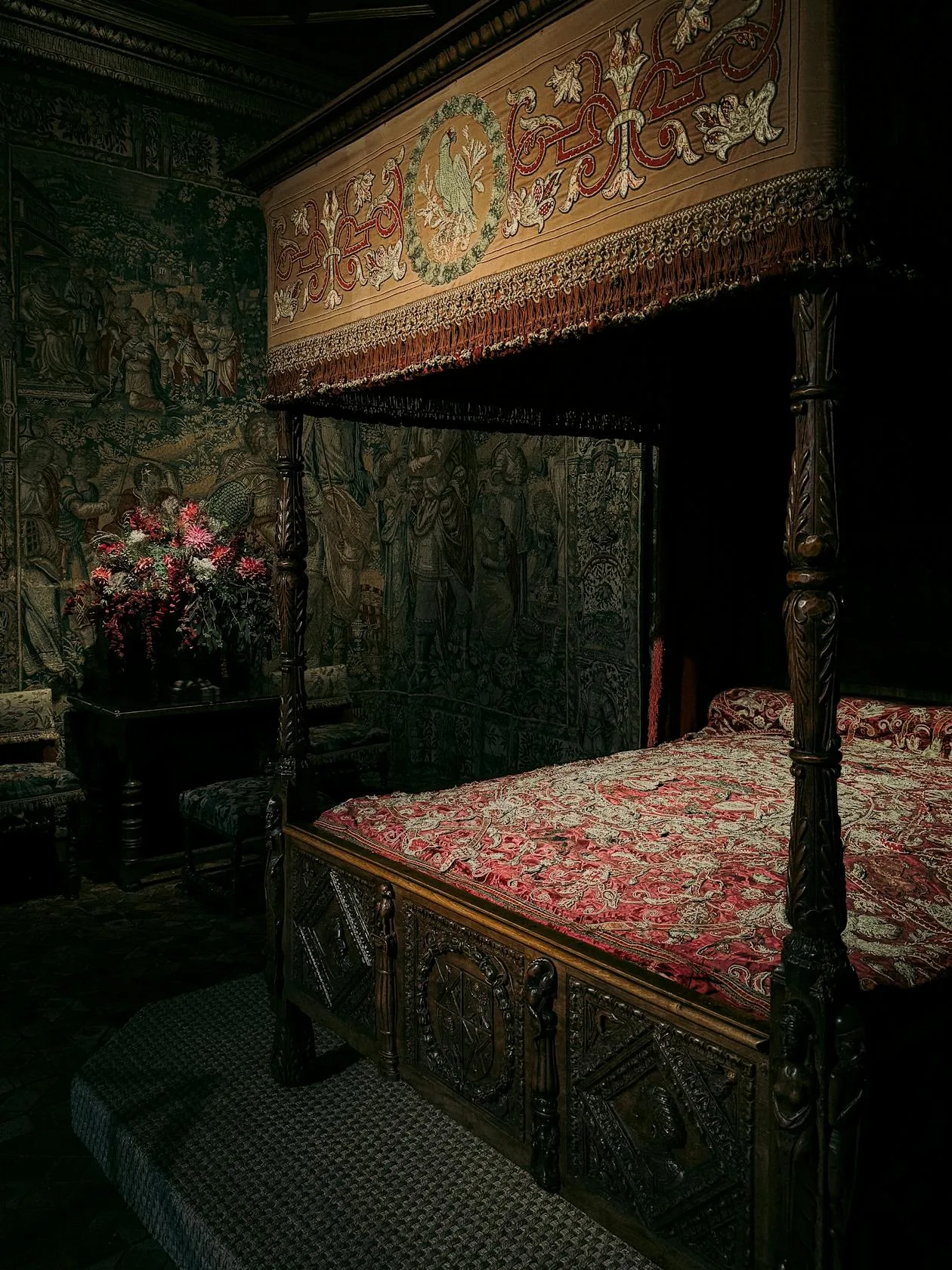
Why it matters: An oak bed 3.4 metres wide, made around 1590, probably as an attraction at an inn in Ware, Hertfordshire. The bed was famous in its own time — Shakespeare mentions it in Twelfth Night (1601), Ben Jonson in two plays. Visitors paid to see it. The V&A acquired it in 1931 for £4,000.
What to notice: The carvings on the headboard and posts are original. The bed changed hands multiple times across four centuries — carvings of names and dates from visitors are visible on the woodwork. The V&A documented 84 carved inscriptions.
How well did you look?
3 quick questions about what you just saw
Visit complete!
Share your visit or save it for later
Your collection