Van Gogh in Paris: 7 Places to See His Work and Traces
Where to see Van Gogh's paintings in Paris — plus the Montmartre street where he lived and the village where he died. Orsay, Orangerie, and two day-trip traces. Updated April 2026.
Van Gogh lived in Paris for two years — March 1886 to February 1888 — in a flat above his brother Theo's gallery on rue Lepic. He painted over 200 works there, shifted his palette from Dutch browns to the colours you think of when you think of Van Gogh, and met Gauguin, Pissarro, and Seurat at a nearby cafe. Most visitors walk past his front door without knowing.
This is where to find his paintings and his traces, ranked by how much time each one needs.
Where are Van Gogh paintings in Paris?
The short answer: the Musée d'Orsay holds the largest and most important collection. A single Van Gogh hangs at the Musée de l'Orangerie. The Louvre has none — its collection stops in 1848, before he was born. For everything else, you follow his footsteps through Montmartre and out to the village where he died.
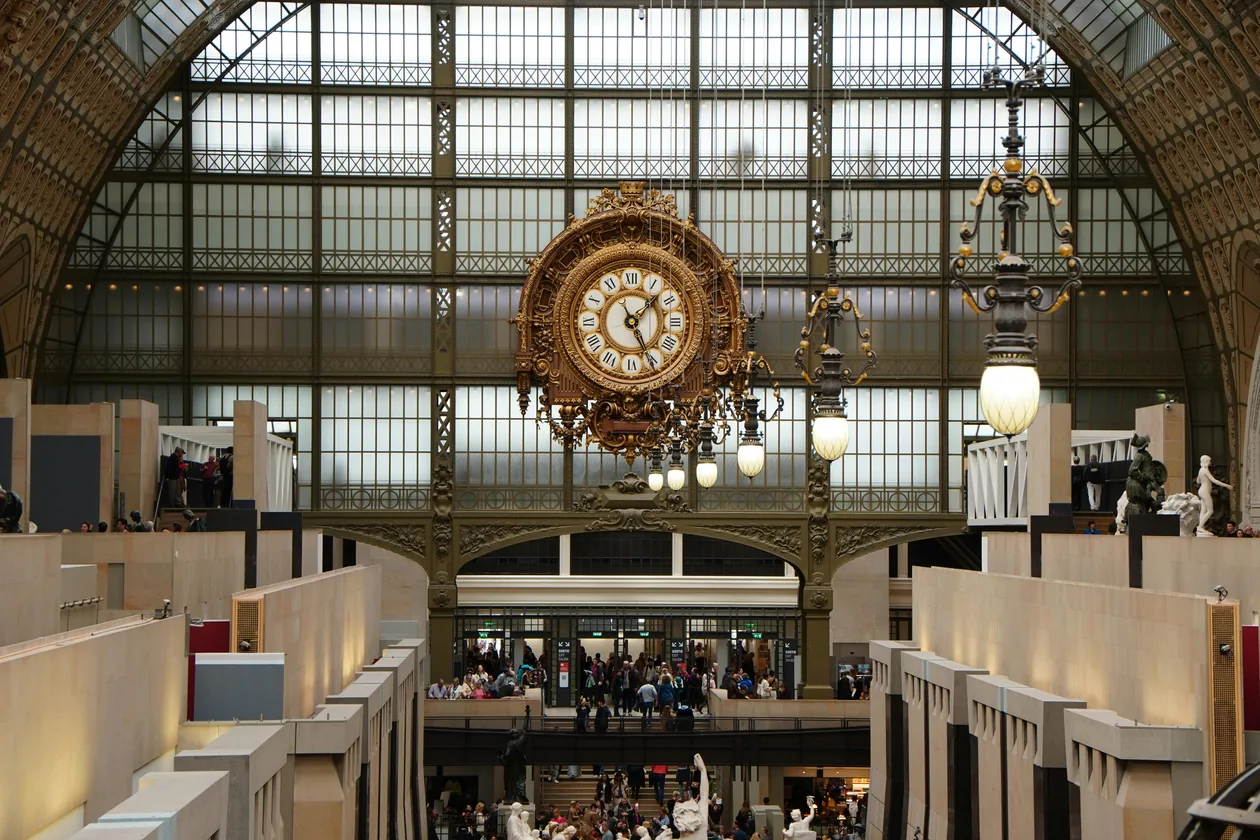
1. Musée d'Orsay — the core collection
What's here: around 20 Van Goghs, displayed in a dedicated gallery on Level 5. Regular highlights include Self-Portrait (1889, the blue-green one painted in Saint-Rémy), Starry Night Over the Rhône (1888), The Church at Auvers-sur-Oise (1890), Portrait of Dr. Paul Gachet (1890), Bedroom at Arles (the third, smaller version, 1889), The Italian Woman, and The Siesta (after Millet).
Where exactly: Level 5, Post-Impressionist galleries, near the clock window. The Van Gogh room sits between Cézanne and Gauguin — the same painters he actually knew.
Practical note: works rotate. Check the Orsay online collection the day before — a specific painting can be off view for loans or conservation. Get your Orsay skip-the-line ticket on GetYourGuide from €27. Our Orsay tickets guide covers free days and the Thursday evening trick.
2. 54 rue Lepic, Montmartre — where he lived
A plain cream-coloured building halfway up the rue Lepic hill, in the 18th arrondissement. Van Gogh shared the second-floor flat with Theo from June 1886 to February 1888. From the back window he painted View of Paris from Theo's Apartment (now in Amsterdam, not Paris). The flat is private and not open to visitors, but the street is open and walkable.
Practical note: combine with the Moulin de la Galette (two blocks north, painted by Van Gogh and Renoir) and place du Tertre for a 30-minute Montmartre loop.
3. Musée de l'Orangerie — the single Van Gogh
What's here: Portrait of a Young Peasant (1889), inside the Walter-Guillaume collection downstairs. One painting, worth the detour if you're already visiting for Monet's Water Lilies upstairs.
Practical note: a €20 combo ticket covers both Orsay and the Orangerie (buy at the Orangerie desk, it is not sold online). Full details in our Orangerie tickets guide.
4. Musée Jacquemart-André — temporary exhibitions
The Jacquemart-André runs the strongest Van Gogh temporary shows in Paris. Past exhibitions include Van Gogh's Palette (2014) and Van Gogh in Auvers-sur-Oise (2023-2024). No permanent Van Gogh — check their current programme before your trip.
5. Fondation Louis Vuitton — occasional loans
The Frank Gehry building in the Bois de Boulogne hosts rotating exhibitions with major international loans. Van Gogh appears every few years when the theme fits. Until 8 March 2027, the Gustave Fayet exhibition shows 10 Van Gogh paintings, including Self-Portrait with Bandaged Ear and Pipe. Prices, hours and the shuttle are in our Fondation Louis Vuitton tickets guide.
6. Auvers-sur-Oise — the day trip (church, wheatfield, grave)
Van Gogh arrived in Auvers on 20 May 1890 and died there 70 days later. In that short time he painted The Church at Auvers, Wheatfield with Crows, and Portrait of Dr. Gachet — the exact works you saw at the Orsay. You can walk from the church to the wheatfield (marked by a plaque) to his grave, shared with Theo, in under 30 minutes.
Practical note: 1 hour direct train from Gare du Nord or Saint-Lazare in summer (April to October). The Auberge Ravoux, his last attic room, operates as a small museum and restaurant in season.
7. Le Moulin de la Galette, Montmartre
Van Gogh painted the Moulin de la Galette twice in 1886, a few streets from his flat. The cafe where he exhibited with Toulouse-Lautrec (the Tambourin, on boulevard de Clichy) is long gone, but the windmill restaurant is still there. No ticket needed, just walk by.
Musée d'Orsay — practical info
Address: 1 Rue de la Légion d'Honneur, 75007 Paris
Hours: Tue-Sun 9:30-18:00, Thu until 21:45 · Closed Mondays
Tickets: €16 online, €14 on-site, €12 Thursday after 18:00. Free first Sunday of the month (book timeslot).
Van Gogh gallery: Level 5, Post-Impressionist wing
Book: Orsay skip-the-line on GetYourGuide · Official site
Last verified: April 2026
Frequently asked questions
Where are Van Gogh paintings in Paris?
The main collection sits on Level 5 of the Musée d'Orsay — around 20 works including Self-Portrait (1889), Starry Night Over the Rhône, Bedroom at Arles, The Church at Auvers-sur-Oise, and Portrait of Dr. Gachet. The Orangerie holds one (Portrait of a Young Peasant). The Jacquemart-André runs temporary Van Gogh shows every few years.
Which Van Gogh paintings are at the Musée d'Orsay?
Around 20 works are held in the collection and roughly a dozen hang at any time. Regular highlights: Self-Portrait (1889), Starry Night Over the Rhône (1888), Bedroom at Arles (1889), The Church at Auvers-sur-Oise (1890), Portrait of Dr. Paul Gachet (1890), The Italian Woman, and The Siesta. Works rotate — check the Orsay online collection the day before.
Did Van Gogh live in Paris?
Yes. He lived with his brother Theo at 54 rue Lepic in Montmartre from June 1886 to February 1888. A small plaque marks the building. The flat itself is private and not open to the public.
Can you visit Auvers-sur-Oise as a day trip from Paris?
Yes. It's 35 km northwest of Paris, 1 hour direct from Gare du Nord or Gare Saint-Lazare in summer. The church, wheatfield, and grave are within a 30-minute walk of each other. The Auberge Ravoux museum is open April to October.
Does the Louvre have Van Gogh paintings?
No. The Louvre's collection ends in 1848. Everything post-1848 French — including Van Gogh — is at the Musée d'Orsay. See our Louvre vs Orsay comparison if you're choosing between the two.
If you're planning a short trip, the Paris in one day itinerary fits Orsay and Montmartre into a single route. For multi-museum visits, check whether the Paris Museum Pass is worth it in 2026.
- Musée d'Orsay Tickets 2026: Prices, Hours & How to Skip the Line
- Musée de l'Orangerie Tickets 2026: Monet's Water Lilies, Prices & Hours
- Louvre vs Orsay: Which Paris Museum Should You Visit First?
- Paris in One Day: The Realistic 24-Hour Itinerary (2026)
- Paris Museum Pass 2026: Is It Worth It? (Honest Math by Visitor Profile)