200 Paintings Across His Life. The Self-Portraits Tell the Story Most Visitors Miss.
A 1.5-hour floor-by-floor route through Sunflowers, The Bedroom, and the portraits that show you who Van Gogh was becoming.
Get your free guide
Enter your email to unlock the full room-by-room guide. One email unlocks all Amsterdam museum guides.
Free · No spam · Unsubscribe anytime
Most visitors come for Sunflowers and leave. The museum has 200 paintings chronologically across his entire life. The self-portraits from age 25 to 37 are the real journey. You're watching him learn to paint emotion.
Start here. Sunflowers, The Bedroom, and Almond Blossom hang within metres of each other. No other museum groups these three together. Spend 10 minutes with Sunflowers alone — look at the yellow, not just the shape. Then find the self-portraits from Arles: the red-bearded man looking at you. The brushstrokes are frantic. Compare them to the self-portraits on Floor 1 — same painter, but something has changed.
The museum jumps backward in time here, but visually it makes sense. Watch his palette explode: reds, yellows, blues he never used in the dark Dutch period. Irises, Starry Night Over the Rhône, and portraits of friends appear here. The letter display is in this section — give it five minutes. Van Gogh wrote over 800 letters; the museum shows originals alongside the paintings they describe. It changes everything.
The portraits and dark peasant scenes from his apprenticeship. The Potato Eaters feels like a different painter from Sunflowers. That's the point. Most visitors skip this floor. Don't. It's the only way to see how far he travelled in 10 years.
The first 90 minutes before tour groups arrive, the Sunflowers room is navigable. By 10 AM it's three rows deep. Tuesday and Wednesday are quietest year-round.
Visitors who enter and immediately go up see the masterpieces first, when energy is highest. Then you walk downward through colour and time. The chronology makes sense in reverse.
Original letters from Van Gogh to his brother Theo, displayed alongside the paintings they describe. Five minutes with these changes how you look at every work in the museum. Most visitors walk past.
Security policy; no backpacks allowed. Free lockers exist but they're small. A small messenger bag or crossbody fits the A4 rule and keeps your hands free.
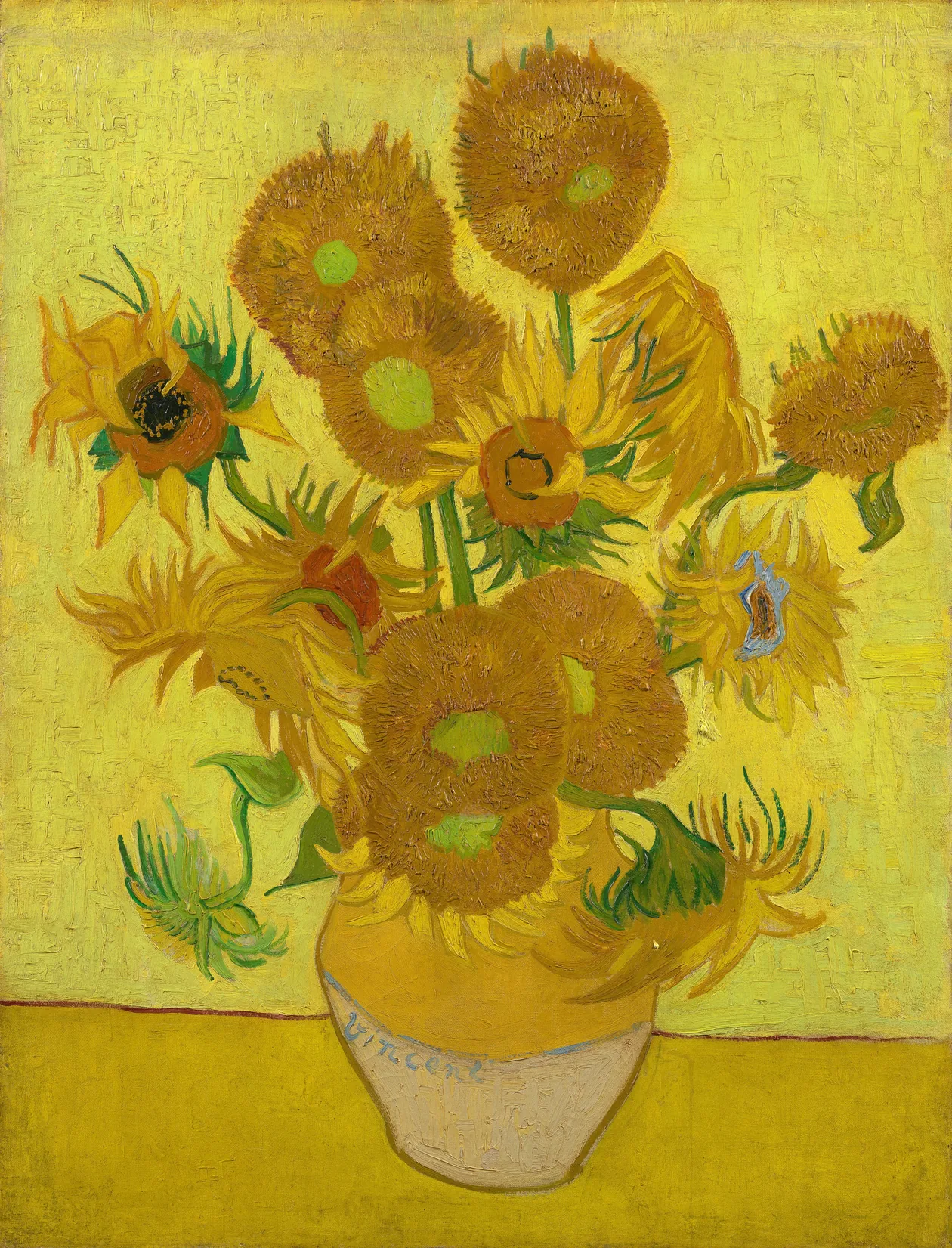
Why it matters: One of five versions Van Gogh painted in Arles. This version hangs in the museum's permanent collection. The yellow isn't just colour — it's his attempt to paint warmth, optimism, the energy he felt in southern France.
What to notice: Stand close. The paint is thick, layered (impasto). Each petal and leaf is built up in visible brushstrokes. Step back 3 metres and the individual strokes merge into an almost photographic image. Van Gogh painted this tension between detail and wholeness deliberately.
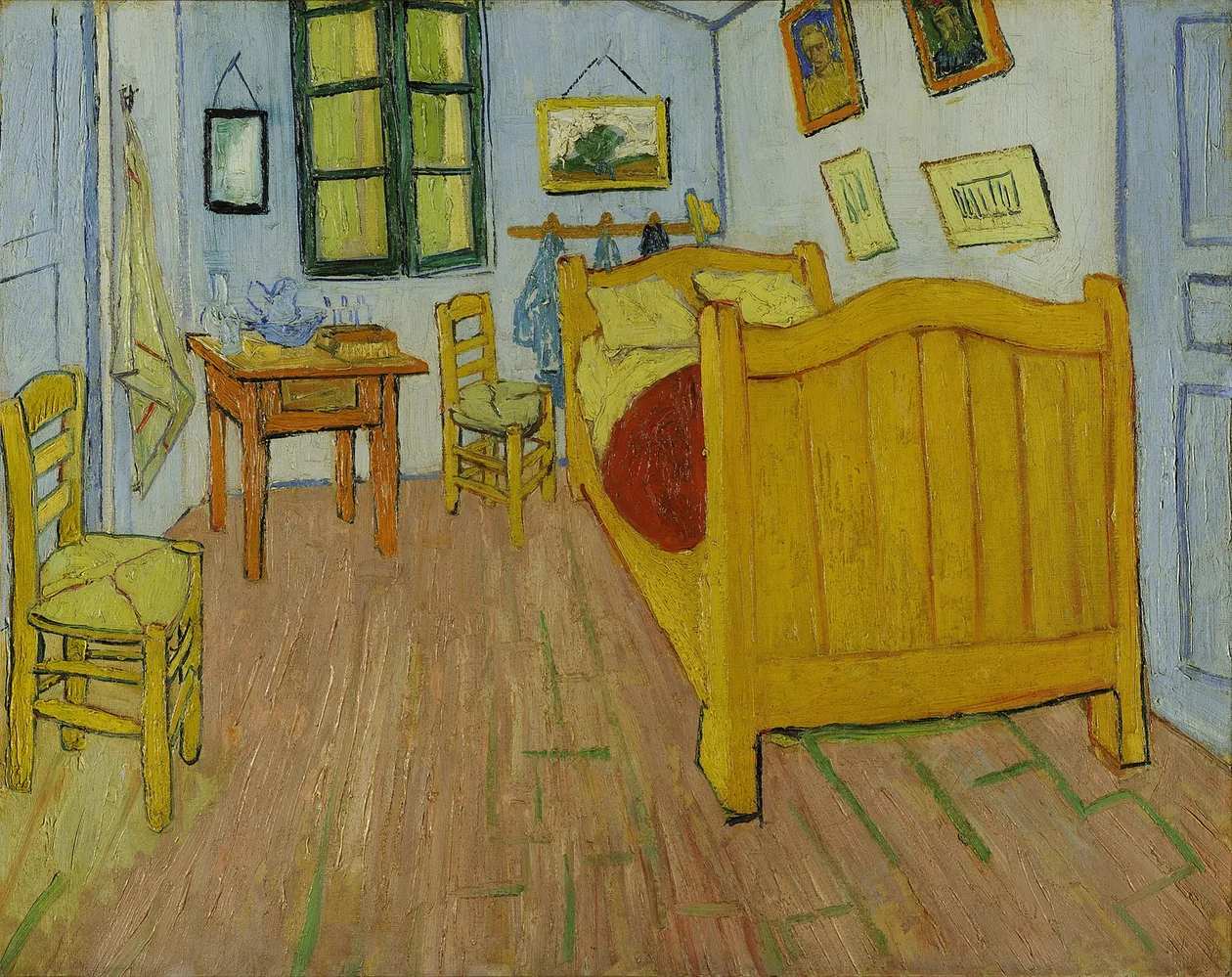
Why it matters: Van Gogh's own bedroom in the Yellow House in Arles, painted in October 1888. This is the first of three versions; the other two are in Chicago and Paris. The perspective is deliberately skewed, the colours unnatural. It's not a room — it's how he wanted rest to feel.
What to notice: The floor and walls don't follow perspective rules. The room tilts. The colours are flat and acidic — purple walls, green window, red bedspread. Nothing is naturalistic. That's the whole point. Compare it to photographs of real 19th-century rooms. Van Gogh abandoned accuracy to paint emotion.
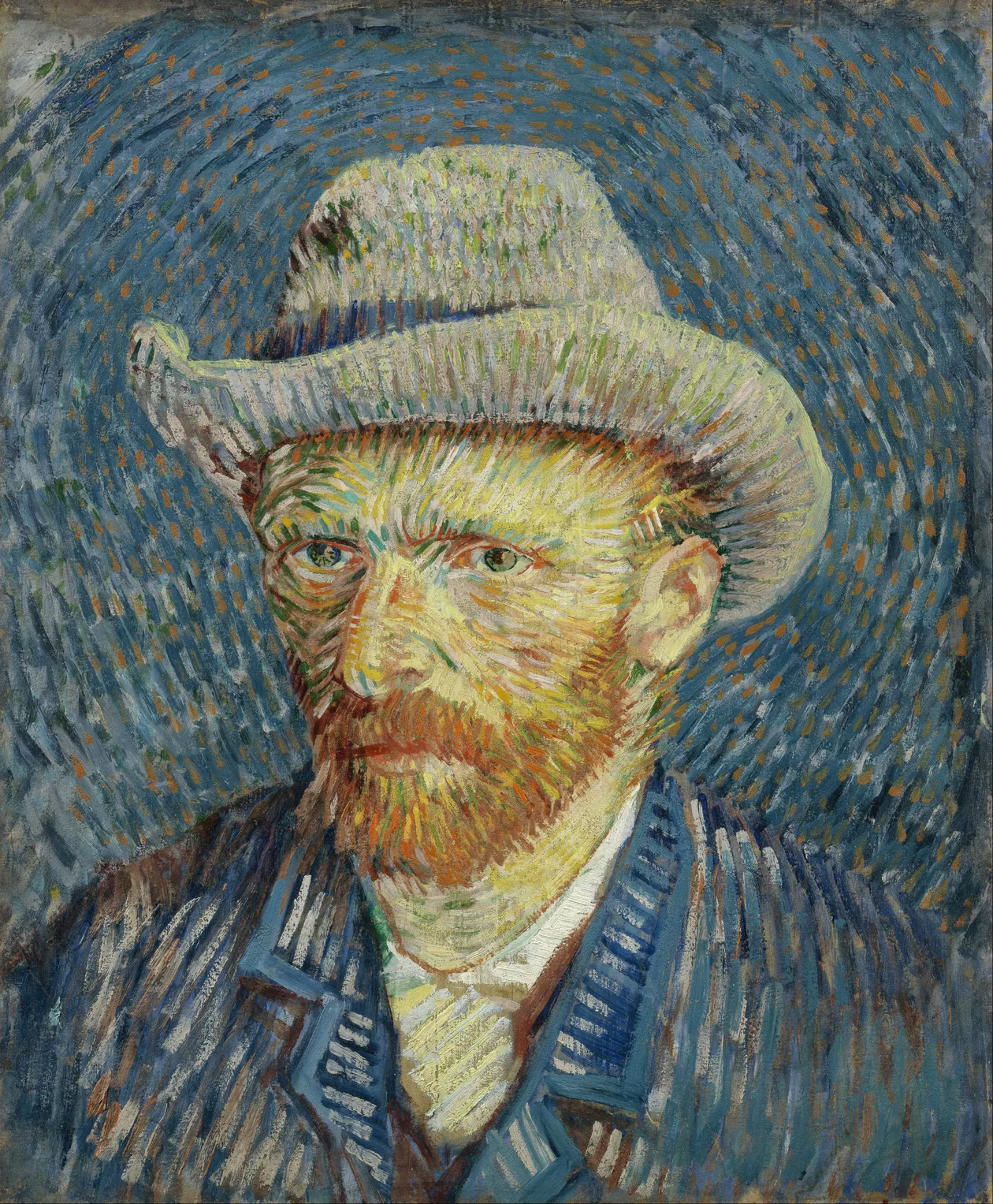
Why it matters: Van Gogh painted over 30 self-portraits in two years. This one, from Paris, shows a steady gaze and controlled brushwork. Compare it to his Arles self-portraits (red beard, frantic energy) two floors down — he's watching himself change.
What to notice: The background is a flat, acidic green. His face is modelled with short parallel brushstrokes (directional hatching). The eyes are clear, almost confrontational. In the Arles versions, the brushwork becomes looser, the expression more troubled. One painter, watching himself age and destabilise. It's the most honest self-portraiture in European art.
How well did you look?
3 quick questions about what you just saw
Visit complete!
Share your visit or save it for later
Your collection