700 Years of Art in One Walk
A room-by-room route from medieval altarpieces to Hopper and Kirchner — top floor to ground.
Get your free guide
Enter your email to unlock the full room-by-room guide. One email unlocks all Madrid museum guides.
Free · No spam · Unsubscribe anytime
The Thyssen fills the gaps the Prado and Reina Sofía leave. Impressionists, German Expressionists, American art — things Spain's other museums simply don't have.
Start at the top and walk down — the museum is designed this way. Italian Primitives, Renaissance portraits, then Caravaggio and the Dutch Golden Age. Room 5 (Ghirlandaio's Giovanna) is a highlight.
This is the Thyssen's strongest floor. Van Gogh, Degas, then Rooms 35–40 for German Expressionism — the best Kirchner collection outside Berlin. End with Hopper's Hotel Room.
180 works on a 15-year loan. Dutch landscapes, more Impressionists, Canaletto views. Less essential but worth a quick pass if you have time.
The quietest of the three Paseo del Arte museums. Early weekdays feel almost private.
Monday 12–16h is free (Mastercard sponsored). Queues go around the block. Not worth it.
15 masterpieces, clearly signposted. A solid option if you're short on time.
€5 for the full guide, but the museum website has a short version. Bring your own headphones.

Why it matters: One of the most beautiful Renaissance portraits in existence. Giovanna died at 19 in childbirth; this was painted after her death, from memory.
What to notice: The profile format is deliberately classical — like a Roman coin. Look at the details: the coral necklace, the embroidered sleeve, the Latin epigram on the wall behind her. Every element is a memorial.

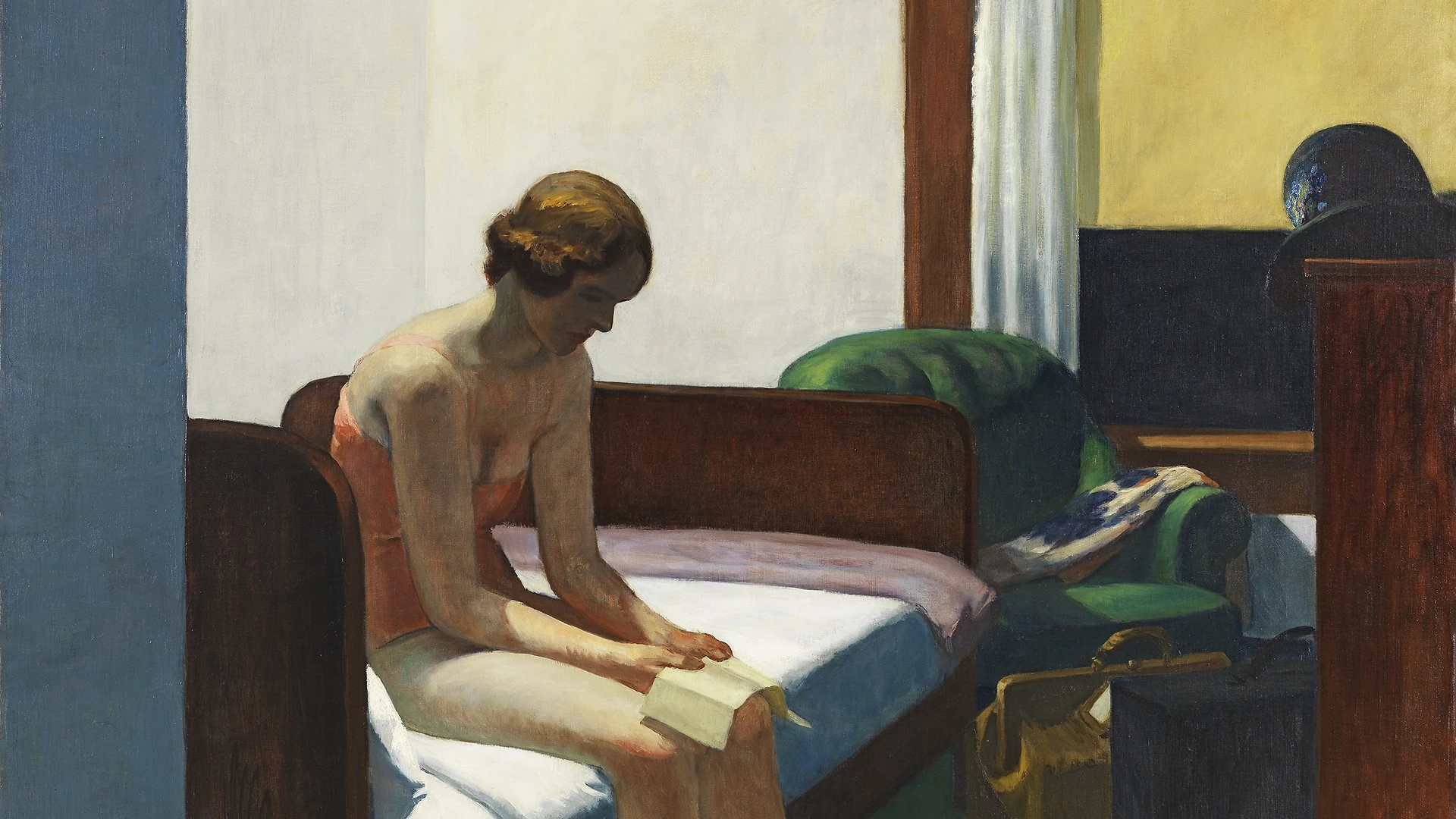
Why it matters: Hopper's loneliness distilled. A woman sits on a hotel bed reading a train timetable. Nothing happens, and that's everything.
What to notice: The light source is harsh and overhead — like an interrogation. Her body language is exhaustion, not seduction. The empty luggage, the hat on the dresser. She's between places, between decisions.

Why it matters: Kirchner painted Fränzi — a child model — with the raw energy of German Expressionism. The distorted colors reject academic realism entirely.
What to notice: The greens and oranges of her skin aren't natural — they're emotional. Compare this with the Renaissance portraits upstairs. Same subject (a person), completely different idea of what painting can do.
How well did you look?
3 quick questions about what you just saw
Visit complete!
Share your visit or save it for later
Your collection