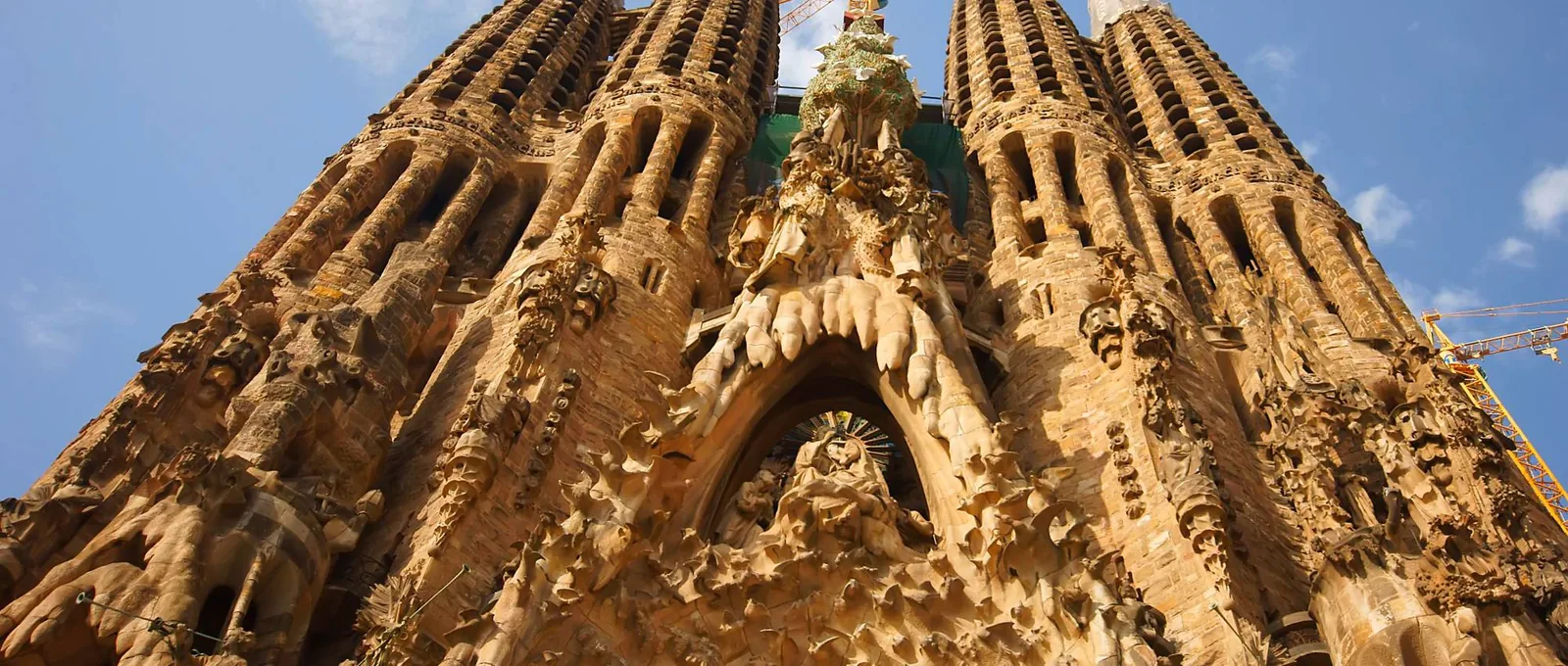
A Building That Explains Itself
Zone-by-zone route through the basilica — light, structure, and the details Gaudí hid in plain sight.
Get your free guide
Enter your email to unlock the full room-by-room guide. One email unlocks all Barcelona museum guides.
Free · No spam · Unsubscribe anytime
Gaudí designed the light before the walls. The stained glass isn't decoration — it's the clock of the building. Morning is blue. Afternoon is fire.
The tree-shaped columns split into branches at the ceiling. Gaudí studied natural structures to distribute weight without flying buttresses. Stand at the center and look straight up — the canopy effect is the whole point. Walk slowly. Most visitors rush to take photos. Give your eyes 5 minutes to adjust.
The east (Nativity) windows cast cool blue and green tones. Walk across the transept to the west (Passion) side — the glass shifts to amber, orange, and red. This is intentional. Gaudí mapped the color spectrum to the sun's path. If you're there in the morning, the east side glows. After 5 PM, the west side catches fire.
The apse holds the main altar with its suspended baldachin. Below, the crypt contains Gaudí's tomb — visible through a small window. The exit leads through exhibition rooms with original models showing how Gaudí used hanging chains to calculate curves. Don't skip these.
Since February 2026, the first hour is designated quiet time. Earphones required for audioguides. It's the closest to the contemplative space Gaudí intended.
If you're choosing one tower, pick Nativity. Better views of the eastern Barcelona coastline and you descend through a tighter spiral staircase with more character.
Slots sell out fast, especially 9 AM and late afternoon. Weekend mornings vanish first. Tuesday and Wednesday are the quietest days.
Tour group peak. Even with a booked slot, the interior feels significantly more crowded. Early morning or after 5 PM is a different experience.
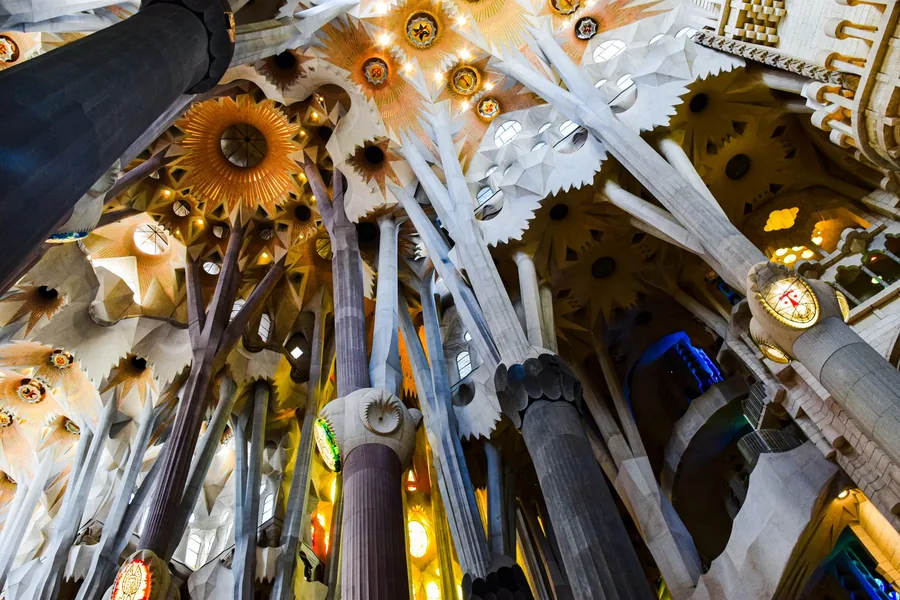
Why it matters: Gaudí eliminated flying buttresses by designing columns that branch like trees to distribute weight naturally. The ceiling is a forest canopy made of stone.
What to notice: Stand at the crossing and look straight up. Each column branches differently depending on the load it carries. The thicker ones near the transept hold more weight — you can see it in how many branches they split into.
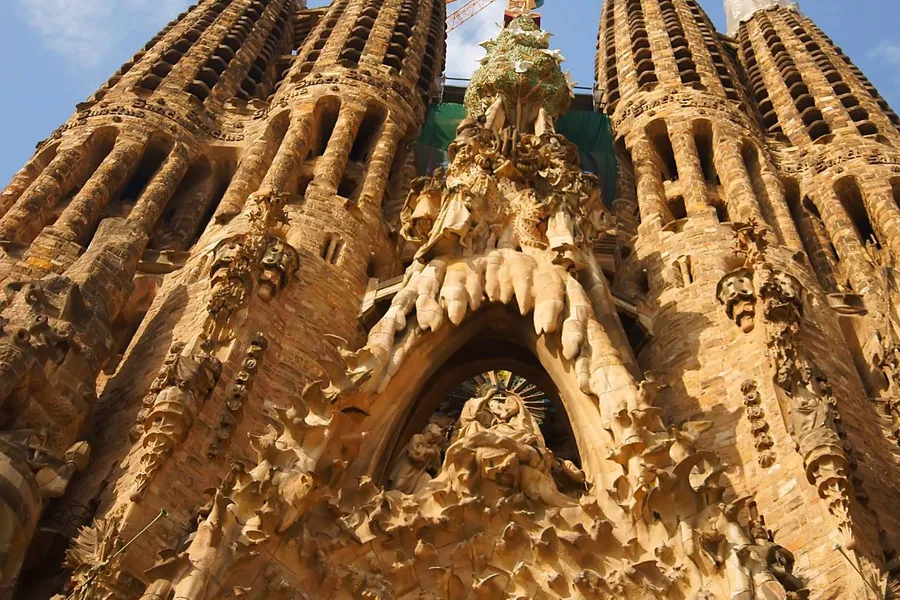
Why it matters: The cold colors represent dawn and birth. Gaudí planned the color-to-orientation mapping decades before the glass was made. Morning light activates these windows.
What to notice: Compare the floor color on the Nativity side with the Passion side. The light literally paints different moods on the same stone depending on the hour.
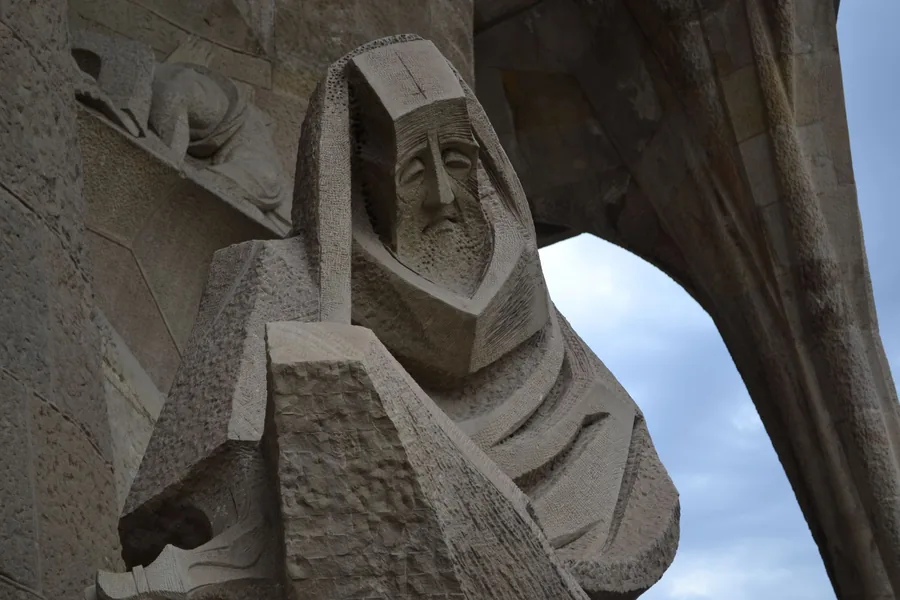
Why it matters: Deliberately angular and austere, in stark contrast with the organic Nativity facade. Subirachs chose to clash with Gaudí's style on purpose — suffering should look different from birth.
What to notice: Find the magic square on the facade: a 4×4 grid where every row, column, and diagonal adds up to 33 — Christ's age at crucifixion. It's at eye level, left side of the entrance.
How well did you look?
3 quick questions about what you just saw
Visit complete!
Share your visit or save it for later
Your collection