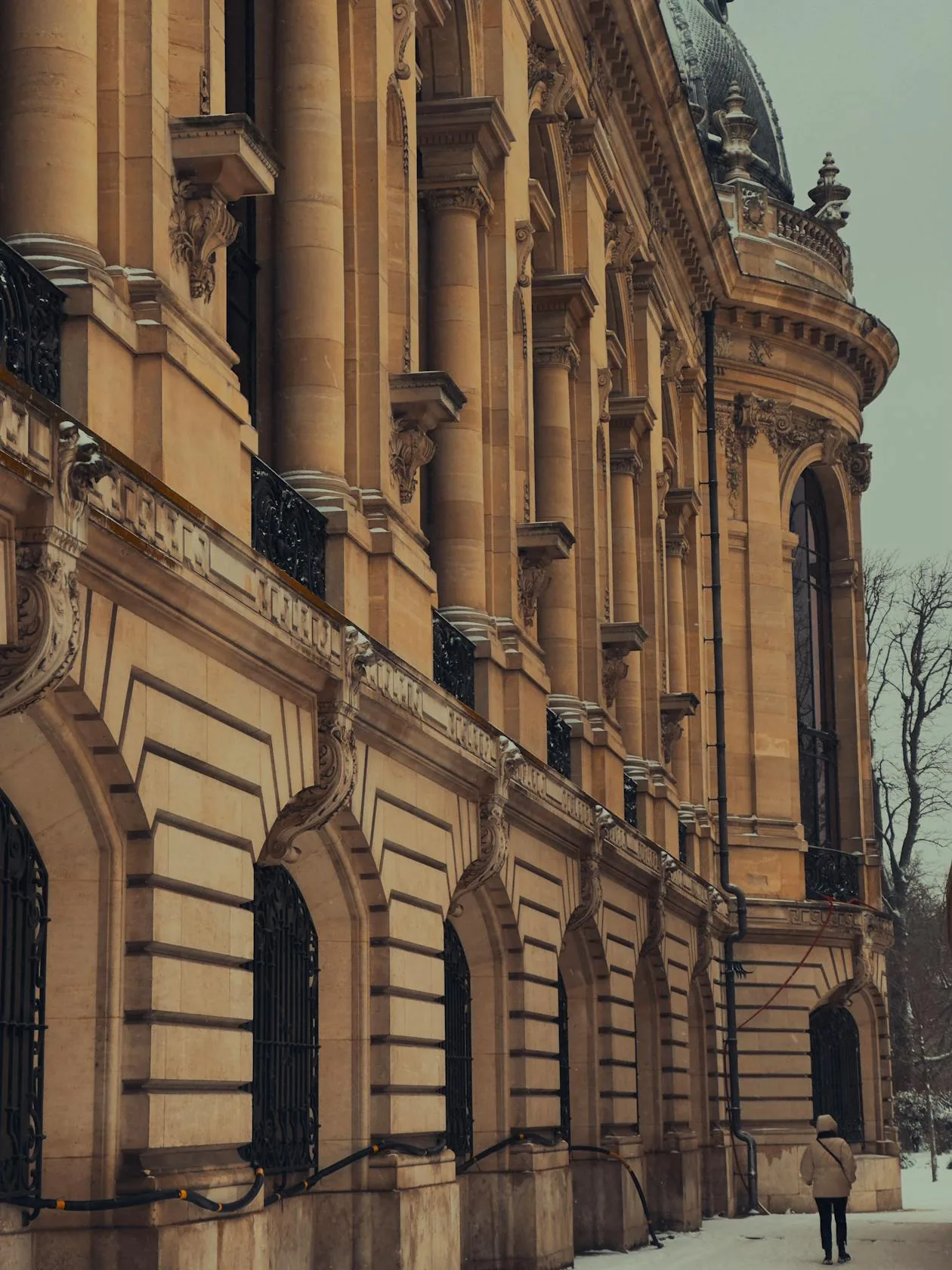
Free, Uncrowded, and Three Blocks from the Champs-Élysées. The Route Most Tourists Never Take.
Ground floor antiquities and 19th century Romanticism first — then Paris 1900 and the garden courtyard. 1 to 1.5 hours.
Get your free guide
Enter your email to unlock the full room-by-room guide. One email unlocks all Paris museum guides.
Free · No spam · Unsubscribe anytime
The Petit Palais is free and almost never crowded — which creates a strange paradox. You get the rarest thing in Paris art tourism: time in front of a masterpiece with no one pushing past you. That's worth planning around.
Start at the ground floor entrance and turn left into the Dutuit antiquities rooms — Greek Archaic bronzes (circa 520 BCE), Etruscan ceramics, and Roman glass. These rooms are almost always empty. Continue through the medieval and early Christian section and into the 19th century French painting galleries. Find Courbet's Firemen Running to a Blaze first — it's large-format, dark, and positioned where visitors often walk past it en route to Monet. Then find Room 08 for the Monet Seine painting. The Romantic gallery added in 2015 hangs Géricault, Delacroix, and Ingres together — allow 5 minutes here.
Take the main staircase to the first floor. The Tuck Collection occupies several rooms of 18th century French furniture, silverware, and decorative objects donated in 1930. This is one of the most intact representations of pre-Revolutionary French decorative arts in Paris. Most visitors skip this floor entirely — which means you can move slowly through it. The craftsmanship in the furniture joints and inlay work is best seen up close. Spend 10 minutes here rather than walking through quickly.
Back on the ground floor, find the Paris 1900 section — this is the strongest argument for visiting the Petit Palais over a larger museum. Gallé glassware, Lalique jewellery, and the complete dining room designed by Hector Guimard (Metro entrance architect) for his own home are displayed together. The Art Nouveau objects here are handled in the same way as paintings — as fine art, not applied decoration. End at the semi-circular garden courtyard. The café, Le Jardin du Petit Palais, opens onto the courtyard — check hours at the entrance, as it sometimes closes mid-afternoon.
The museum opens at 10:00. Tuesday to Thursday mornings are the quietest — the Grand Palais crowd hasn't crossed the road yet. By 13:00 on weekends, all three rooms of the 19th century section can feel congested.
The permanent collection is free with no booking. The temporary exhibition (currently 'Artists' Faces', until 19 July 2026) costs €12 — purchased at the welcome desk inside. The desk is a 30-second walk from the entrance. No online booking required.
Free lockers are available in the entrance hall. Large backpacks are not permitted in the galleries. Visitor reviews consistently flag this — if you arrive with luggage or a large bag, budget 5 minutes at the lockers before entering.
The museum extends to 20:00 on Fridays and Saturdays for temporary exhibitions. Friday evenings draw fewer visitors than weekend daytime. If your schedule allows, it's the best window for the permanent collection after weekday mornings.
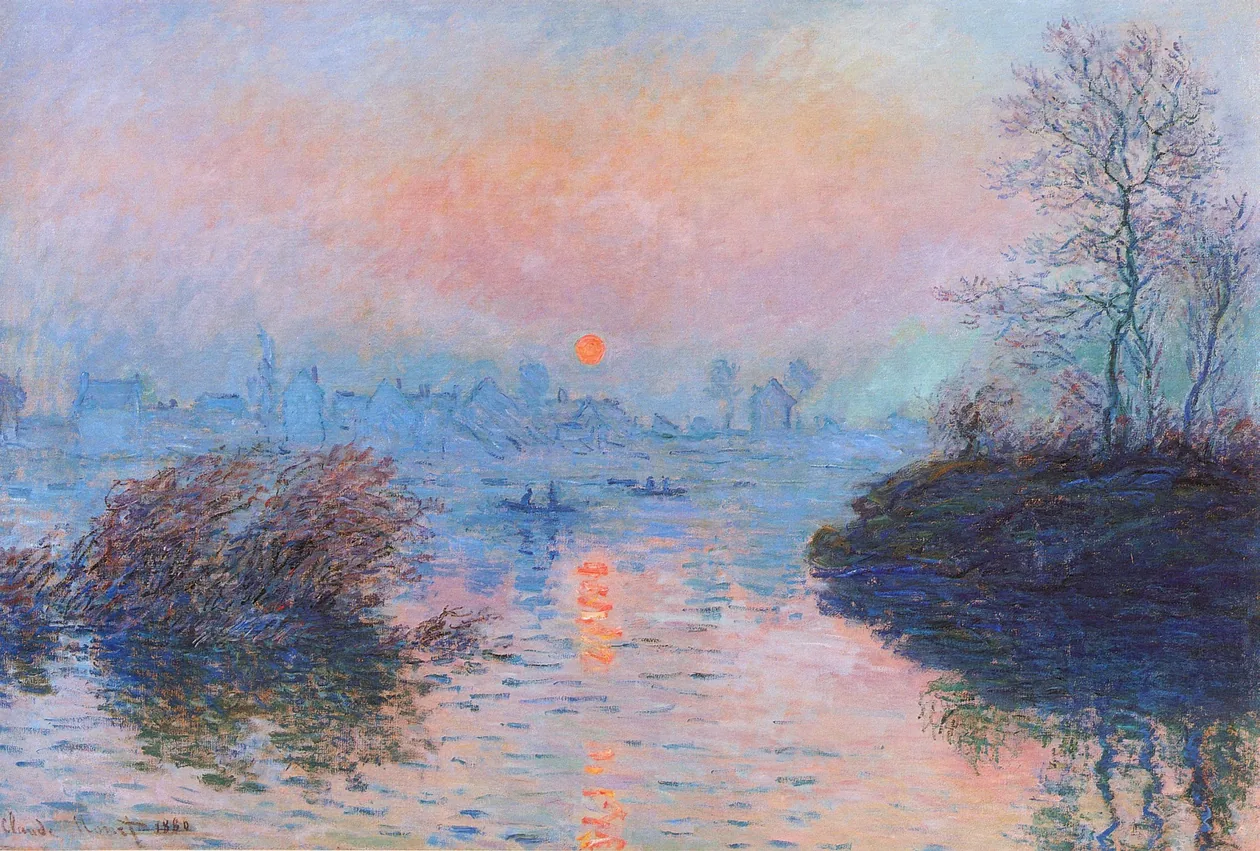
Why it matters: Monet painted this in 1880 during one of the most difficult periods of his life — his first wife Camille had died the previous year, and he was living in Vétheuil in financial difficulty. The painting is from his winter series on the Seine, and it shows a Monet most visitors don't expect: quiet, atmospheric, technically restrained.
What to notice: Look at the difference between the upper and lower halves. The upper third — mist, sky, cold air — is painted in thin, fluid strokes. The water below uses thick impasto marks with bright highlights. One composition, two different physical techniques. The orange-pink light of the sunset doesn't dominate the painting the way a Turner would — Monet subordinates colour to atmosphere.
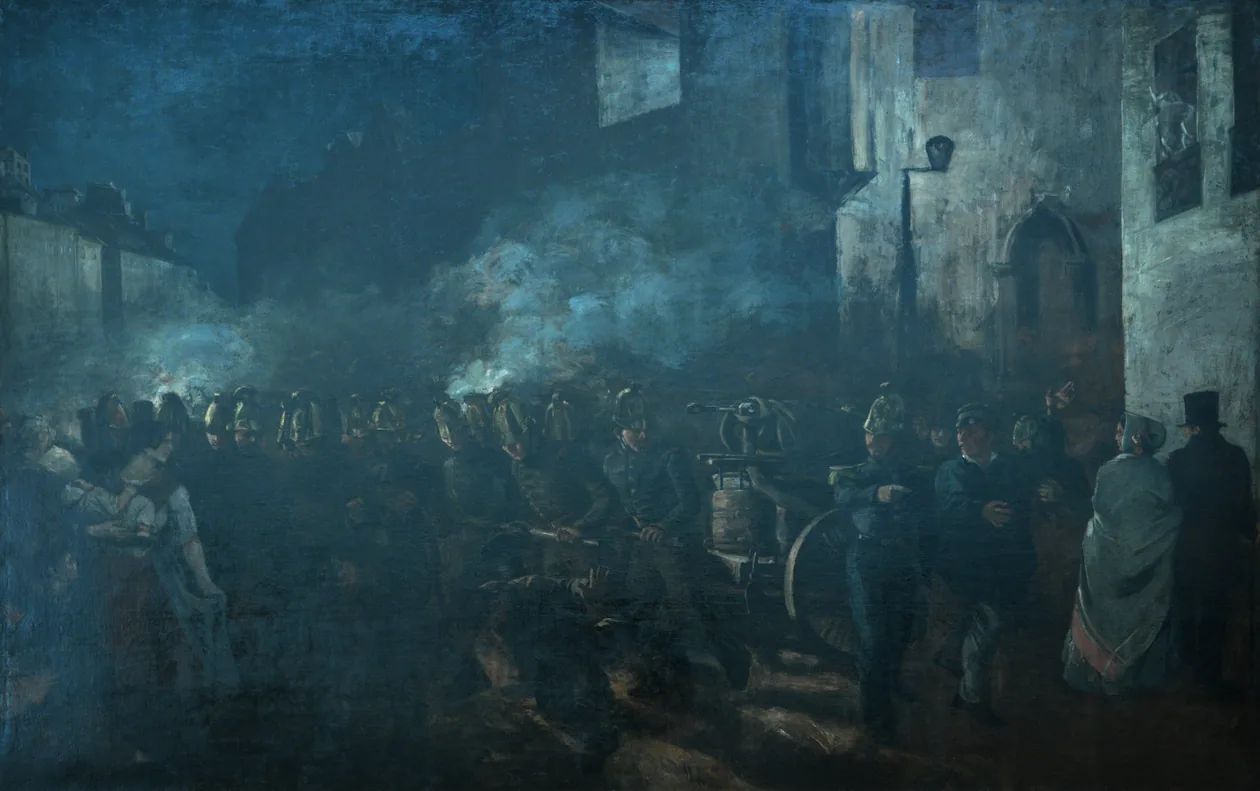
Why it matters: Found rolled up in Courbet's studio after his death, donated to the City of Paris by his sister Juliette. It's one of his most unusual large-format works — a night scene, urban, depicting the industrial machinery of a fire cart against the medieval architecture of old Paris. It reads like a manifesto about a city in transition.
What to notice: Notice how the firemen's arm gestures extend toward — and seem to push beyond — the right edge of the canvas. Courbet rarely used this compositional device. The lower half of the painting is entirely figures in motion; the upper half opens to a night sky and urban skyline. On the right, a Gothic gate; on the left, a gas lamp. The contrast is deliberate: Courbet was documenting Haussmann's Paris replacing medieval Paris in real time.
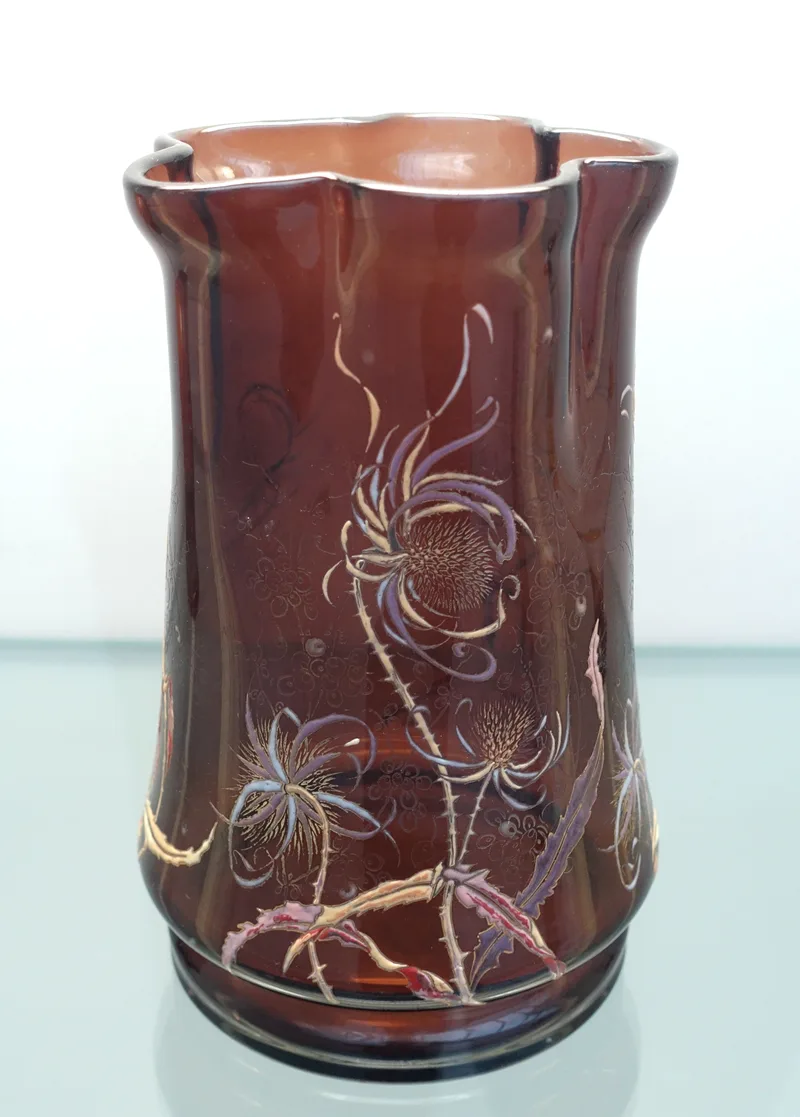
Why it matters: The Petit Palais holds one of the strongest Art Nouveau decorative arts collections in Paris, covering glass by Gallé and the Daum brothers, jewellery by Lalique and Fouquet, and furniture by Hector Guimard. The Guimard dining room — installed for his own home — is displayed intact. This is not secondary art. The Petit Palais treats it as the equal of the paintings upstairs.
What to notice: Get close to the Gallé pieces. The layering technique — multiple glass colours cut back to reveal designs — is not visible from a distance. The botanical motifs are not painted on; they're carved through layers of coloured glass. The translucency changes entirely depending on whether light comes from behind or in front of the object. Move around a single piece rather than looking from one angle.
How well did you look?
3 quick questions about what you just saw
Visit complete!
Share your visit or save it for later
Your collection