A Park That Decided Not to Be a Park
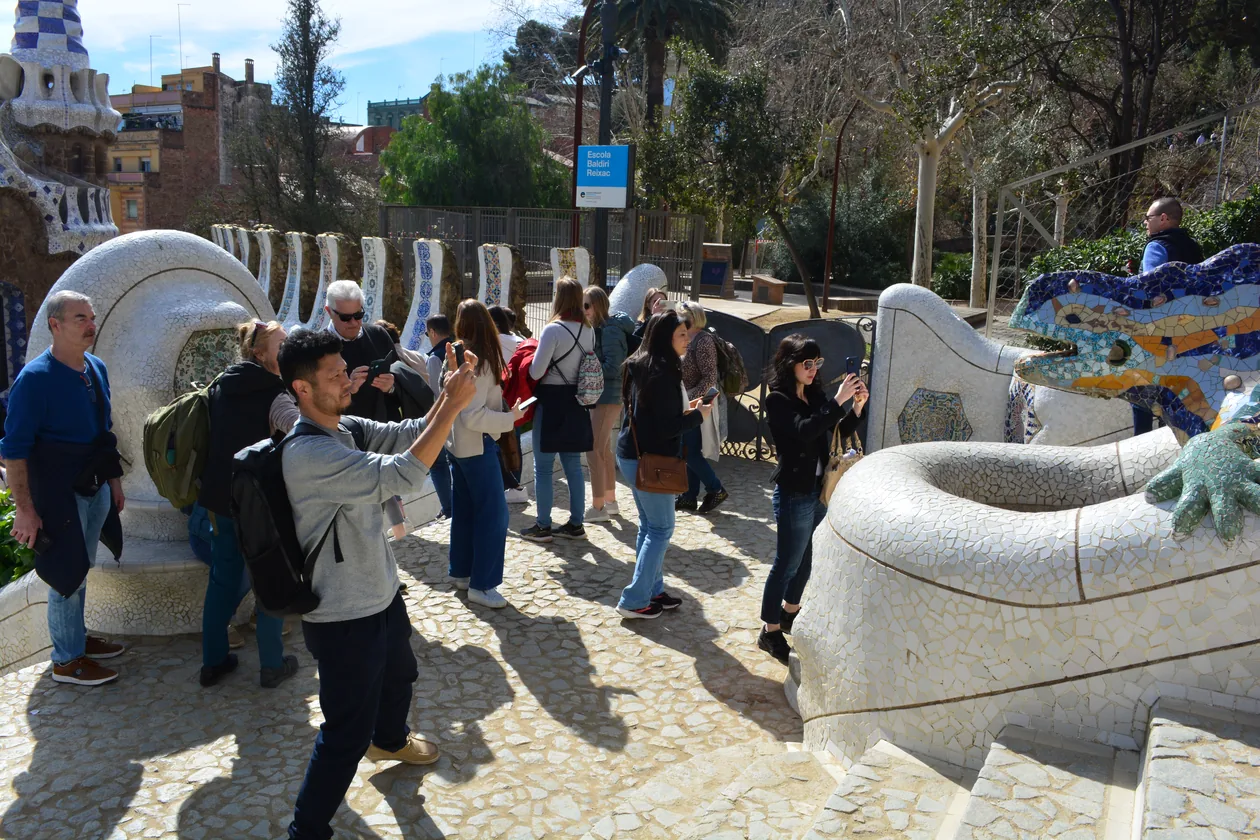
Gaudí's failed housing estate, from the Dragon staircase up to Casa Gaudí — the route most tour groups cut in half.
Get your free guide
Enter your email to unlock the full room-by-room guide. One email unlocks all Barcelona museum guides.
Free · No spam · Unsubscribe anytime
Gaudí was hired to build a luxury suburb. Only two houses sold. What survived is the experiment, not the business plan — and that's why it still works.
Enter through the main gate on Olot street, between the two gingerbread pavilions (Casa del Guarda on the left, the concierge house on the right). The staircase splits around el Drac, the trencadís salamander that everyone photographs. Walk past him first. Climb three steps, then turn and shoot: the queue clears, and the Hypostyle Hall frames the Dragon from behind. It's the angle most visitors miss.
The Hypostyle Hall was planned as the market for the housing estate that never happened. The 86 Doric columns lean slightly inward — Gaudí tilted them to match the force lines of the plaza above. Look up at the ceiling: four large mosaic suns and dozens of smaller medallions by Josep Maria Jujol. Most visitors walk straight through and never look up. The ceiling is the ceiling of the Plaça de la Natura above. You'll stand on top of it in a minute.
Climb the final staircase to the Plaça de la Natura. The 110-metre Banc Serpentejant wraps the edge like a tide line. Sit down — Jujol shaped the curves to fit a human back. The view runs from the sea to Tibidabo. From the plaza's west side, follow the pink path 4 minutes to the Casa-Museu Gaudí, where Gaudí lived for 20 years (€9, separate ticket). Almost no group tour includes it. That's why it's the park's quietest room.
First entry of the day. Coach tours arrive from 10:30. The Dragon staircase is photographable without waiting, and the morning light hits the trencadís at its warmest angle.
Bus 24 drops you near the Carmel gate on the top side. Skip the 15-minute uphill walk from Lesseps or Vallcarca metro, and you arrive fresh instead of sweating.
Where Gaudí lived from 1906 to 1926. Original furniture he designed for Casa Batlló and La Pedrera, his bedroom, his drawing desk. Add 20-30 min and buy the combo ticket at the gate.
Coach tour peak. Even with a timed ticket, the Plaça fills with photo lines at the bench. If that's your only window, do Casa Gaudí first while the crowd sits at the bench.
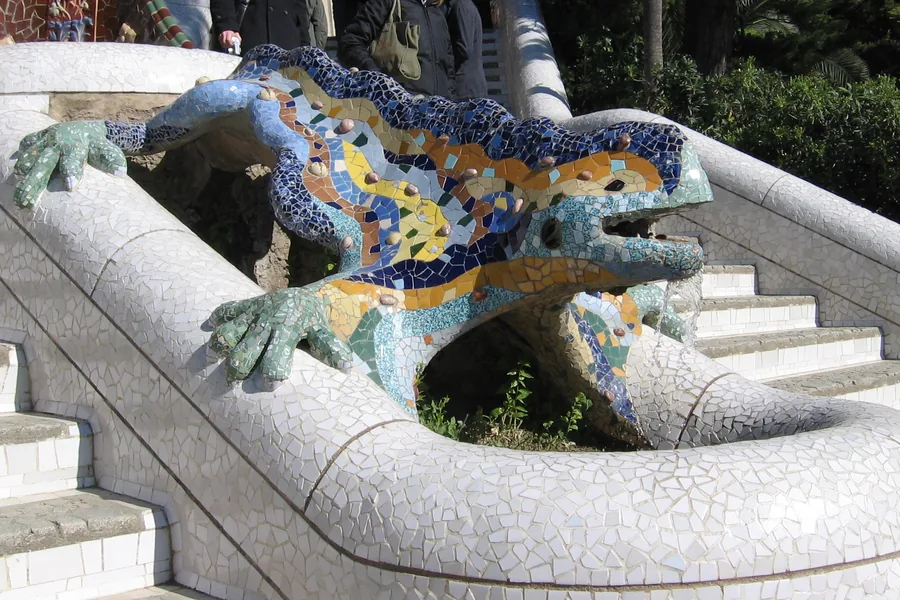
Why it matters: Not actually a dragon. Most scholars read it as a salamander referring to alchemical symbolism, or a nod to the Nîmes coat of arms Güell admired. Gaudí's team covered it in trencadís — broken ceramic pieces recycled from local factories. It's the technique Gaudí turned into a signature across the whole park.
What to notice: Look at the joints between ceramic fragments. No two pieces match. Gaudí's crew improvised each placement on site, which is why every inch of the lizard has a slightly different palette. The mouth spouts water when the fountain runs — mornings are the best time to catch it.
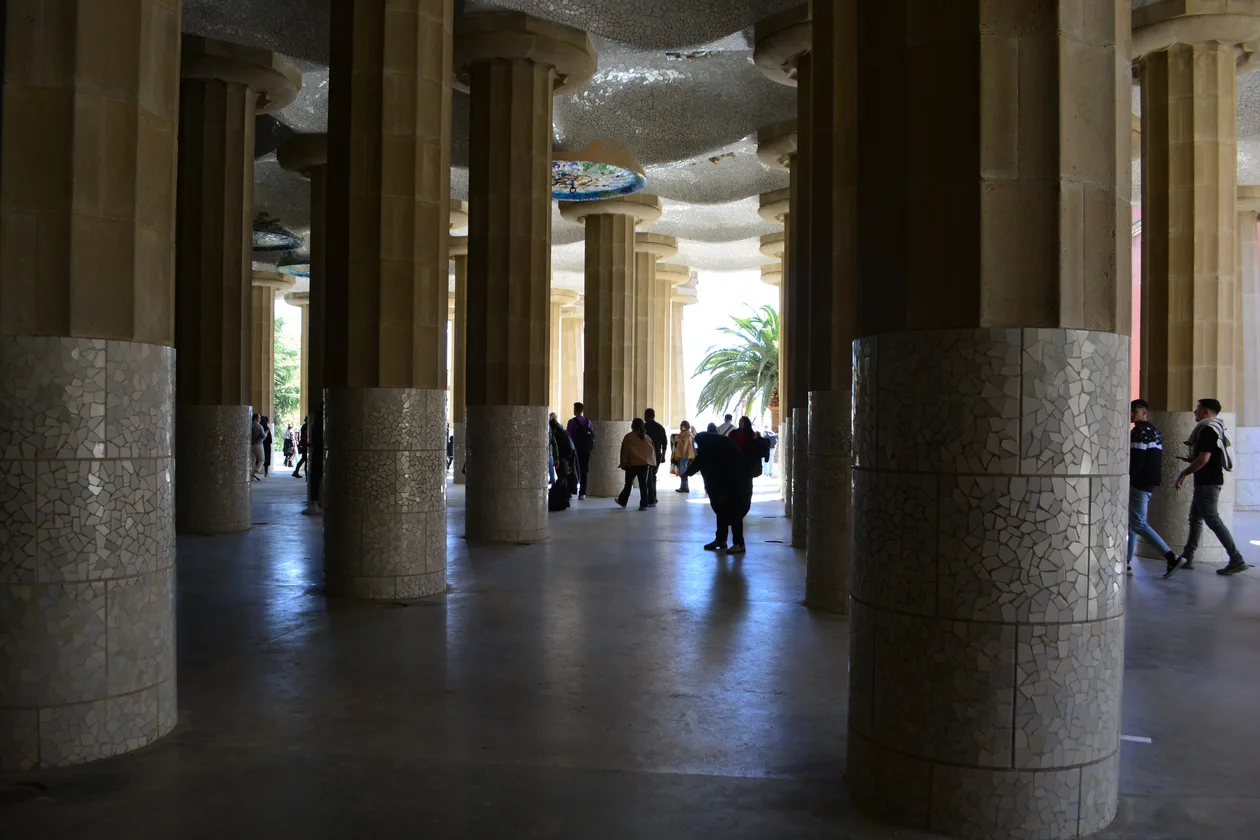
Why it matters: Gaudí gave his collaborator Jujol the ceiling as a blank canvas. Jujol filled it with four large sun medallions and dozens of smaller roundels made from recycled bottles, tiles, and broken china. This is where trencadís became an art form in its own right, not a surface treatment.
What to notice: Find the four big suns — they mark the cardinal points. Between them, look for fragments of cups, bottle bases, even porcelain dolls. Jujol told his workers to bring whatever they broke at home. The ceiling is a collective self-portrait of the neighbourhood in 1910.
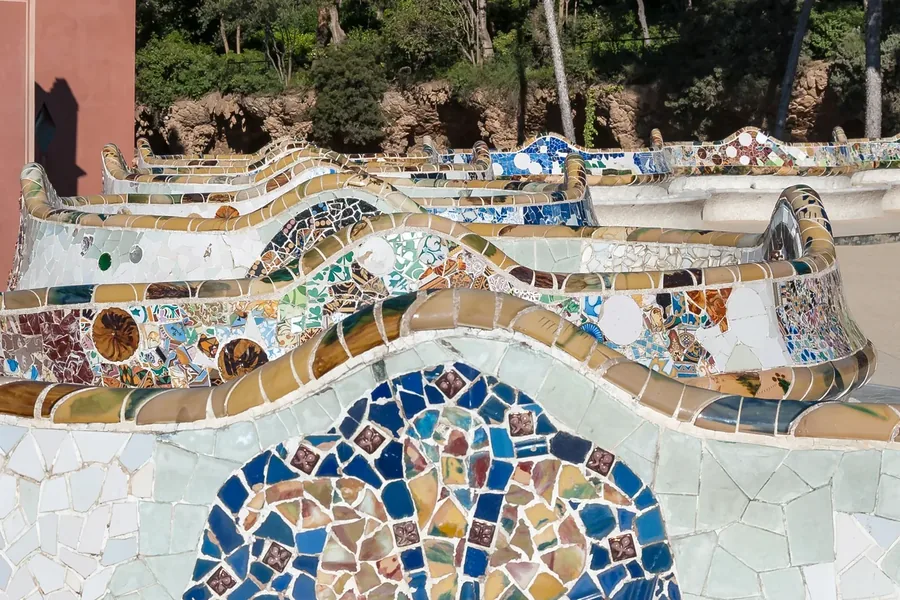
Why it matters: At 110 metres, it's one of the world's longest benches and also one of the most comfortable. Jujol reportedly had workers sit in wet clay to cast the back curve, then shaped the bench to match a human spine. The mosaic patterns were his own — Gaudí signed off on the structure and left the surface to his younger collaborator.
What to notice: Sit on the inward curves (they face the Plaça) rather than the outward ones (facing the view). The inward curves were designed for conversation; the outward ones for the panorama. Most visitors do this wrong. Also: the bench doubles as drainage — water flows through hidden channels to cisterns beneath the Hypostyle.
How well did you look?
3 quick questions about what you just saw
Visit complete!
Share your visit or save it for later
Your collection