5 Paris Museums to Skip on Your First Visit (2026)
Paris has too many museums for one trip. Here are five you can save for your second — so you can see the rest properly.
Paris has more famous museums than any city in Europe. It also has finite hours in your trip. The maths doesn't work in your favour: even three days won't cover the headline list, and visitors who try come back exhausted and remembering nothing.
The trick isn't picking the best ones. The trick is knowing which famous ones to skip — so the rest land properly.
Here are five Paris museums you can leave for trip two, with no guilt.
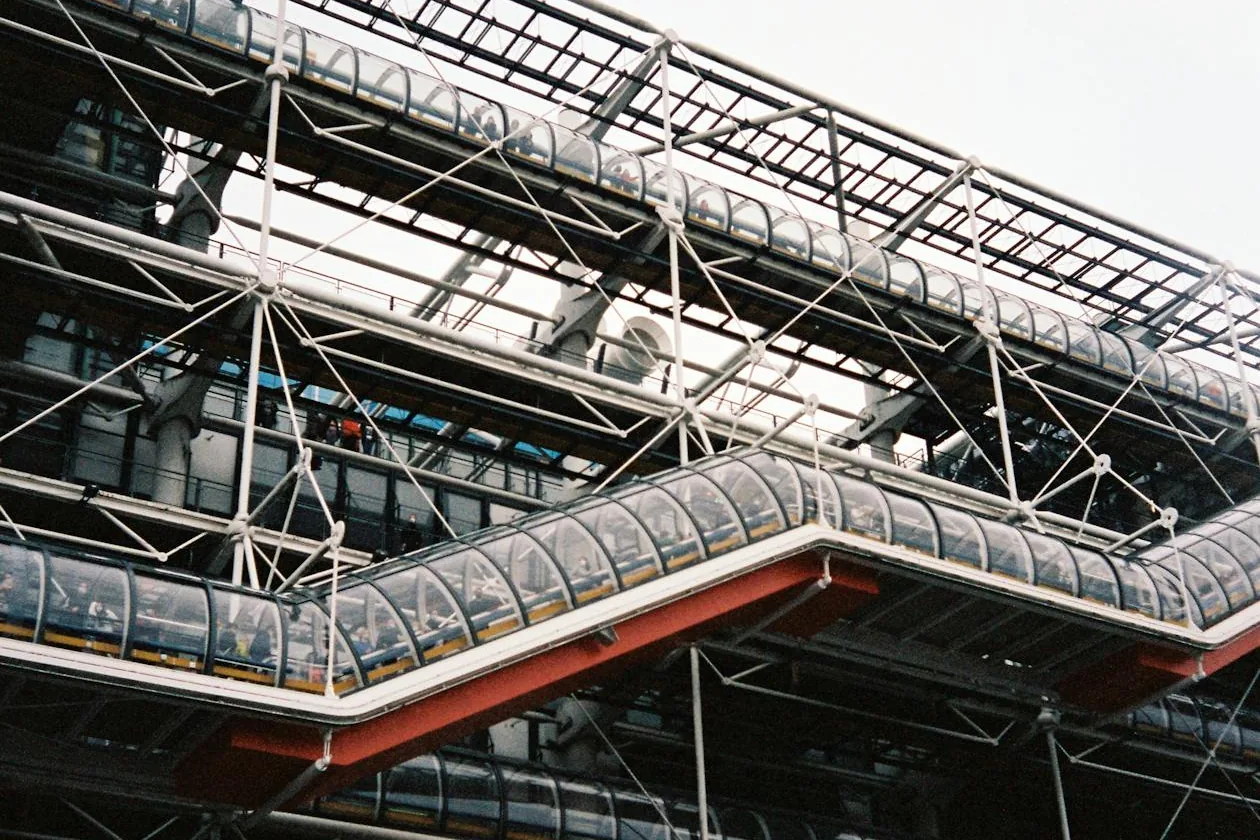
1. The Centre Pompidou
Easy one. The Pompidou closed in September 2025 for a five-year renovation. It reopens around 2030. You couldn't visit it now if you wanted to.
The collection is partly redistributed — some pieces at the Grand Palais, some travelling. If you came to Paris specifically for Brancusi or the modern collection, our where to see Pompidou art guide tracks where the major works are now. Otherwise: the Musée d'Art Moderne (free, walking distance from the Eiffel Tower) covers the same era with a smaller but solid permanent collection.
2. The Musée d'Orangerie
The Orangerie is two oval rooms with Monet's Water Lilies wrapping the walls. It's beautiful. It's also an hour-long experience, charged at €12.50, that overlaps with what the Orsay does at scale.
If you came to Paris to stand inside the Water Lilies specifically, go. It's worth it for that. If Monet is one of many reasons, the Orsay has Water Lilies adjacent rooms with five other Monets, plus everything from Manet to Cézanne. Same time investment, ten times the collection. The math favours the Orsay for first-timers.
3. The Musée Carnavalet
The Carnavalet is the Museum of Paris — the city's history across two restored mansions in the Marais. Free admission. 3,800 objects. Genuinely important.
It's also text-heavy and assumes you know names like Robespierre, Haussmann, and Madame de Sévigné. First-time visitors who don't have the context wander through pretty rooms feeling slightly lost. Locals love it because they know the names. Save it for the trip where you've watched a few French history documentaries first.
4. The Musée du Quai Branly
Non-European art and ethnography across Africa, Oceania, the Americas, and Asia. Architecturally striking — Jean Nouvel building, vertical garden façade. Strong collection. Strong opinions about colonialism, repatriation, framing.
The reason to skip on a first Paris trip is theme, not quality. If your trip is built around European art (Louvre + Orsay + impressionism), the Quai Branly is a different conversation entirely. Brilliant, but it pulls you off course. Better as the centrepiece of a return trip themed around it.
5. The Musée Rodin
The Rodin gets recommended in every Paris guide because the gardens are lovely and The Thinker is on the lawn. Both true.
It's also a 30-40 minute Métro ride from the Louvre/Orsay axis, requires its own ticket, and competes with limited time. On a 3-day trip with two large museums already on the schedule, Rodin is what gets cut last and resented most. Save it for a longer stay or a sculpture-focused return trip when you can give it a proper morning.
What should you do instead?
Two large museums (Louvre + Orsay) plus one or two smaller picks based on what you actually love. That's the trip that works. Use the saved time to walk: Île Saint-Louis at golden hour, the Marais after dinner, the Seine quays without a destination. The Paris that lives between museums is the one most first-timers miss because they tried to do everything.
For the positive version of this list, see best art museums in Paris. For the math on whether a museum pass pays off given this curated approach, see Paris Museum Pass: is it worth it in 2026. For a single-day version, see Paris in one day.
Frequently asked questions
Is the Centre Pompidou open in 2026?
No. The Pompidou closed in September 2025 for a five-year renovation, reopening targeted for 2030. The collection is partially redistributed — some works are at the Grand Palais, others on tour. If you want to see Pompidou-style modern art in Paris in 2026, head to the Musée d'Art Moderne (free permanent collection) or the Fondation Louis Vuitton instead.
Is the Musée d'Orangerie worth it for a first-time visitor?
Only if Monet's Water Lilies are a specific reason you came to Paris. The Orangerie is two oval rooms — one experience, an hour at most. If you're squeezing in three or four museums in a long weekend, the Orsay covers Monet too and gives you ten times the collection for the same time investment.
Should you skip the Carnavalet on your first trip to Paris?
Yes — unless you already know French history well. The Carnavalet is the Museum of Paris, telling the city's story through 3,800 objects across two mansions. Beautiful, free, important. Also dense, text-heavy, and frustrating if you don't recognize the names. Save it for trip two when you have context.
What Paris museums should a first-time visitor prioritize?
The Louvre and the Musée d'Orsay, in that order. Both are non-negotiable for first-timers. After those, pick by interest: Rodin if you love sculpture, Orangerie if Monet specifically, Picasso if 20th-century. The Quai Branly, Carnavalet, Pompidou, and the smaller Latin Quarter museums all reward return visits more than first ones.
How many museums can you realistically do in three days in Paris?
Three or four, comfortably. Two large (Louvre + Orsay) plus one or two smaller (Orangerie, Rodin, Picasso, or a free option like Petit Palais). Trying to fit five or six means rushing all of them. Most first-timers regret the marathon version more than the curated one.
Last verified: May 2026
This is a take, not a verdict. If the Pompidou reopens early, if your trip is themed around Rodin, if you've already done the headline museums on a previous visit — the list shifts. The point isn't the list. The point is asking the question instead of trying to do everything.
- Best Art Museums in Paris (the positive list)
- Louvre vs Musée d'Orsay: Which to Visit
- Where to See Pompidou Art While the Museum Is Closed
- Paris Museum Pass: Is It Worth It in 2026?
- Paris in One Day: A Realistic Art Itinerary
- Musée de l'Orangerie Tickets 2026

Or skip the planning: I'll do it for you
Send me your dates. I’ll plan which museum goes on which day, around closures, free days and timed entries, and check every date against the official museum sites myself. In your inbox the same day.
 Planned by Adrià, who writes these guides