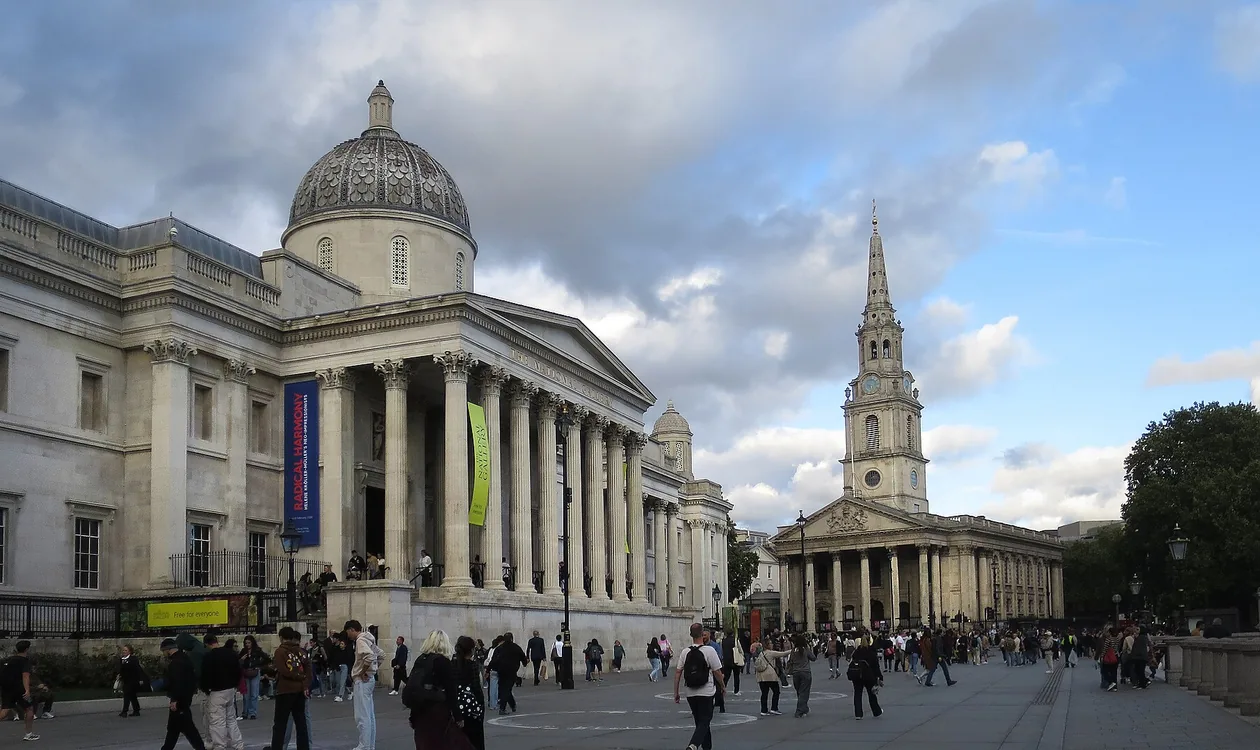
From Van Eyck to Van Gogh in One Morning
A section-by-section route through the Sainsbury Wing, the Turner rooms, and the Impressionists — all free.
Get your free guide
Enter your email to unlock the full room-by-room guide. One email unlocks all London museum guides.
Free · No spam · Unsubscribe anytime
Because it's free, you can afford to slow down. Spend twenty minutes with one painting. Come back tomorrow for a different room. Most museums don't give you that.
Enter from Pall Mall East — it's quieter than the Trafalgar Square doors. The new double-height foyer opens in front of you. Head upstairs to the Sainsbury Wing galleries. Leonardo's Virgin of the Rocks is here (Sainsbury Wing, Room 66 area). So is Botticelli's Venus and Mars — look at the bottom right corner for the detail most visitors miss. The wasps nesting in Mars's armour. The medieval and early Renaissance rooms reward slowing down: the gold-ground panels, the scale of the altarpieces.
Cross into the main Wilkins Building. Room 52 holds van Eyck's Arnolfini Portrait. Stand close enough to see the convex mirror on the back wall — it reflects two additional figures and the room behind the viewer. Above it: the inscription 'Jan van Eyck was here.' Room 51a, just before, has the Burlington House Cartoon by Leonardo — the only surviving large preparatory drawing and consistently quiet. Room 40 is where Turner's Fighting Temeraire hangs. Give it five minutes. The contrast between the steaming black tug and the glowing ship is the whole argument.
Room 43 holds Van Gogh's Sunflowers and several Monet canvases. On weekday mornings and weekend afternoons, it's the most crowded room in the building. On Friday evenings after 19:00, it empties. That's the window to stand in front of Sunflowers without being jostled. Van Gogh's yellow-background version is here — look at the paint surface. The thickness of brushstrokes shifts between petals and background in a way that's obvious in person and invisible in reproduction.
The Impressionist rooms — Room 43 and its neighbours — are noticeably quieter in the last two hours before closing on Fridays. The museum stays open until 21:00. It's the least crowded the building gets on any day.
Monday to Friday, a free 60-minute tour departs from the main hall at 14:00. Five or six selected works, no booking required. Visitors consistently say the guides add context the audio guide doesn't cover. The route changes weekly.
The Sainsbury Wing entrance on Pall Mall East (a short walk from the main Trafalgar Square steps) is the least busy way into the building. No sign advertises it loudly. On peak days, it's a meaningful difference.
Large bags and rucksacks are not permitted in the galleries. The cloakroom (ground floor, free) takes them. Factor in two minutes each way. Trying to carry a large bag in will send you back to the entrance.
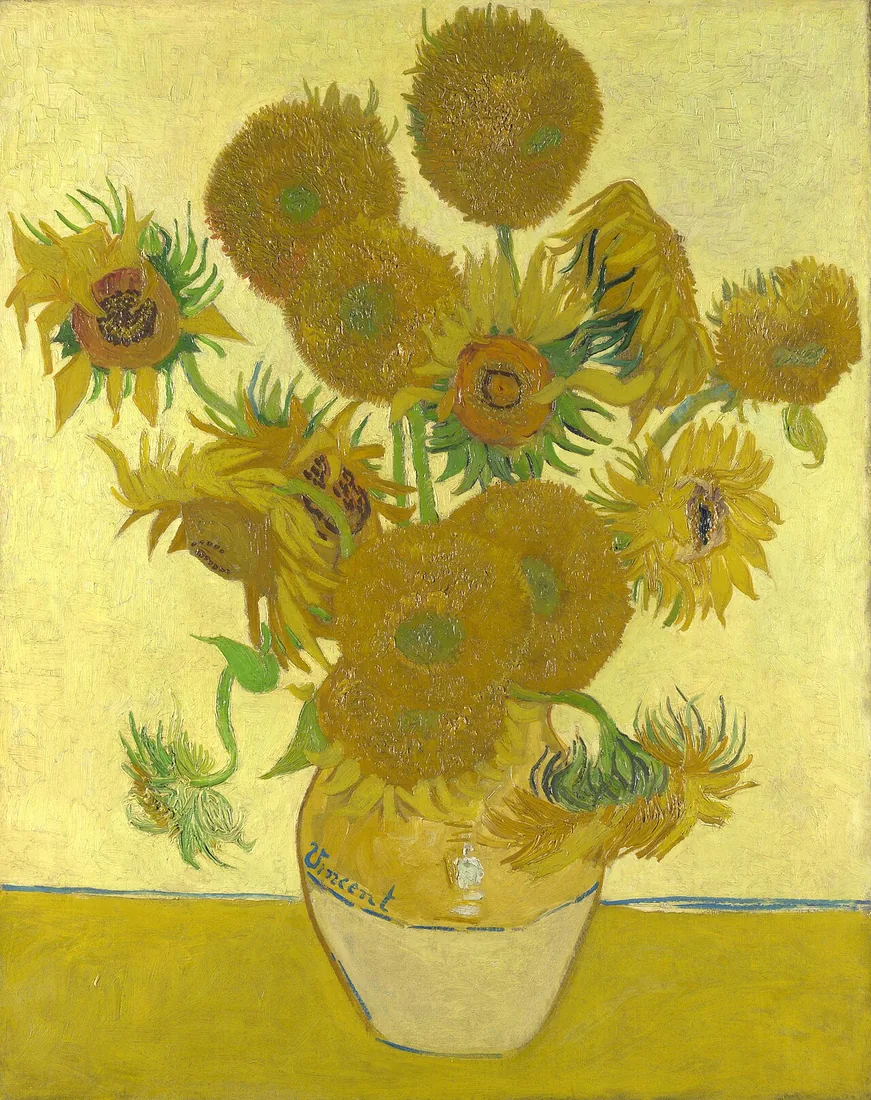
Why it matters: Van Gogh painted seven versions of this subject. This is one of two with a yellow background, making the paint surface the visual puzzle rather than the composition. He sent this version to Gauguin to decorate his room in Arles.
What to notice: Look at the thickness of individual brushstrokes — it varies dramatically between the petals, the stems, and the background. He was building three-dimensional texture. In a reproduction, this disappears. In person, the paint surface is the subject.
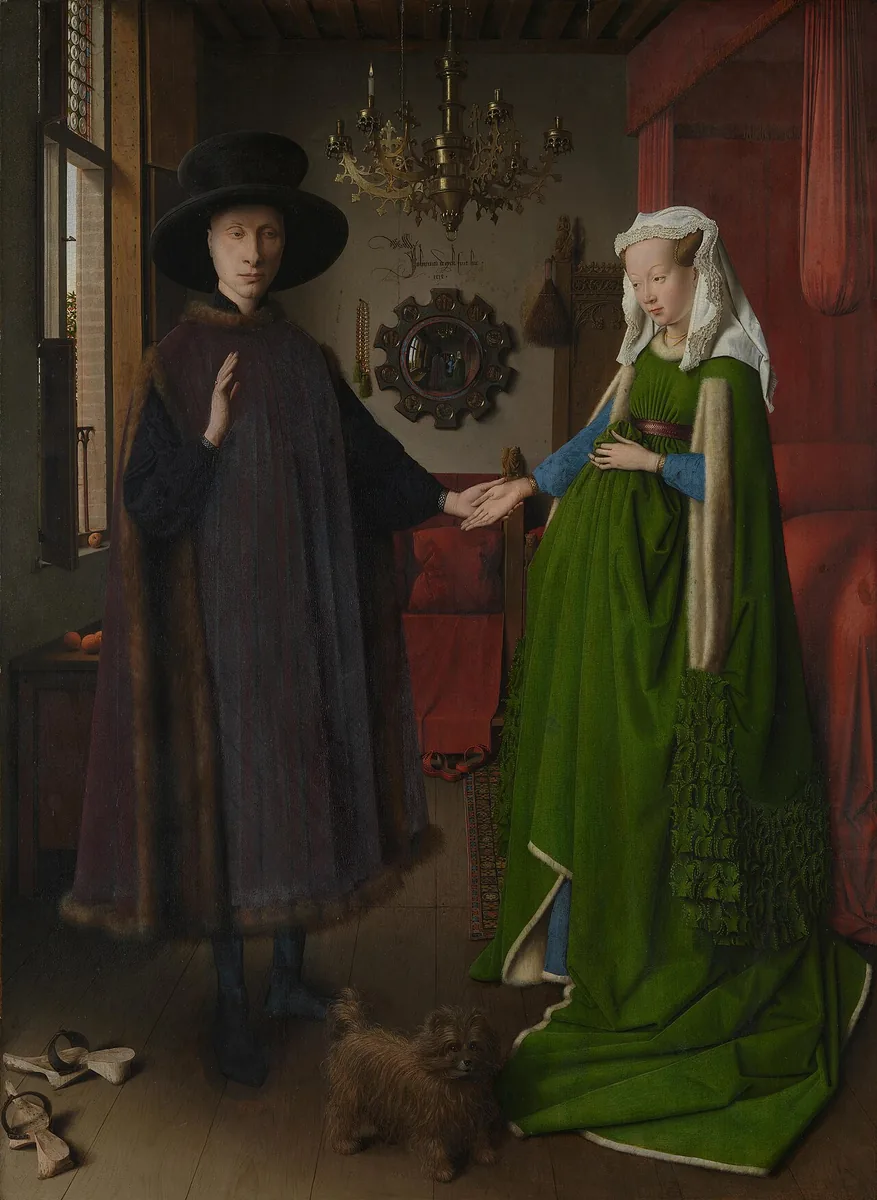
Why it matters: Van Eyck signed this painting with an inscription above the mirror that reads 'Jan van Eyck was here' — not a casual flourish, but a legal witness statement. The painting likely records a significant event, with the artist as one of the witnesses.
What to notice: Find the convex mirror on the back wall. Look closely at the reflections inside it: two figures face into the room from the doorway behind you. One is likely van Eyck himself. The mirror reflects what the painting cannot show.
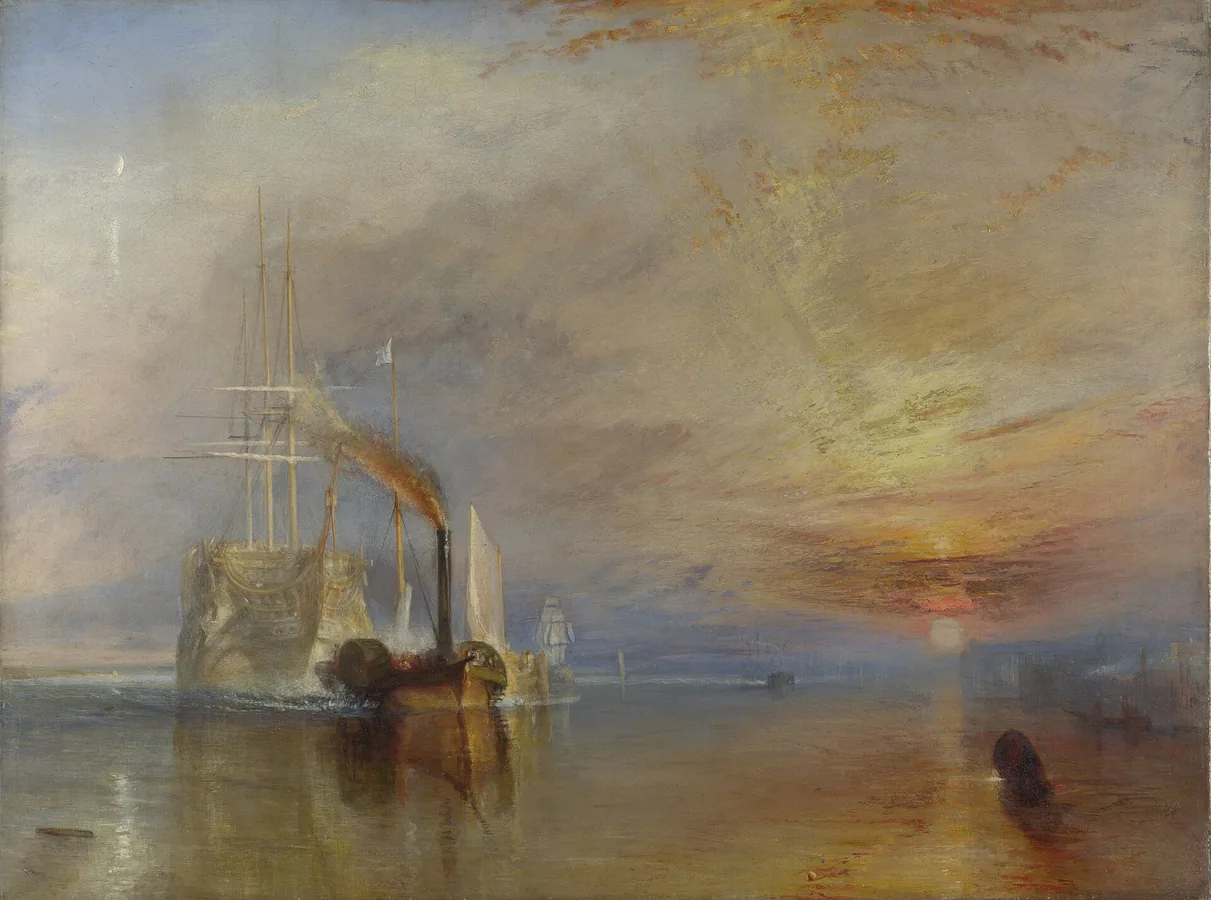
Why it matters: The Temeraire fought at the Battle of Trafalgar in 1805. By 1838, it was obsolete — sold for scrap and towed up the Thames by a steam tug. Turner witnessed the tow and painted it from memory the following year. Voted the greatest British painting in a public poll.
What to notice: The steam tug is black, squat, belching smoke. The Temeraire is pale, ghostlike, almost translucent against a sunset sky. Turner wasn't painting a historical record — he was painting an elegy. The contrast is the argument.
How well did you look?
3 quick questions about what you just saw
Visit complete!
Share your visit or save it for later
Your collection