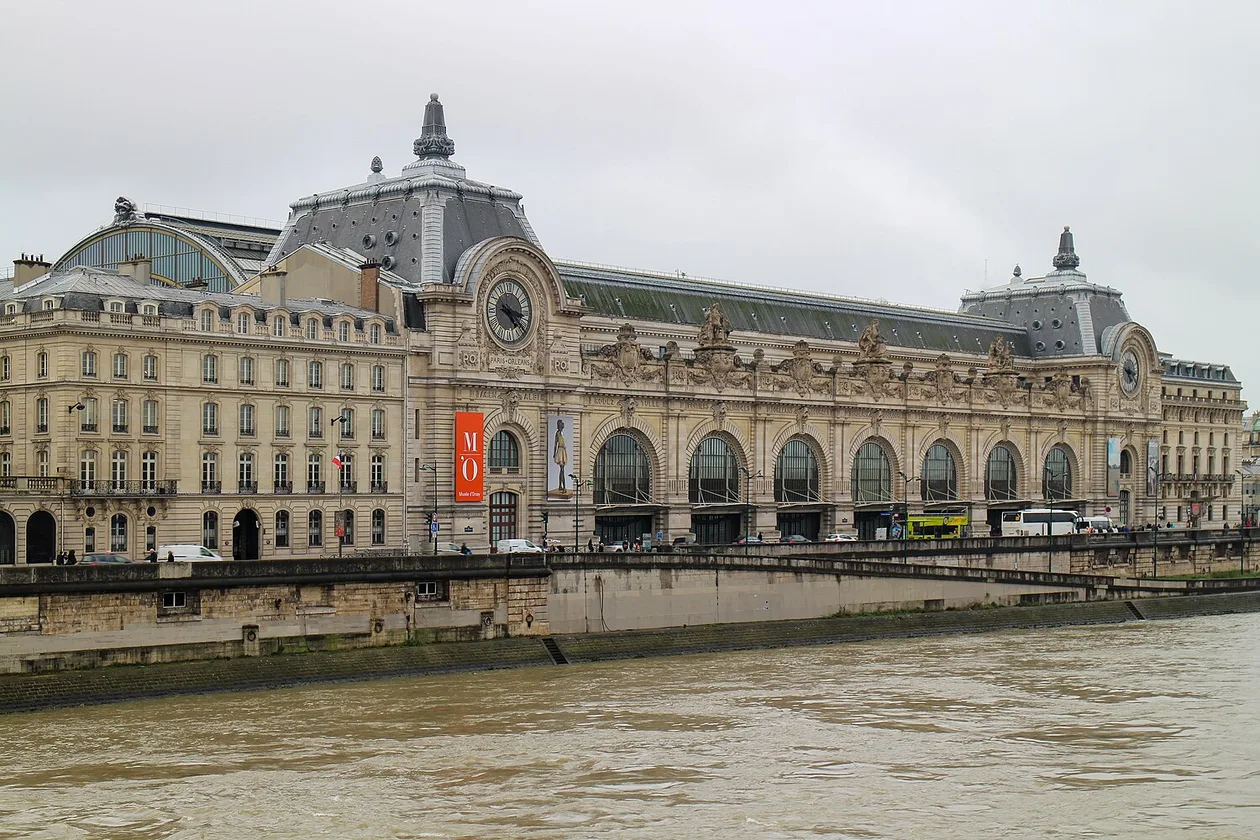
2,000 Masterpieces in a Train Station. The Route Most Visitors Get Wrong.
Level 5 first — Monet, Renoir, Van Gogh, Degas. Then Level 2 Post-Impressionists. Then the ground floor Manet. The order changes everything.
Get your free guide
Enter your email to unlock the full room-by-room guide. One email unlocks all Paris museum guides.
Free · No spam · Unsubscribe anytime
Most visitors start at ground level and reach Van Gogh exhausted. The clock window light is best at sunset, but only if you have energy left to climb to Level 5. Start at the top.
Take the main staircase or elevator to the top floor immediately after entry. The natural skylight floods this gallery — you're standing inside the converted train station's original roof. Walk the full length of the Impressionist gallery (the Seine side). Hit the anchor works: Renoir's Bal du moulin de la Galette (Room 32, right side), then the Monet serial paintings, then the Degas pastels. Save the clock window for last — it frames Sacré-Cœur and the Seine. The 24 Van Goghs at the end (Rooms 36–37) lead naturally into Level 2. For a personal take on the highlights, see Artsy Traveler's Orsay guide.
Drop one level to access Van Gogh's Church at Auvers, Self-Portraits, and the full Post-Impressionist narrative. The rooms feel less crowded because most visitors never reach this level. The Belle Époque restaurant here has better light and views than the ground-floor cafeteria. Spend 2–3 minutes with each Van Gogh; the brushwork rewards close looking. Rodin's sculptures anchor the end of the section.
Return to ground level for the final section. The central hall sculpture display frames the route. Focus on Manet's Olympia (Room 14, left side), a painting that broke every rule and started the whole Impressionist revolution. Courbet's realism and academic painters set the context. By now, you've seen the full arc from Realism through Post-Impressionism without retracing your steps.
The ticket price drops to €12. Visitor numbers collapse after 18:00. The light through the great clock window at sunset is the best photograph in Paris, and you'll have it to yourself.
The energy difference is real. Level 5 is bright, energetic, densest with masterpieces. Ground floor is quieter but can feel exhausting if you're already tired. Reverse the typical route. You'll remember it more.
This historic train-station clock frames the Seine and Sacré-Cœur. It's the museum's most photographed spot and the best vantage point for the whole city. Arrive early or stay late to avoid queue positions.
Lockers and bag check are included with entry. Large backpacks and luggage cannot be brought into galleries. It's not a choice — staff will turn you back.
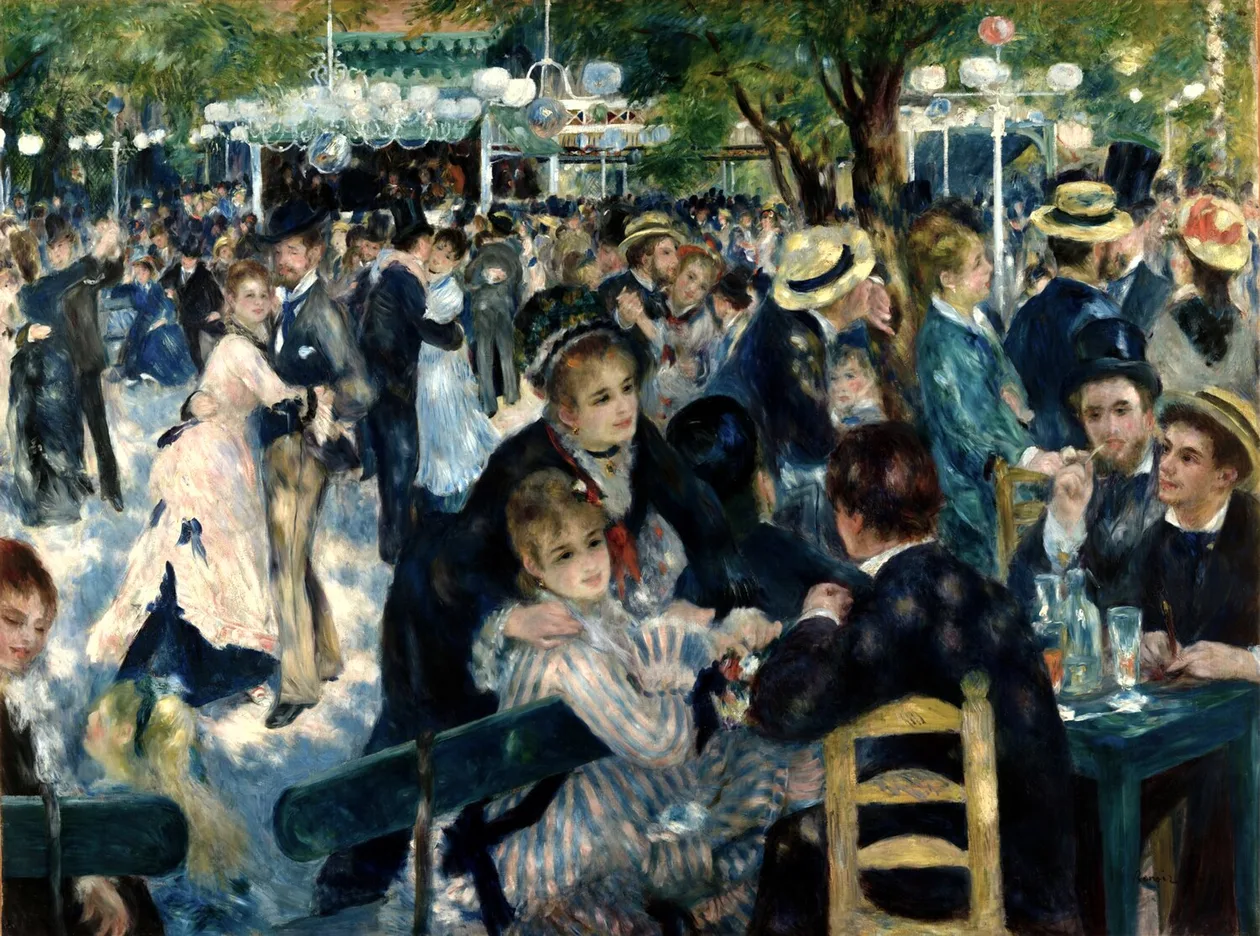
Why it matters: Renoir's most famous work. It captures Montmartre's open-air dance culture in one composition — light, movement, flirtation, the exact moment before Impressionism became mainstream. It's joy in paint.
What to notice: Stand back first. Watch how light fragments across the faces and dresses. The white paint strokes create movement without defining it. Move closer. Renoir layered colours instead of blending — blues, pinks, yellows sitting side by side. The shadows are not grey or black; they're translucent. The couple in the left foreground is absorbed in each other while the crowd moves around them. That tension between intimacy and public space is the whole painting.
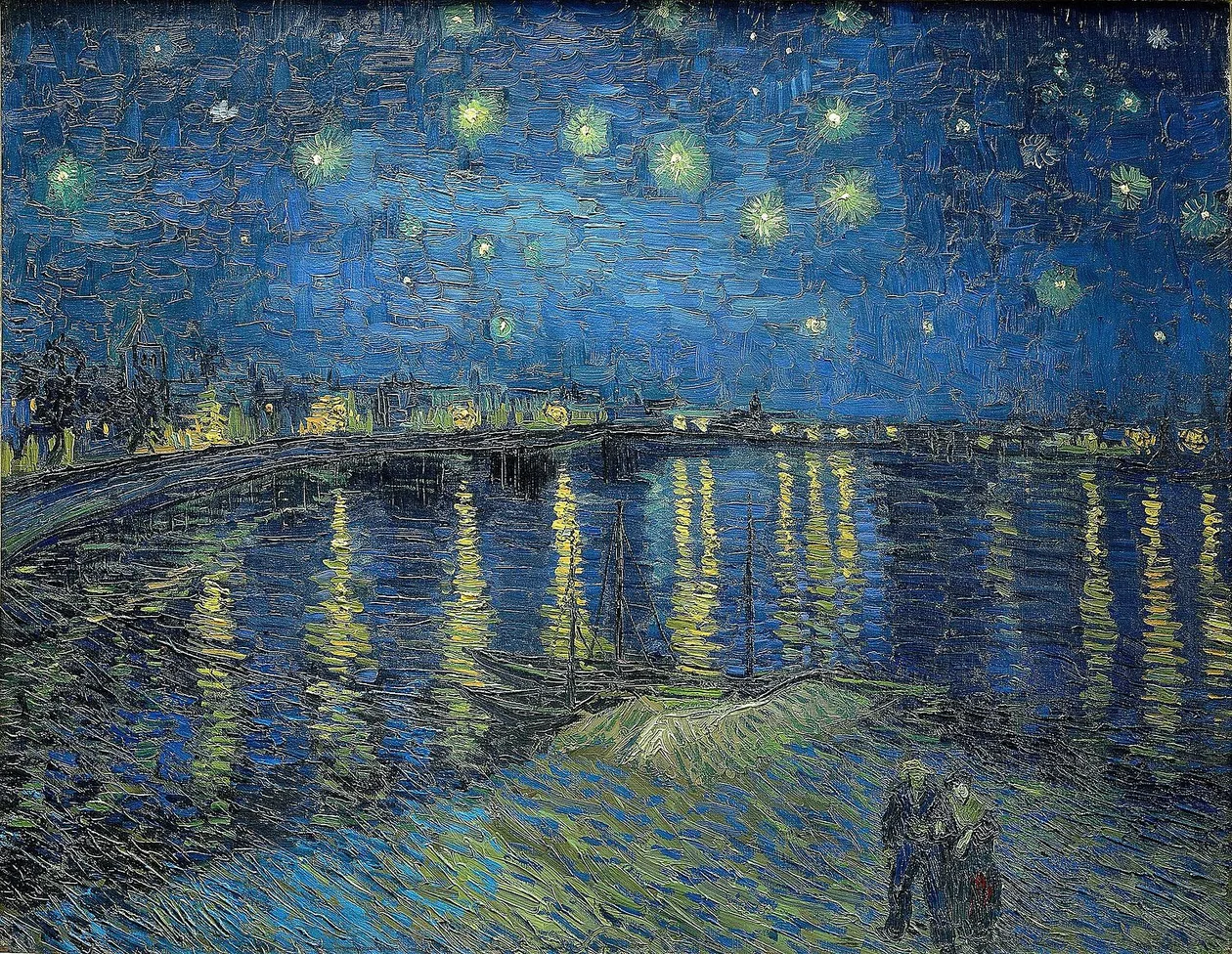
Why it matters: Often confused with the MoMA Starry Night. This one is different — it shows the Arles riverside at night. The water becomes a mirror for the sky. It's introspection, not turbulence. Van Gogh painted it in September 1888, during a moment of relative calm.
What to notice: The stars are not twinkles; they're thick daubs of yellow paint that vibrate. The water's reflection is inverted stars. The town lights line the opposite shore. The brush strokes mirror the ripples. Unlike the swirling MoMA version, this one is grounded, almost still. The movement is in the paint itself, not in the sky.
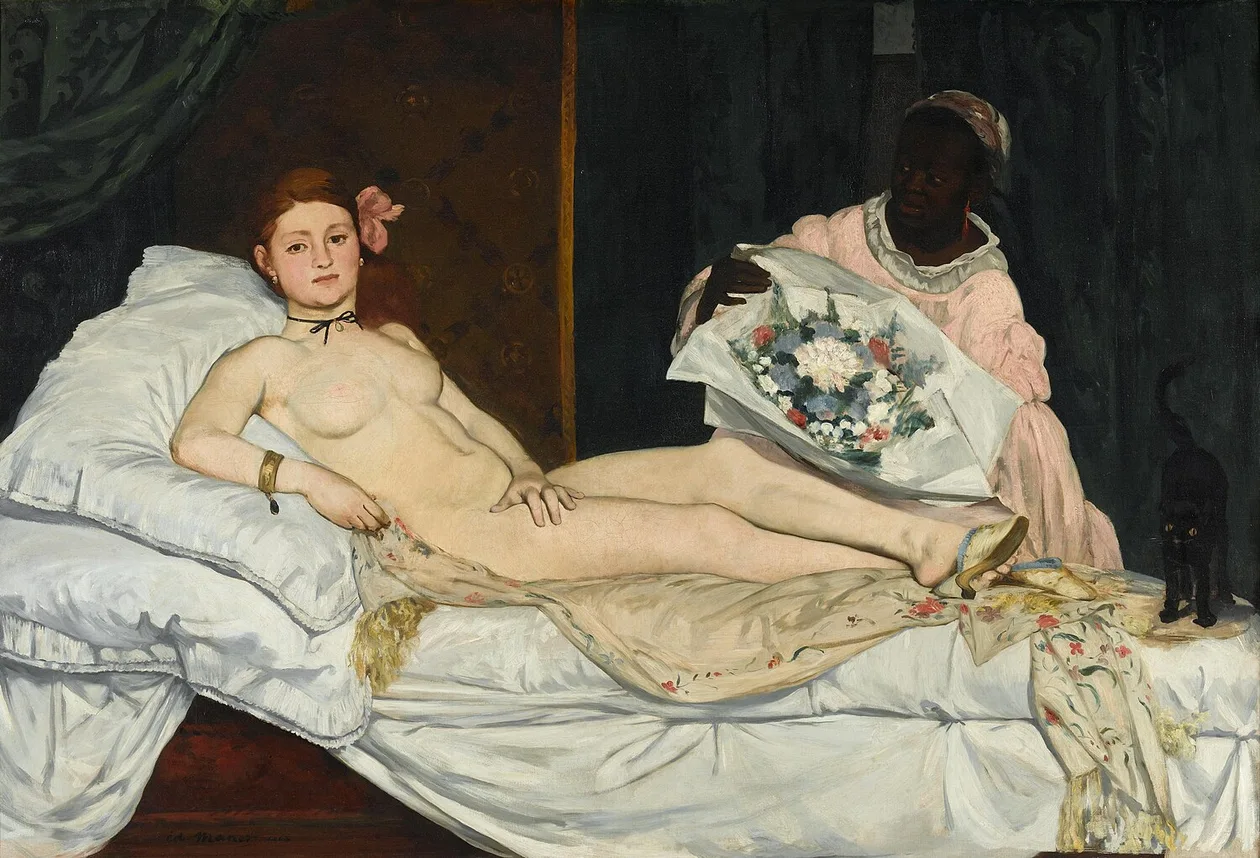
Why it matters: The painting that shocked Paris and started the Impressionist revolution. It broke every rule: the reclining nude is not an allegorical goddess but a sex worker. She looks directly at you, unashamed. The black servant with flowers and the black cat were interpreted as commentary on race and power. It's a confrontation, not a decoration.
What to notice: She is not soft or inviting. Her gaze is direct, commanding. The flesh tones are not the warm peachy nudes of Academic tradition — they're nearly clinical, painted flatly without shadow. The white bedsheet is the brightest thing in the room. That light-dark contrast creates an almost photographic effect. Manet forced viewers to stop looking at the body as an object and start asking questions about who is being represented and why.
How well did you look?
3 quick questions about what you just saw
Visit complete!
Share your visit or save it for later
Your collection