579 Years of Construction. 135 Spires. One Rooftop You Walk Through.
A room-by-room route through Milan Cathedral — nave, rooftop, and the 4th-century baptistery underneath.
Get your free guide
Enter your email to unlock the full room-by-room guide. One email unlocks all Milan museum guides.
Free · No spam · Unsubscribe anytime
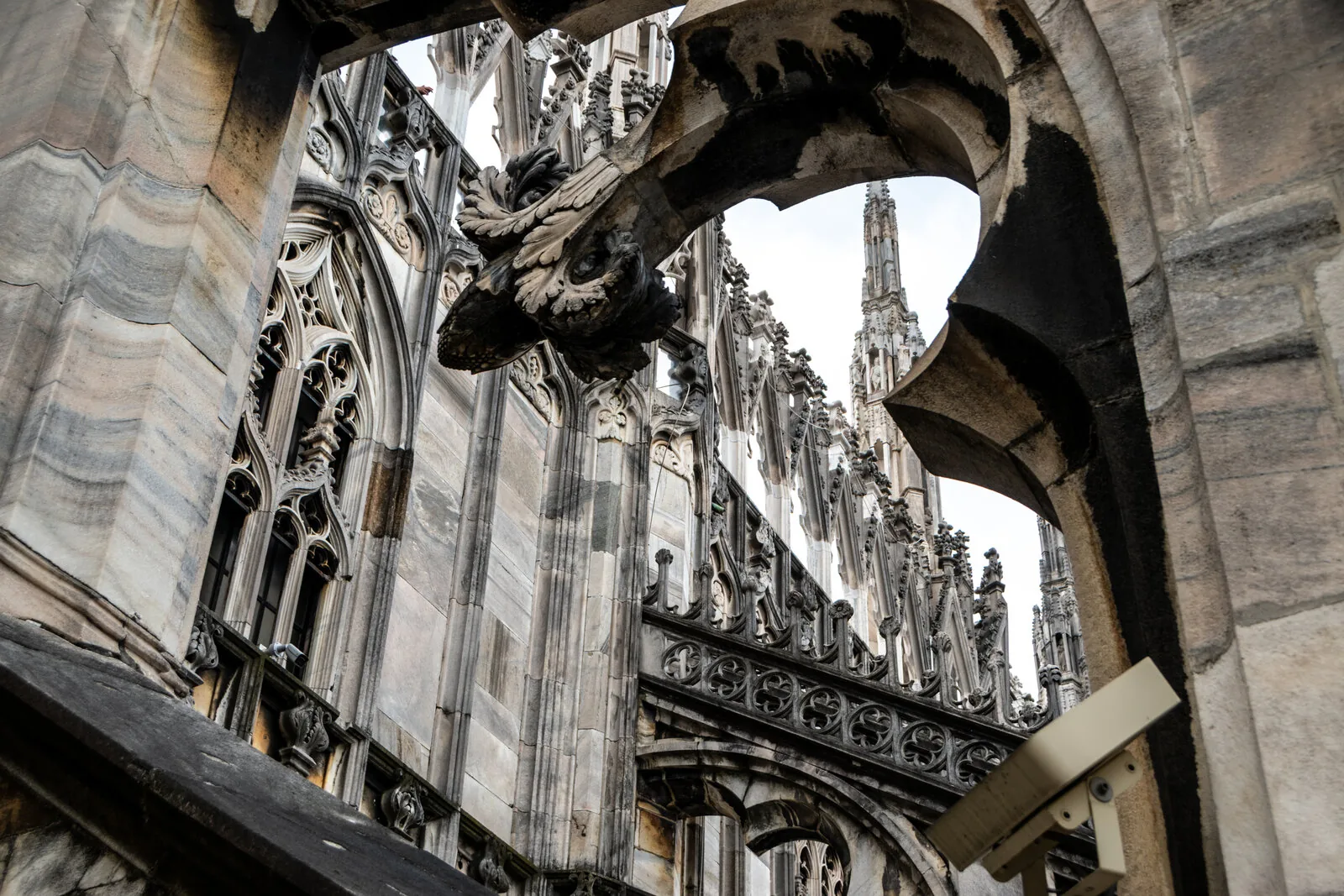
From the ground, the Duomo is a postcard. From the rooftop, it is an engineering project that makes no practical sense and works anyway. Plan to walk among the spires, not just ride an elevator up and back.
Enter the cathedral and walk straight down the central nave. The 52 pillars are each 24 metres tall. In the south transept, stop at Marco d'Agrate's St. Bartholomew. Continue to the apse — the three 15th-century stained-glass windows are the oldest in the building. Morning light hits the east windows; come back in the afternoon to see the west.
Take the elevator on the exterior north side (or the 251 stone steps if you have the stairs pass). The elevator drops you on the first terrace level. From there, everyone walks among the spires. The Madonnina stands on the highest point. South-facing terraces hold light longer in the afternoon — best photos between 15:00 and 17:00.
Back at ground level, look for the staircase inside the cathedral leading down to the Baptistery of San Giovanni alle Fonti. Built around 378 AD. This is where Ambrose baptised Augustine in 387. Almost empty. Included in every pass above the free entry. Most tour groups skip it.
Shoulders and knees covered — no exceptions, even outdoors. They check at the door and will turn you away. Pack a scarf or light layer in summer.
The cathedral is free. Between 8:00 and 9:00 the security queue is usually under 15 minutes. After 10:30 it runs 30–60.
The €12 you save on the stairs pass costs you 251 steps up a narrow medieval staircase. Keep your energy for the rooftop walk — that is the memorable part.
There is no place to leave luggage or large backpacks. Leave them at the hotel. Small daypacks pass security without issue.
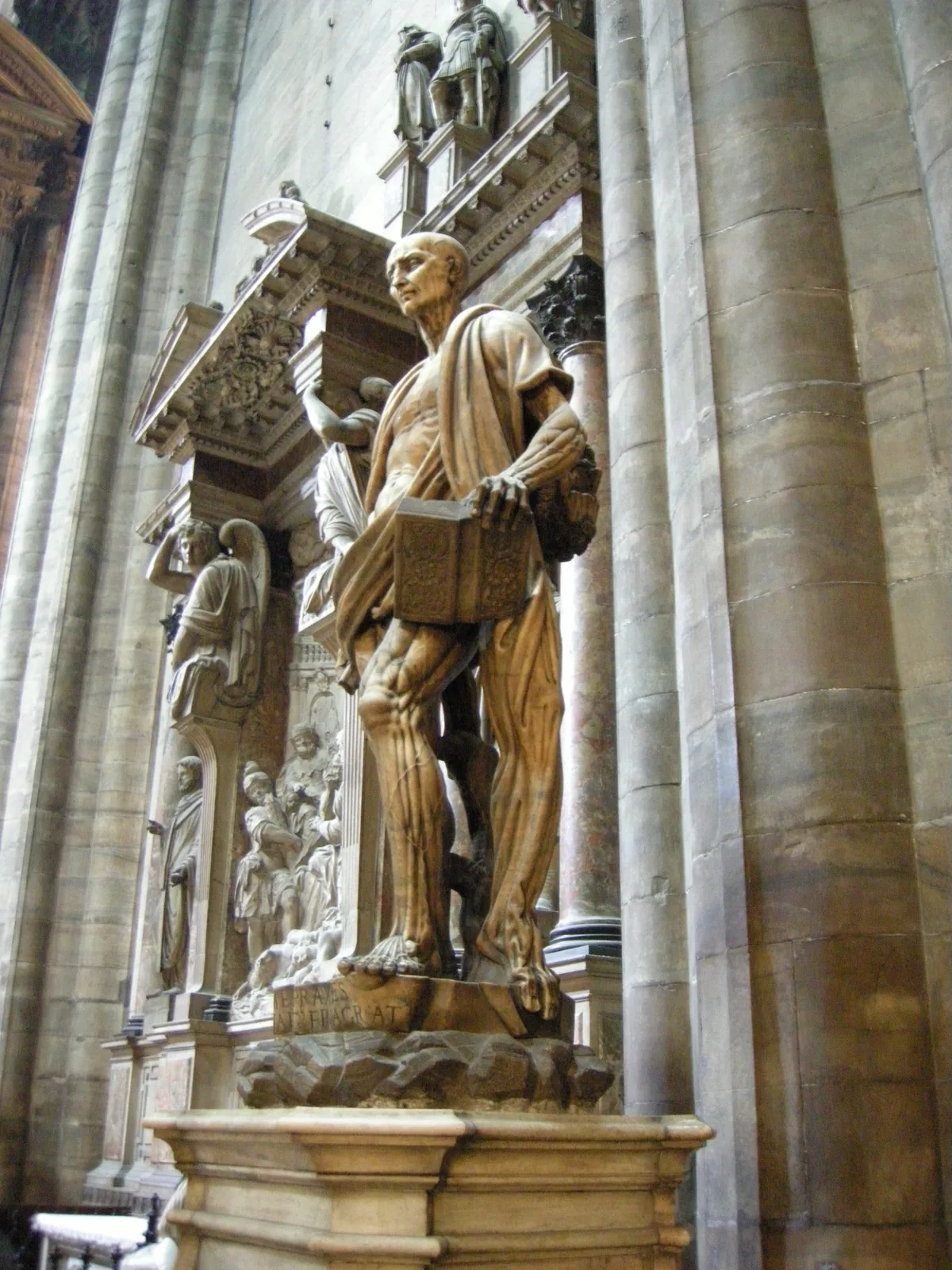
Why it matters: A saint martyred by being skinned alive, carved holding his own skin draped across his shoulders like a shawl. D'Agrate signed the plinth in Latin — "Not Praxiteles but Marco d'Agrate made me" — claiming equal rank with the ancients.
What to notice: The anatomical detail is the point. Every visible muscle, tendon, and vein is carved on the exposed body. The skin itself hangs naturalistically — folds, nipples, fingernails still attached. Step close enough to see d'Agrate's signature on the base.
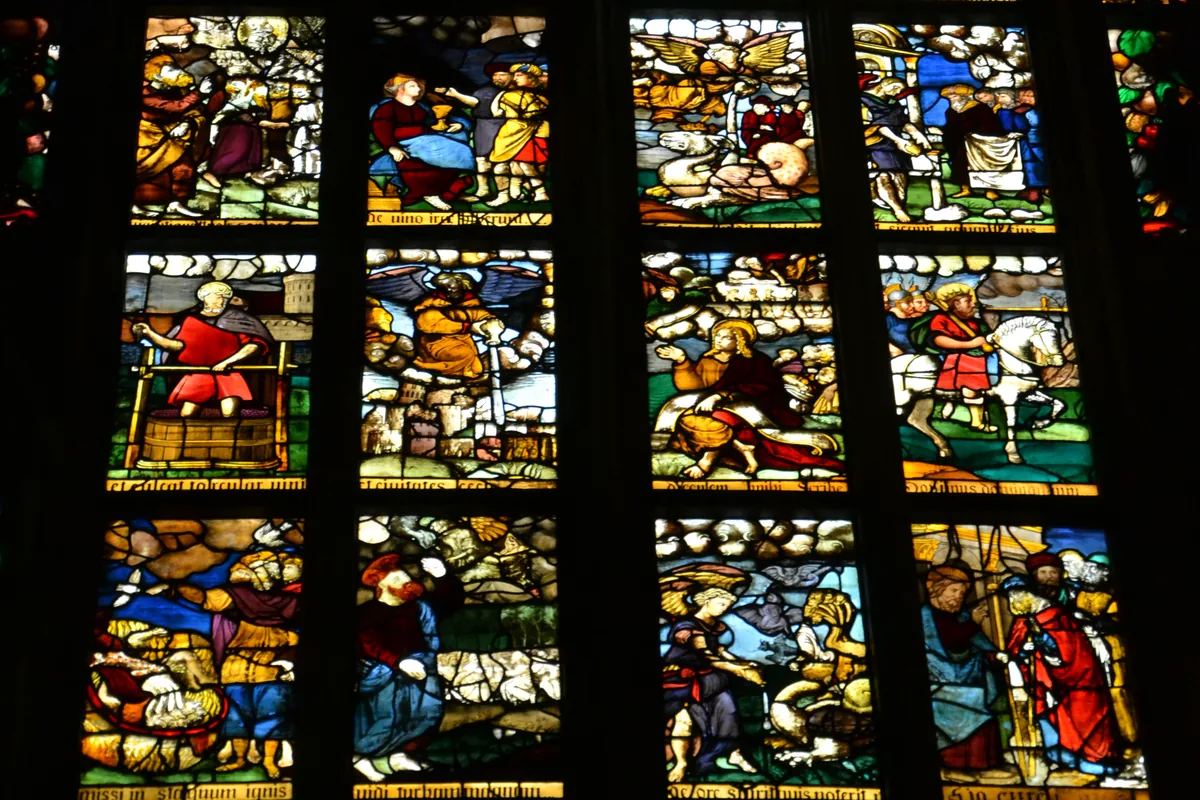
Why it matters: The oldest surviving glass in the cathedral, installed in the 1400s. Around 50 original panes survived centuries of replacement and restoration. The subject matter reads like a medieval graphic novel: John's visions from Revelation across more than 150 scenes.
What to notice: Stand at the transept crossing, 20 metres back, to see the whole ensemble. Then approach. The upper panels are the originals — colours are deeper, the leading heavier. Lower panels are 19th-century replacements — thinner, brighter, less atmospheric. You can tell the difference once you know what to look for.
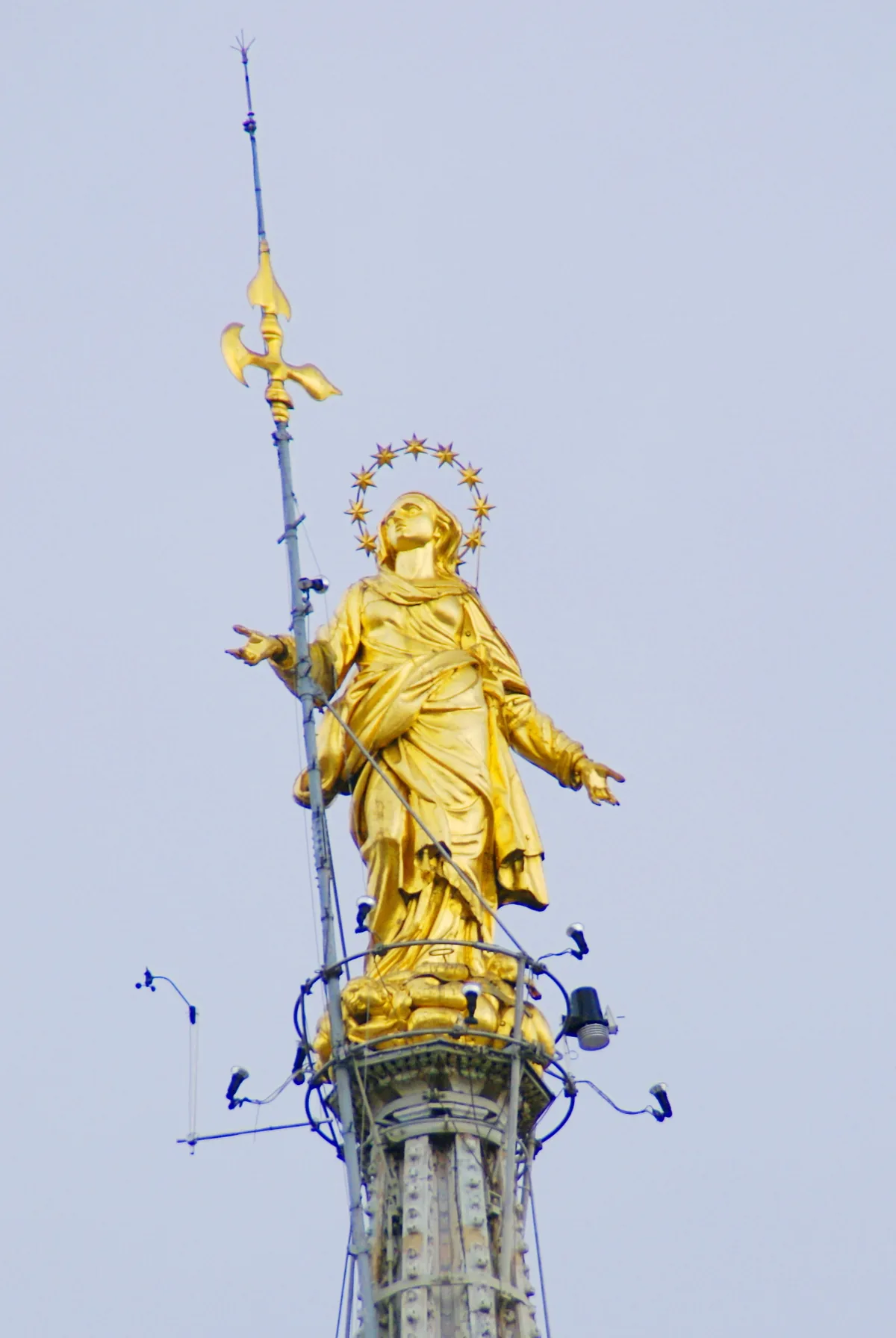
Why it matters: 4.16 metres of hammered copper, originally gilded with pure gold leaf. For two centuries, no building in Milan was allowed to rise above her — a rule only broken in 1960 with the Pirelli Tower, which then mounted its own replica on the roof to keep tradition alive.
What to notice: From the rooftop you cannot stand at her base — the final spire is off-limits. Position yourself on the south-east terrace instead. The view puts her profile against the Alps on clear days. Morning haze hides them; afternoons after 15:00 are clearest in spring and autumn.
How well did you look?
3 quick questions about what you just saw
Visit complete!
Share your visit or save it for later
Your collection