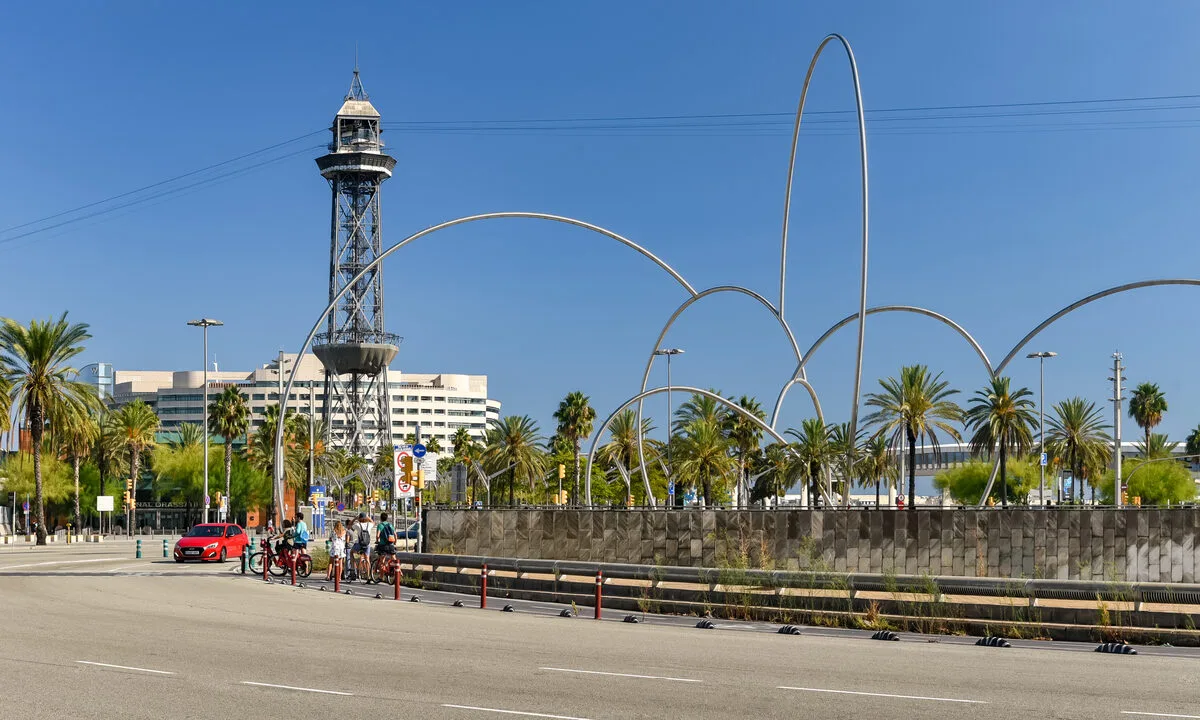
The flagship that changed a century
Your optimized route through the Royal Shipyards, the Galera Real, and the Santa Eulàlia schooner
Get your free guide
Enter your email to unlock the full room-by-room guide. One email unlocks all Barcelona museum guides.
Free · No spam · Unsubscribe anytime
The Drassanes Reials were built to construct entire warships under cover. Walk the length of the main hall before looking at anything in it — the scale of what medieval Barcelona was capable of requires a few seconds to register.
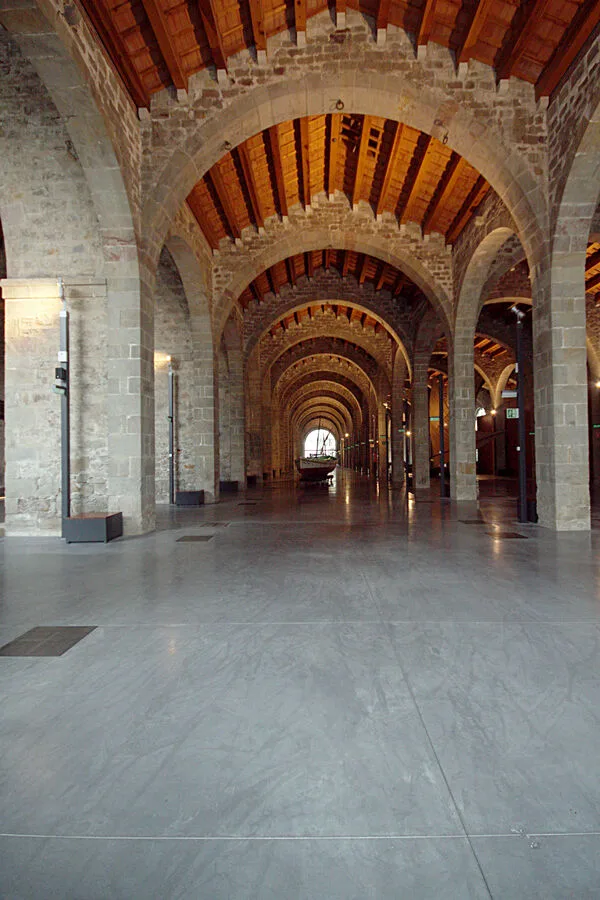
Enter the main shipyard hall and stop before approaching the ship. Look first at the hall itself: seven parallel Gothic arches, 25 meters high, originally built to shelter full-scale warship construction. Then approach the Galera Real. Walk the full length along the ground level first (60 meters), then use the elevated walkway on the right side to view from above. The upper platform is where the scale of the oar deck becomes visible. The Ictíneo submarine replica sits near the entrance to this hall — look right as you enter, most people walk past it.
The surrounding bays of the shipyard hold the permanent collection: carved ship figureheads from 18th–19th century vessels (full-size, not miniatures), historic navigation instruments, detailed ship models, and cross-sections through different vessel types. The model ship collection is one of the most complete in Spain. The audio guide adds context to individual pieces — pick it up at the entrance.
The Santa Eulàlia is moored at Moll de la Fusta, a 10-minute walk from the museum along the waterfront. Built in 1918, it's a 47-meter three-mast trading schooner, restored to original condition and classified as national heritage. You can board and walk the deck, go below, and see the original engine room. Confirm it's in port before heading over — the schooner sails occasionally on a seasonal schedule and may not be dockside.
The elevated platform around the Galera Real changes the visit. From ground level the ship is impressive. From the upper walkway, the full 60-meter length of the hull is visible — you see it as a captain would have seen it from a following vessel. Most visitors skip it because it's not obviously signed.
The Maritime Museum is significantly less crowded than MACBA or the Picasso Museum. Visitor reviews consistently note the space. School groups arrive on weekday mornings — Tuesday and Thursday before noon are the busiest weekday slots. Wednesday and Friday afternoons are the calmest.
The schooner is included in your €10 ticket but not always in port. It sails several times per year on a seasonal program. Check the official website before your visit if seeing the schooner is a priority.
Sundays from 15:00 are free. The Santa Eulàlia access during the free window varies — call the museum or check online. The Barcelona Card includes the Maritime Museum; the Articket does not.
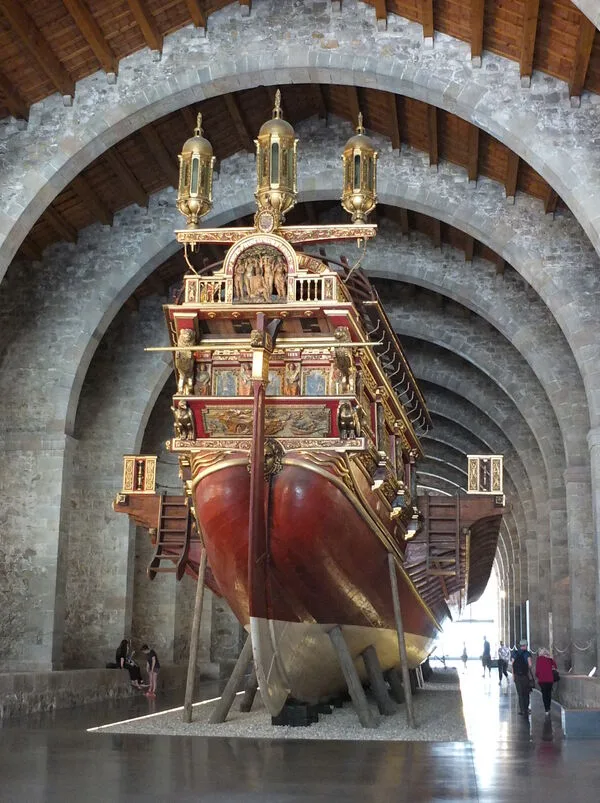
Why it matters: The Galera Real commanded the fleet of the Holy League at the Battle of Lepanto in 1571 — the naval battle that stopped Ottoman expansion into the western Mediterranean. It was built in these exact shipyards. At 60 meters with 59 oars and 236 oarsmen, it was one of the largest war galleys ever constructed.
What to notice: From the upper walkway, look down at the oar deck layout. 236 oarsmen sat three to an oar bench, chained during battle, with a walkway down the center for the overseer. The conditions of operation are written on the hull in the arrangement of the benches.
Why it matters: Narcís Monturiol, a Catalan inventor, built the Ictíneo I in 1858 — one of the world's first functional submarines. It could carry six people, dive to 30 meters, and sustain underwater travel on a steam engine fed by a chemical reaction that generated oxygen simultaneously. He built it in Barcelona's harbor.
What to notice: The scale is smaller than most visitors expect — it was designed for six people, not a crew of dozens. The cigar shape and the viewport ports at the nose made it functional, not comfortable. Monturiol ran out of funding before he could commercialize it.
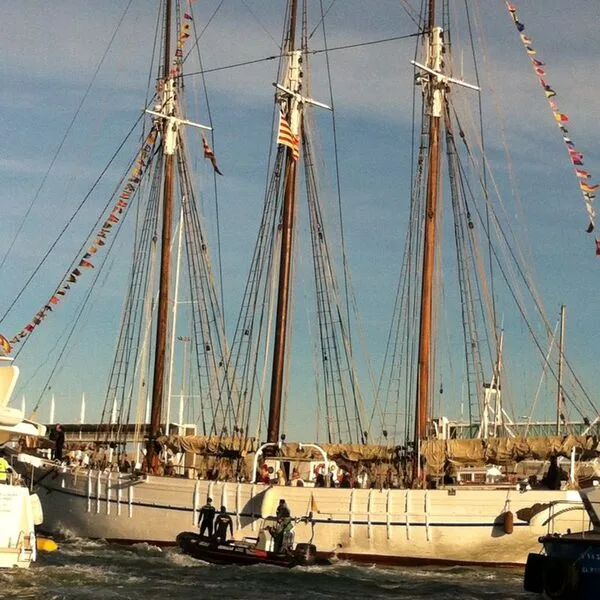
Why it matters: A genuine 1918 trading vessel, not a reconstruction. Used commercially until the 1960s, then restored by the museum to original condition. One of the few surviving examples of early 20th-century coastal trading vessels still floating and open to visitors.
What to notice: Go below deck. The cargo hold gives you the sensory experience that the deck doesn't — the scale of the storage space, the smell of treated wood, the ceiling height that the crew worked in for weeks at a time.
How well did you look?
3 quick questions about what you just saw
Visit complete!
Share your visit or save it for later
Your collection