The Amazon is inside this building
Your optimized route through the Flooded Forest, Geological Wall, and Planetarium
Get your free guide
Enter your email to unlock the full room-by-room guide. One email unlocks all Barcelona museum guides.
Free · No spam · Unsubscribe anytime
Most science museums show you images of the natural world. CosmoCaixa put the natural world inside a building and let it keep growing. The Flooded Forest has been alive since 2004.
Go here first, before crowds build. Enter the upper level to see the rainforest canopy — tree species labeled in Latin and common names, humidity visibly high, rain simulation scheduled throughout the day. Then descend to the underground viewing tunnel: walk slowly, look down at the root systems below the waterline, watch the piranhas in the aquarium panels. This is the section most visitors rush. Give it 20 minutes at the tunnel minimum.
The Geological Wall runs 100 meters along the main corridor — seven genuine rock sections, labeled with their age and formation type. Read the panels from right to left (oldest to newest) for the sequence to make sense. The Hall of Matter below covers physics, chemistry, and cosmology. It's the slowest section of the museum but the one adults consistently return to. Spend at least 30 minutes here if you're not rushing to a Planetarium session.
The Planetarium runs sessions throughout the day on a fixed schedule — buy tickets when you arrive, not mid-visit. Sessions are 30–40 minutes and fill up. For families: Creactivity (ages 3–6) and Clik (ages 6–12) are on the lower floors, with supervised science activity spaces that function as structured play with scientific framing. Both require separate booking, available at the entrance.
School groups arrive between 10:00 and 11:30 on weekdays. The Flooded Forest tunnel becomes crowded. If you arrive at 10:00, you have a 45-minute window before group visits change the pace significantly.
Free admission applies to all CaixaBank account holders — any card, any account type. If someone in your group has a CaixaBank account, bring the card. The saving is €8 per person.
Sessions sell out, especially on weekends. Buy your Planetarium ticket (€4 extra) immediately at the entrance before visiting anything else. You can choose which session to attend once you know the schedule.
Getting there requires the FGC train from Plaça Catalunya (not Line 4 or 5 — a different rail system) to Avinguda Tibidabo, then a 15-minute uphill walk or bus 196. Plan 35–40 minutes each way from the city center.

Why it matters: A genuine ecosystem, not a display. 13 tree species, 58 plants, and 36 animals live inside this 1,000 m² enclosure. The rain simulation creates authentic humidity and temperature conditions. The underground tunnel puts you below the water level of the flooded zone.
What to notice: Look down in the tunnel viewing sections, not just ahead. The root systems extend several meters below the waterline — the underwater view is the only perspective that conveys the actual depth of the ecosystem. Most visitors look at eye level and miss it.
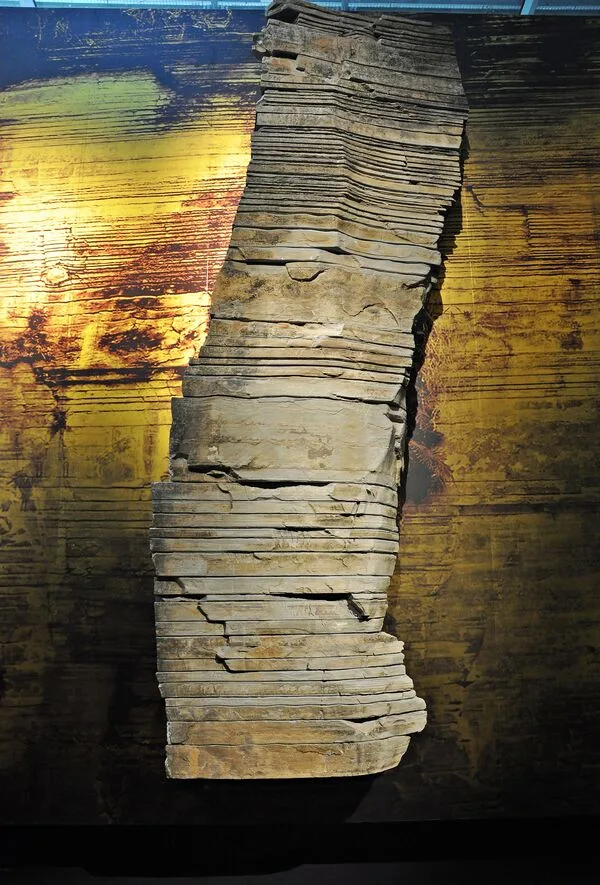
Why it matters: Seven genuine rock sections, not reproductions. The oldest visible sample is approximately 3.5 billion years old. The wall is designed to be read as a timeline — the right end shows the oldest formations, the left shows recent geology.
What to notice: Run your hand along the rock surface (it's permitted in marked sections). The texture difference between metamorphic, sedimentary, and igneous rock is tactile before it's visual — you feel the grain and weight before you read the label.
Why it matters: A 14-meter dome with an astronomical simulation system that projects the current night sky and animated journeys through the solar system. Sessions run 30–40 minutes. It's a separate purchase (€4) but one of the few planetariums in Spain at this technical level.
What to notice: Arrive 10 minutes before your session starts — the dome fills from the back first, and the best viewing position is at a slight recline in the center-rear section, not directly under the highest point of the dome.
How well did you look?
3 quick questions about what you just saw
Visit complete!
Share your visit or save it for later
Your collection