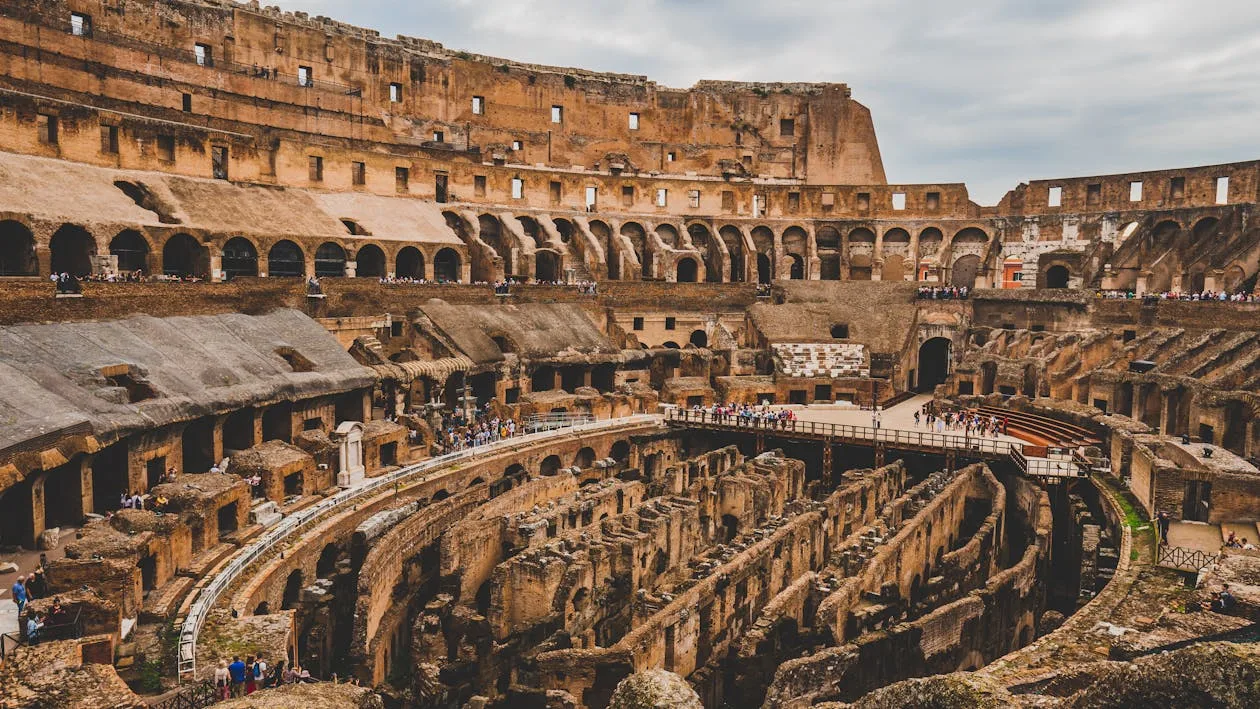
50,000 Spectators. 80 Arches. 2,000 Years of Standing.
A zone-by-zone route through the Colosseum, Roman Forum, and Palatine Hill — what to see, in what order, and what most visitors miss.
Get your free guide
Enter your email to unlock the full room-by-room guide. One email unlocks all Rome museum guides.
Free · No spam · Unsubscribe anytime
Most visitors arrive, photograph the arena from Level I, and leave in 45 minutes. The ones who get something lasting read the seating map at the entrance, spend time in the Forum first, and stay long enough for the afternoon light to shift. The building rewards attention.
Enter and orient yourself: the oval is 188 metres long, 156 wide. The original 80 numbered arches (vomitoria) could discharge 50,000 spectators in under 15 minutes — the same crowd-flow logic used in modern stadiums today. Walk to Level II for the best unobstructed view over the arena floor and down into the hypogeum below. On a standard ticket, this is as close as you get to the underground. Look up at the attic level: 240 corbels once held wooden masts for the velarium, a retractable canvas awning that shaded spectators from the Roman sun. No awning survives, but every anchor point is still there.
The Full Experience adds the reconstructed arena floor and the hypogeum beneath it. You walk where gladiators walked. The brick chambers below held animals in wooden cages on hydraulic lifts — they would appear through trap doors directly onto the arena floor above. Roman sources describe the hypogeum as one of the most feared places in the city. The smell alone announced what was coming.
Both are included on your Colosseum ticket (24-hour validity). Enter the Forum from Via Sacra. Walk the entire length to the Arch of Titus, which commemorates the sack of Jerusalem in 70 AD — the menorah relief on the inner wall is one of the most historically significant images in Rome. Then climb Palatine Hill for the view over the Circus Maximus. Budget 90 minutes. The Forum heats up by midday — go early or bring water and a hat.
Approach from Via dei Fori Imperiali and enter the Roman Forum before the Colosseum. Security queue is shorter, the Forum is calmer in morning light, and you reach the Colosseum as the finale rather than the warmup.
Official tickets release exactly 30 days before your visit date. In peak season (April–October), the 8:30 AM Colosseum slot sells out within the hour. Full Experience and Attic slots go even faster. Check as soon as your date opens.
The standard €18 ticket doesn't include the hypogeum or arena floor. The Full Experience is €24 — worth booking 3+ weeks ahead. If it's sold out, GetYourGuide's guided underground tour includes guaranteed access and a licensed guide.
In spring and autumn, afternoon light enters through the upper arches and hits the interior stonework at a low angle that changes the colour of the entire bowl. Most visitors have left by 2 PM. The building looks completely different.
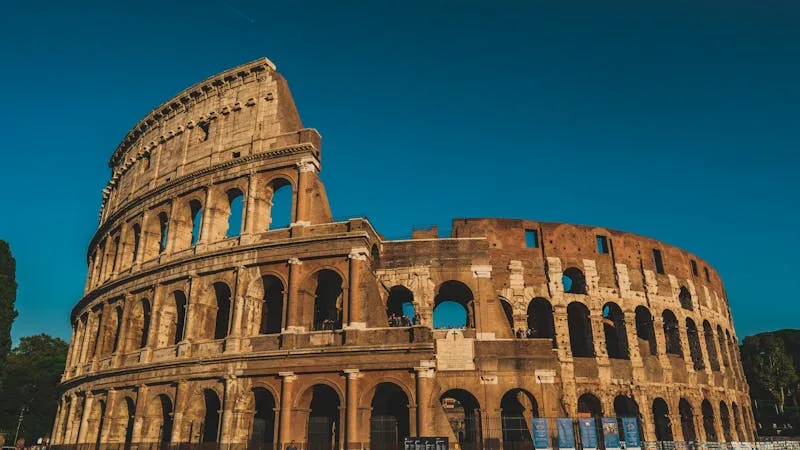
Why it matters: The exterior isn't decoration — it's a grammar lesson in Roman architecture. Each of the three tiers uses a different Classical order: Doric at ground level (the simplest), Ionic in the middle, Corinthian at the top. This stacked combination became the template for every civic building, stadium, and courthouse in Western architecture for the next 2,000 years.
What to notice: Stand back on Via Sacra and count the arches: 80 on each tier. Then look above the Corinthian level at the blank attic. Those 240 small corbels protruding from the stone held wooden masts that supported the velarium — the awning system. A crew of sailors from the Roman navy operated it. No awning survives, but every mounting point is still there.
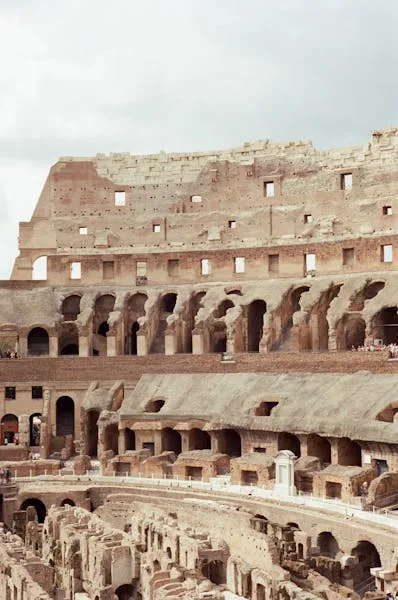
Why it matters: The seating plan was Roman society made physical. Senators watched from marble chairs at the podium level, separated from the arena by a 4-metre wall. Equestrians sat just above. Male citizens took the middle tiers. Women and slaves occupied the highest wooden bleachers nearest the open sky. Your seat announced your rank to 50,000 people every time you arrived.
What to notice: Look at the wall between the podium seats and the arena floor: the barrier was designed to stop animals reaching spectators, not the other way around. Tickets (tesserae) were colour-coded terracotta tablets stamped with gate, tier, and row. Different colours routed different social classes to different vomitoria — the same crowd never crossed paths entering or leaving.
How well did you look?
3 quick questions about what you just saw
Visit complete!
Share your visit or save it for later
Your collection