8 Million Objects. 90 Minutes to See the Best of Them.
A room-by-room route through the Rosetta Stone, Parthenon, and Sutton Hoo
Get your free guide
Enter your email to unlock the full room-by-room guide. One email unlocks all London museum guides.
Free · No spam · Unsubscribe anytime
The British Museum doesn't ask you to believe in greatness — it just shows you the objects that shaped it and lets you stand three feet away.
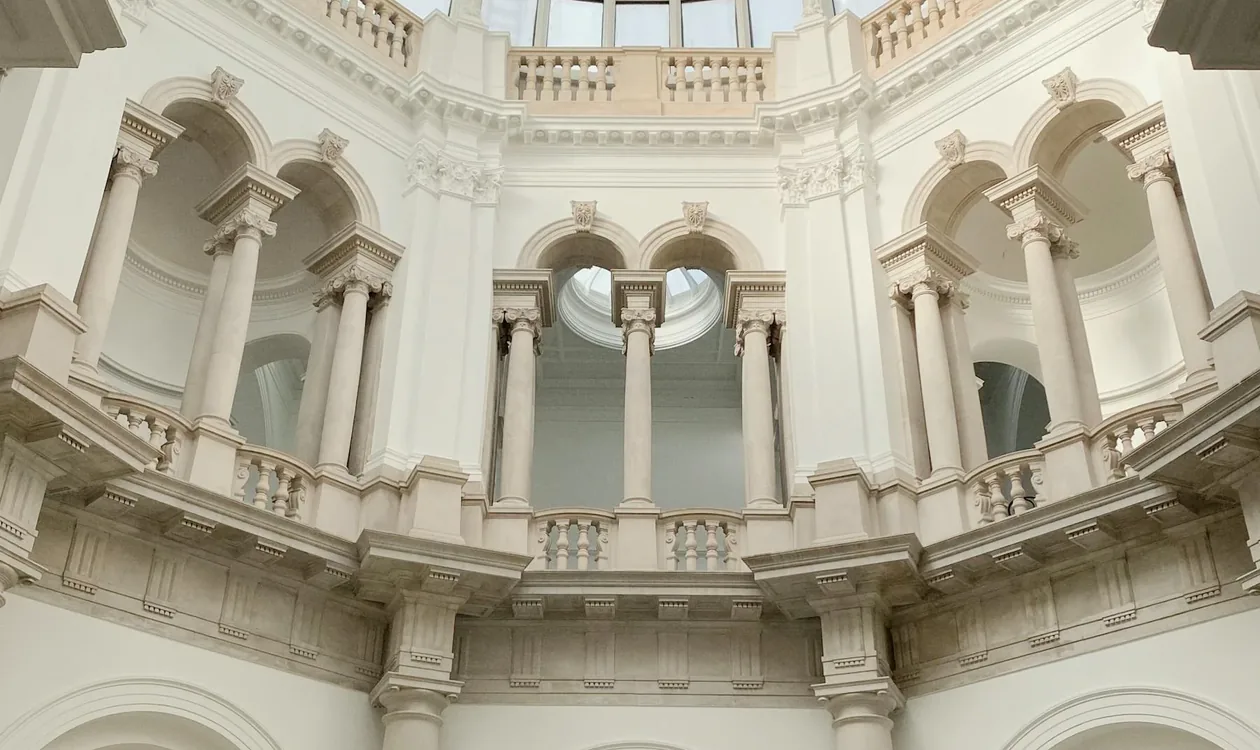
From the main entrance, the Great Court opens ahead of you — one of the largest covered public squares in Europe, glass roof and all. Head immediately to Room 4 (ground floor, south side). The Rosetta Stone is at the back of the room: smaller than expected, 196 BC, the same royal decree carved in three scripts. Most visitors photograph it and move on. Spend five minutes reading the cartouches in the hieroglyphic section. Then walk west to Room 18: the Parthenon Sculptures, displayed at eye level so you can walk alongside 75 metres of 5th-century BC marble frieze — riders, gods, sacrificial animals, all carved in extraordinary relief.
Take the stairs on the west side up to the upper floor. Rooms 62 and 63 hold the Egyptian mummy collection: wooden coffins, gilded innermost cases, bandaged bodies, and the Fayum portrait mummies — Roman-era painted faces so direct they look like photographs. The progression from simple wooden boxes (1550 BC) to elaborate gilded portraits (100 AD) tells you more about Egyptian beliefs and Roman influence than any wall text. Go slowly through Room 63 and look at the painted faces one by one.
Continue to Room 41: the Sutton Hoo collection. The 7th-century Anglo-Saxon helmet — two eye sockets formed from boar eyebrows, a nose guard, a moustache — is a face, and it stops people. The reconstruction outside the case shows the full effect; the original is behind it, in original fragments and restored sections. Then step next door into Room 40 for the Lewis Chessmen: 12th-century walrus ivory pieces found in Scotland, carved with expressions ranging from bored to alarmed. These are the original chess pieces that Rowling based the game on in Harry Potter — and they're vastly stranger and more human than you expect.
The permanent collection is free, but booking a timed ticket on britishmuseum.org guarantees priority entry. On busy weekends, the queue without a ticket can be significant. Takes 2 minutes to book.
The museum stays open until 8:30 PM on Fridays (last entry 8:15 PM). Visitor numbers drop sharply after 5 PM. The Parthenon Sculptures room, which is crowded during the day, is often empty by 6:30 PM.
Wheeled cases and bags over 8kg must be left at the cloakroom near the Great Court entrance. Travel light or plan the bag check into your arrival time.
Check the information board when you arrive — free 60-minute highlights tours run daily and depart from the Great Court. No booking required. Faster orientation than the audio guide for a first visit.
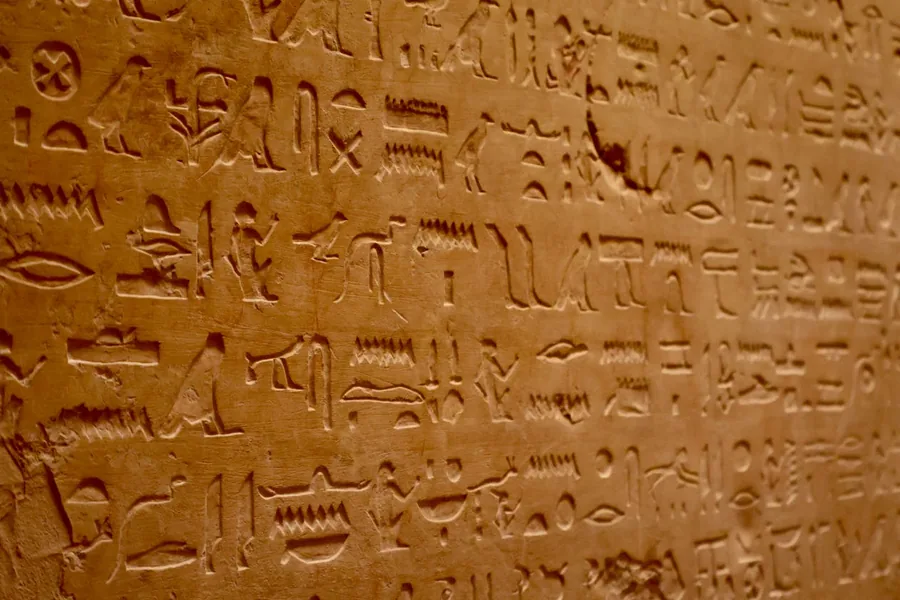
Why it matters: This 112 cm fragment was the key to deciphering Egyptian hieroglyphics. Found by French soldiers near Rosetta in 1799, it carries a priestly decree in three scripts: Ancient Egyptian hieroglyphs, Demotic, and Ancient Greek. Scholars used the Greek to crack the other two, opening 3,000 years of unread Egyptian writing.
What to notice: Find the point where the hieroglyphic script ends and the Demotic section begins — the shift in character density is visible. Then look at the bottom third in Greek. The same 14 lines, three languages, one decree.
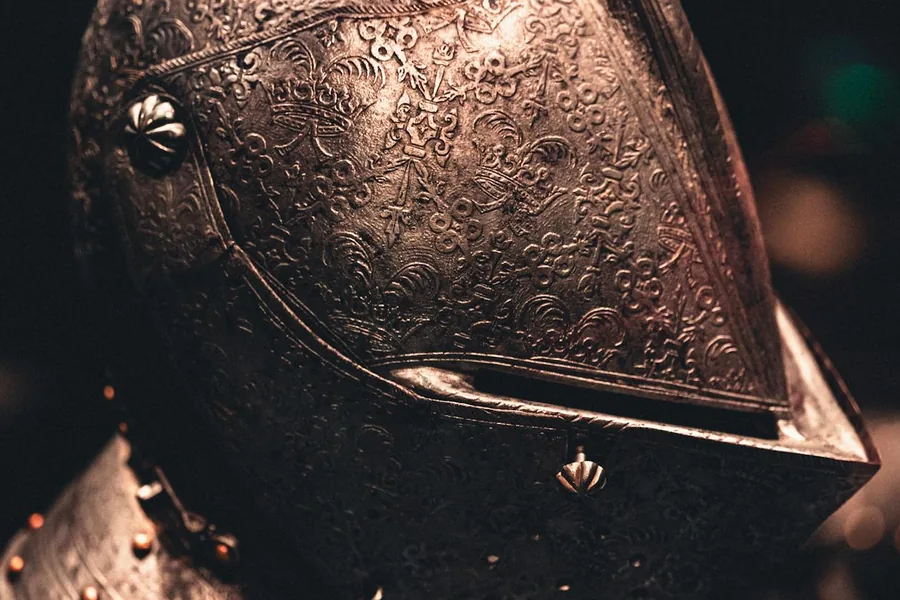
Why it matters: Unearthed from a 7th-century Anglo-Saxon ship burial in Suffolk in 1939, this helmet is the object that transformed how historians understood pre-Norman England. It belongs to someone of extraordinary wealth — possibly a king. The face formed by eyebrow ridges, nose guard, and moustache is the most recognisable image in British archaeology.
What to notice: Look at the reconstruction outside the case first — it shows the complete helmet with its bronze fittings intact. Then look at the original: the areas of rust and the restored sections tell you which parts survived and which were pieced together from 263 fragments.
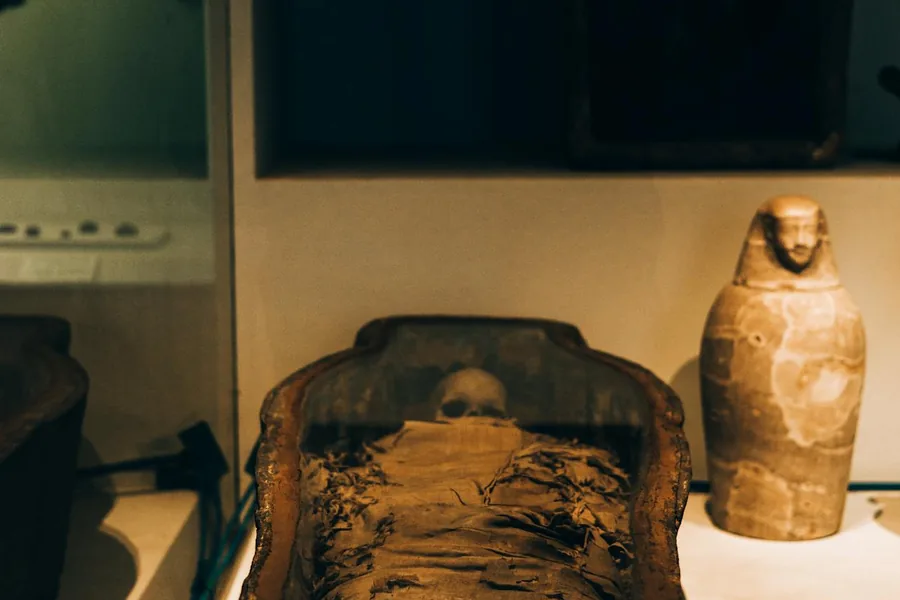
Why it matters: Katebet was a chantress of Amun — a musician in the god's service — during the New Kingdom. Her gilded inner coffin shows the level of care and resources invested in Egyptian burial rituals for high-status individuals. The gold leaf on her face and the detail of the funerary scenes around the case have survived 3,300 years.
What to notice: The painted eyes on the coffin lid were positioned over where the face of the mummy would be — the dead were meant to be able to see outward through them. Compare the face on her coffin with the Fayum portrait mummies in the same room, painted 1,200 years later under Roman influence.
How well did you look?
3 quick questions about what you just saw
Visit complete!
Share your visit or save it for later
Your collection