360 People. 2 Hours. The Most Intimate Great Museum in the World.
A room-by-room route through the Borghese — Bernini, Canova, Caravaggio, and how to use your 120 minutes before the clock runs out.
Get your free guide
Enter your email to unlock the full room-by-room guide. One email unlocks all Rome museum guides.
Free · No spam · Unsubscribe anytime
Most museums give you infinite time and too much to see. The Borghese gives you exactly 2 hours and exactly the right amount. Go straight to the ground floor. Bernini's Apollo and Daphne and the Rape of Proserpina deserve 45 minutes between them. The paintings upstairs are secondary — though the six Caravaggios are not.
Enter and turn immediately into Room I. Pauline Bonaparte — Napoleon's sister — reclines on a chaise longue as Venus Victrix, carved by Antonio Canova in 1808. The marble surface appears warm to the touch. It isn't, but Canova worked the stone to suggest soft skin rather than cold mineral. The story goes that when asked how she could pose nude, Pauline answered: 'The studio was heated.' The sculpture was kept under lock and key by her husband Cardinal Camillo Borghese, shown only to select visitors by candlelight. The candles were not decoration — they made the marble glow.
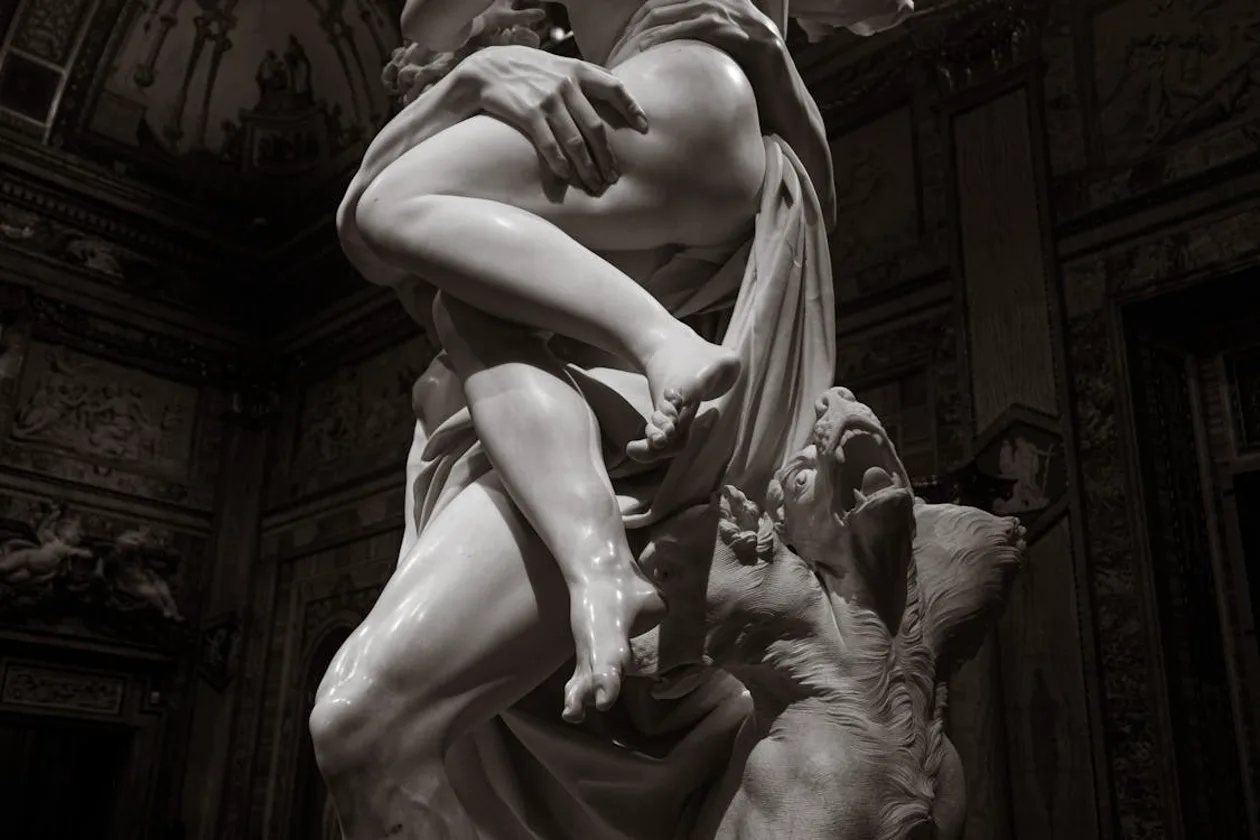
Three rooms, three masterpieces. Room II: The Rape of Proserpina (1621–22). Pluto carries Persephone to the underworld — his fingers press into her thigh with such force you instinctively expect to feel resistance. Walk around the full 360°; the three-headed Cerberus at the base rewards attention. Room III: Apollo and Daphne (1622–25). Bernini was 24. Apollo reaches for Daphne just as she transforms into a laurel tree — fingers become branches, feet become roots, bark creeps up her legs. The transition from human to plant happens in the space of an inch of marble. Room IV: Bernini's David (1623–24). Unlike Michelangelo's David contemplating the battle, this one is in it — mid-throw, jaw set, every muscle engaged. Stand behind the David and look at his face in the mirror on the opposite wall. Bernini used his own face as the model.
The first-floor painting galleries hold Raphael, Titian, Correggio, and Rubens — a collection that would headline any European museum. But the room that matters is the Caravaggio room. Six paintings in a space designed for twenty. Boy with a Basket of Fruit, David with the Head of Goliath, St Jerome Writing, Madonna dei Palafrenieri (rejected by the Vatican as too realistic), Sick Bacchus, John the Baptist. In David with the Head of Goliath, the severed head is Caravaggio's own face. He painted it in 1610, the year he was trying to secure a papal pardon for murder. He died that same year, before the pardon arrived.
The Borghese official site (galleriaborghese.it) releases tickets approximately 10 days in advance. In peak season, morning slots (9 AM) sell out within hours of release. The 9 AM slot has the fewest people — 360 is the total building capacity, not the per-room limit, but mornings still feel emptier. Set a reminder for 10 days before your visit date.
The Bernini sculptures in Rooms II–IV are designed to be experienced from every angle. Apollo and Daphne looks completely different from behind — you see the back of Apollo's head, the roots emerging from Daphne's feet, and the full sweep of motion. The Rape of Proserpina has three distinct compositions depending on where you stand. Most visitors see only one side and leave. Don't.
Bernini's sculptures reward slow looking, but they also work on immediate impact. The paintings upstairs — especially the six Caravaggios — require more concentration and are better appreciated with a fresh eye. If you do the first floor first and leave the Bernini rooms for last, you'll spend the final 20 minutes rushing through the best rooms in the building. Start on the ground floor.
The Borghese enforces strict entry times and 2-hour limits for all visitors without exception. Arriving 10 minutes late means 10 fewer minutes inside. The cloakroom is mandatory (bags larger than A4 must be checked). Factor this into your arrival time — the bag check alone takes 5 minutes at peak times.
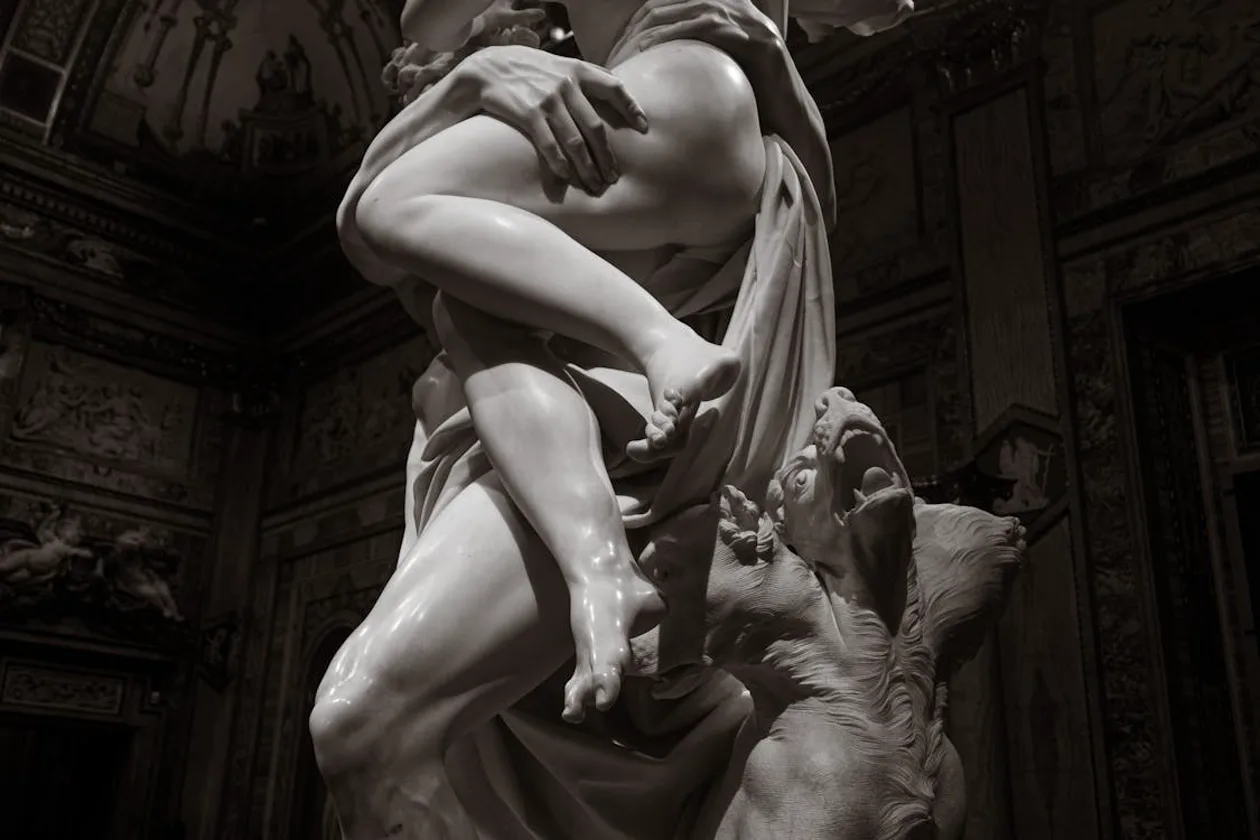
Why it matters: Bernini carved both works before he was 28. Cardinal Scipione Borghese commissioned them as pure displays of virtuosity — proof that a sculptor could make marble behave like flesh, like motion, like transformation. In the Rape of Proserpina, Pluto's fingers visibly compress Persephone's thigh. In Apollo and Daphne, bark creeps up a human leg in the same block of stone. Neither effect had been done before in marble at this scale.
What to notice: In the Rape of Proserpina: look at where Pluto's hand grips Persephone's thigh — the fingers press in and the flesh deforms around them. Then look at the three-headed Cerberus crouched at the base, often overlooked. In Apollo and Daphne: look at the exact point where Daphne's fingers become laurel leaves. Bernini carved the transition across one continuous surface — no joint, no seam. The marble changes what it is representing mid-sculpture.
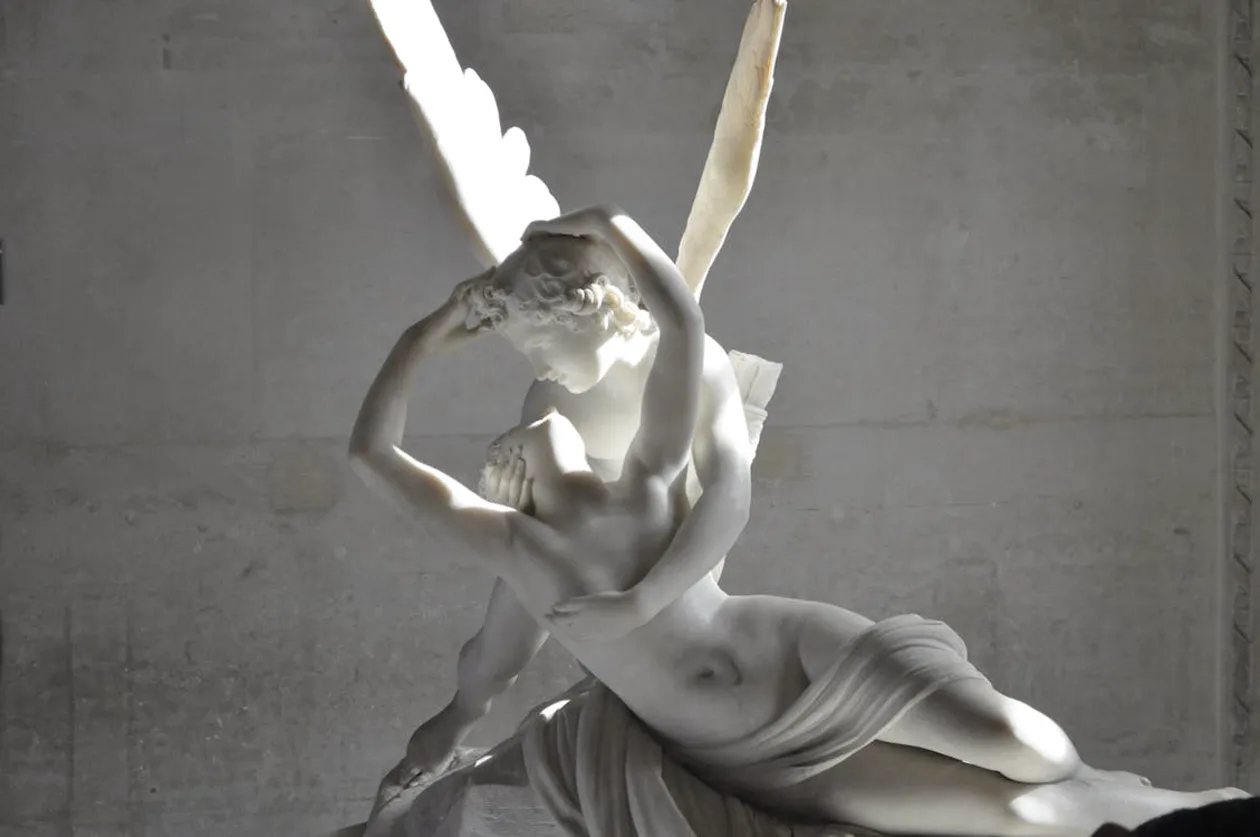
Why it matters: Canova's commission was to portray Napoleon's sister in the guise of Venus Victorious — victorious in the Judgement of Paris, the apple in her hand. The result is a portrait that is simultaneously mythological allegory and recognisable individual. The surface treatment — particularly the simulated fabric of the mattress — is considered among the finest marble carving of the 19th century.
What to notice: Run your eye along the surface of the mattress and chaise longue beneath the figure. Canova carved each fabric crease independently, varying the depth of cut to simulate different weights of textile. The figure itself is polished to suggest skin; the support beneath is textured differently to suggest fabric. Two completely different surface treatments in one continuous block. Then notice the tilt of the head — slightly to the left, eyes looking down. It's a pose from life, not from convention.
How well did you look?
3 quick questions about what you just saw
Visit complete!
Share your visit or save it for later
Your collection