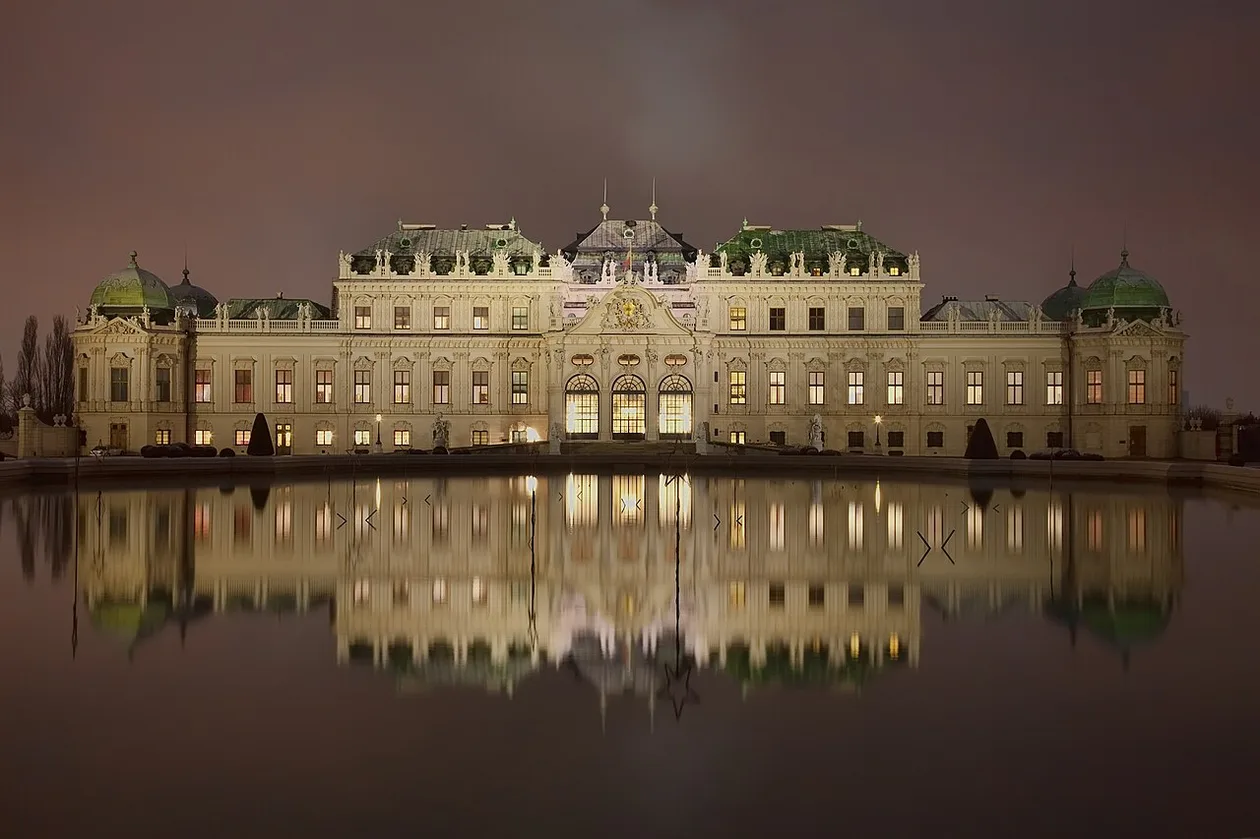
One Painting Draws the Crowd. Three Floors Hold the Story.
A floor-by-floor route through the Upper Belvedere — Klimt's gold, Schiele's bodies, and the Baroque palace they hang in.
Get your free guide
Enter your email to unlock the full room-by-room guide. One email unlocks all Vienna museum guides.
Free · No spam · Unsubscribe anytime
The museum's own route runs chronologically, ground floor upward, and delivers you to The Kiss at the exact hour everyone else arrives. Run it backwards.
Go up one floor and turn west. The Kiss hangs at the far end of the Vienna 1900 rooms, and the museum's signposted chronological tour arrives here last, which is why the room is calm at opening and two phones deep by eleven. Give the painting ten minutes before you look at anything else, then work backwards through Judith and the rest of the Klimts in the same suite. The Belvedere owns 24 Klimt paintings and most visitors leave having registered one.
Keep going up, not down. This is where Schiele lives, and it is the part of the visit that people remember six months later. Klimt gilded bodies; Schiele stripped them. Standing in front of Death and the Maiden twenty minutes after The Kiss is the single best thing this building can do for you, and almost nobody does it in that order. The Avant-Gardes rooms continue west if you have time.
Come back down to the Marble Hall, the double-height room at the centre of the palace where Austria signed its State Treaty in 1955. East of it the Baroque and Biedermeier galleries run 1600 to 1865, and at the far east end sit Franz Xaver Messerschmidt's Character Heads: a set of grimacing metal busts from the 1770s that look two centuries out of place. Most visitors have gone home by this point. The rooms are usually empty.
The ground floor holds Middle Ages and Renaissance, 1200 to 1600, plus the Sala Terrena with its four Atlas pillars holding up the ceiling. Then leave through the gardens rather than the front. The formal terraces between the Upper and Lower Belvedere are free to walk, and the view back over the city from the top terrace is the one on the postcards.
The Klimt room fills between 11 AM and 2 PM. Arriving at opening buys you roughly 30 to 45 minutes with The Kiss before the first coach groups reach the upper floor.
The signposted route starts on the ground floor with medieval panels and works up. Follow it and you reach Klimt at peak crowd with tired legs. Go straight up to Floor 1 west instead and do the chronology in reverse.
A common wrong turn. The floor below the Klimt room is Middle Ages and Renaissance. For Schiele you go up to Floor 2, east wing.
The Upper Belvedere holds the permanent collection, including everything in this guide. The Lower Belvedere, across the gardens, is temporary exhibitions on its own ticket. Check what is on before you pay for both.
The Belvedere runs dynamic pricing and calls it the Tagesaktueller Preis, the day's current price. The figure you see weeks ahead may not be the figure on the day.
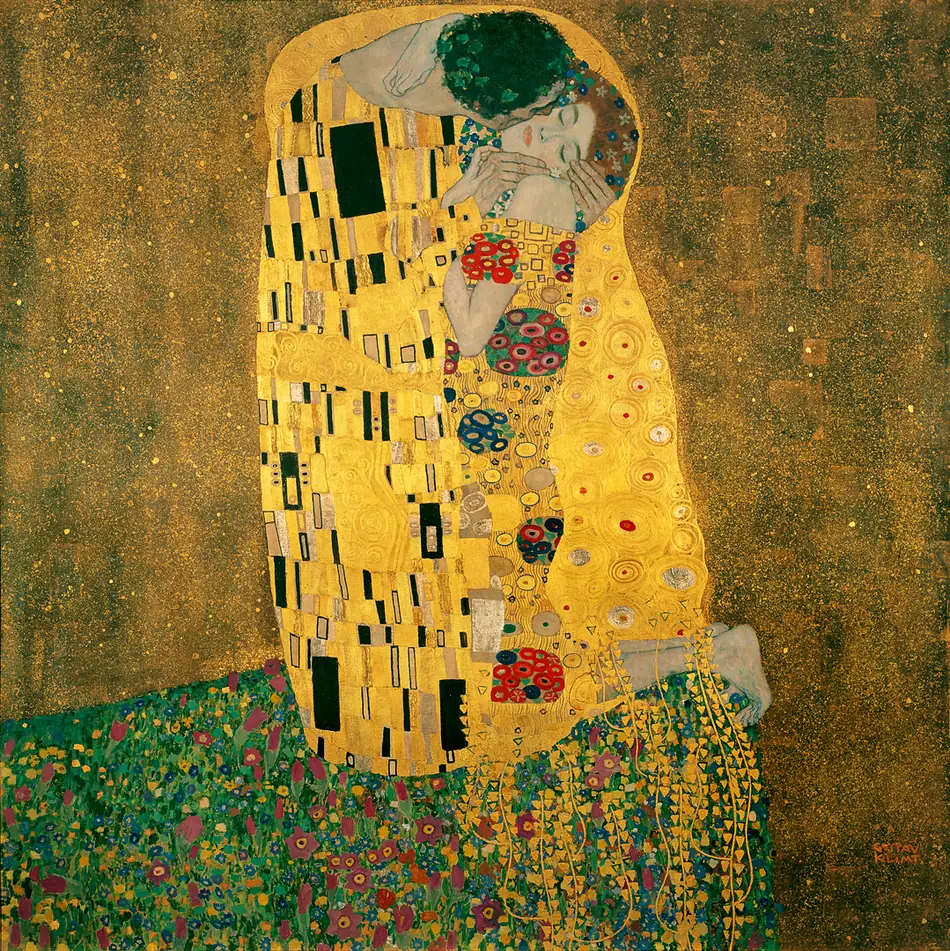
Why it matters: A 180 by 180 cm square of gold leaf and oil showing two figures kneeling at the edge of a flowering meadow. It is the most photographed painting in Austria and the reason the Belvedere sells the tickets it does.
What to notice: The gold is not one surface. Klimt gave the man rectangles in black, white and grey, the woman circles and flowers, and the two patterns only merge where the bodies touch. Then look down: they are kneeling on a cliff edge, and her feet are curled over it.
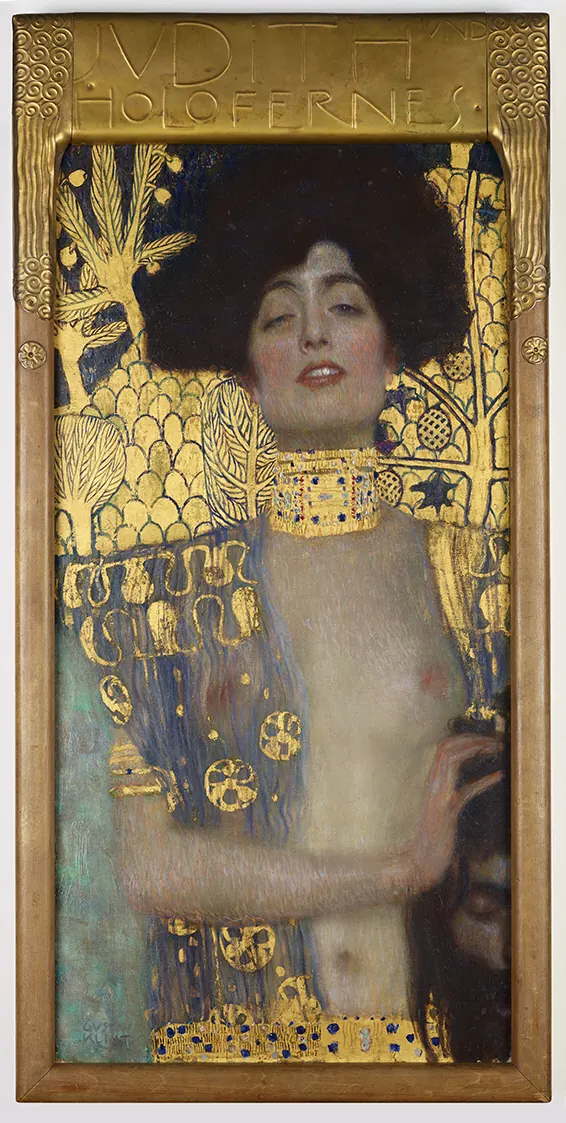
Why it matters: Painted seven years before The Kiss and nothing like it. Judith holds the severed head of Holofernes in the bottom right corner, half out of frame, and looks straight past you with an expression that has nothing to do with heroism.
What to notice: The frame is by Klimt's brother Georg, a metalworker, and it is part of the painting: JUDITH UND HOLOFERNES is beaten into the brass along the top. Almost every reproduction crops it off, which removes the title from the work.
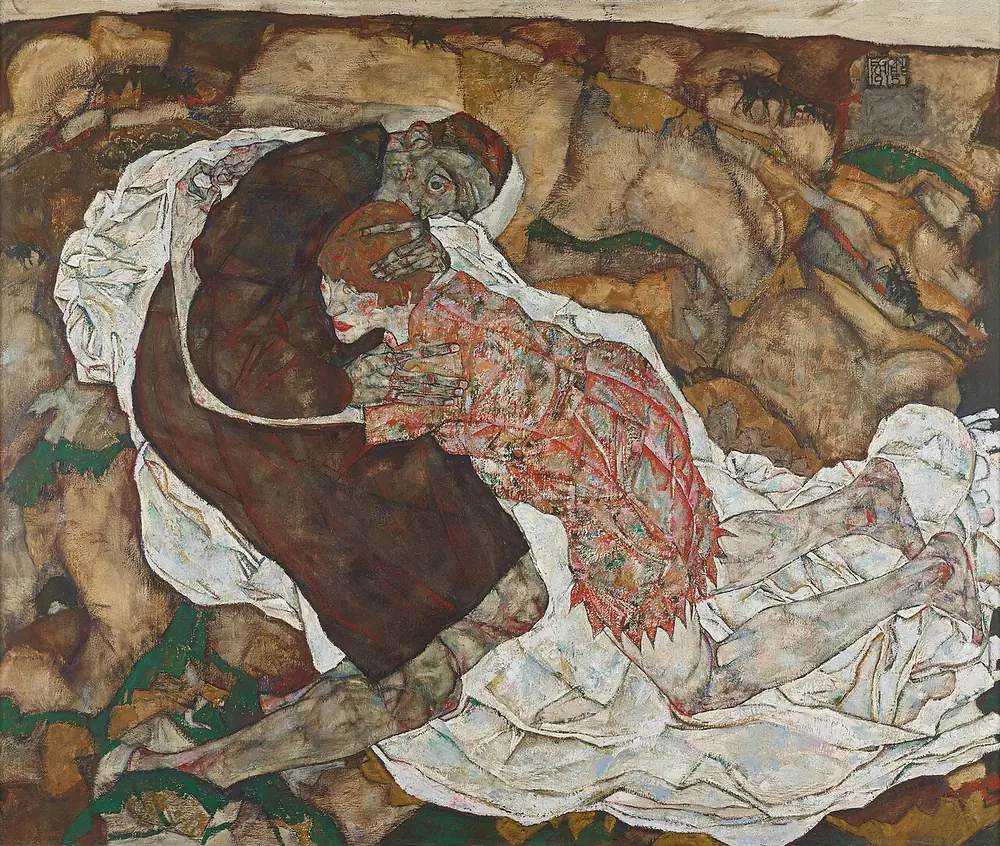
Why it matters: Two figures clinging to each other on a crumpled sheet, painted the year Schiele married someone else and ended a four-year relationship with his model Wally Neuzil. The composition is an embrace and a separation at once.
What to notice: Compare the hands to The Kiss you saw twenty minutes ago. Klimt's couple are held inside a single golden shape. Schiele's are two bodies that do not fit together, drawn with a line that keeps breaking. Same subject, same city, seven years apart.
How well did you look?
3 quick questions about what you just saw
Visit complete!
Share your visit or save it for later
Your collection