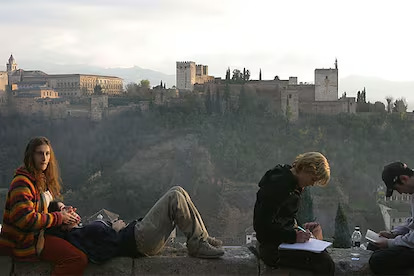
The palace they built to forget the world
Your route through the Alhambra — section by section, with timing
Get your free guide
Enter your email to unlock the full room-by-room guide. One email unlocks all Granada museum guides.
Free · No spam · Unsubscribe anytime
The Alhambra isn't a museum you walk through. It's a place that was designed to change how you experience space, light, and water. Every courtyard frames a different view. Every ceiling catches light differently as the day moves.
Closed until further notice after the earthquakes of 15 and 18 August 2026. Start at the Generalife instead, and get the wide view from the Silla del Moro outside the complex. When it reopens: the military fortress is the oldest section, and the Torre de la Vela gives 360° views of Granada, the Sierra Nevada, and the Nasrid Palaces below. That view makes the rest of the visit make sense, and it is quieter first thing in the morning.
The highlight. Move through the Mexuar (council rooms), the Comares Palace with its reflecting pool, and into the Palace of the Lions. Slow down in the Hall of the Two Sisters — the muqarnas ceiling is the most intricate in the complex. Take the Partal path out (quieter, with ruins and gardens most visitors skip).
The Nasrid sultans' summer retreat. The Patio de la Acequia (water channel courtyard) is the centrepiece. Walk through the upper gardens for views back toward the Alhambra. Late afternoon light here is worth timing your visit around.
After the Granada earthquakes of 15 and 18 August 2026, the Alcazaba, the Andalusi Monuments and Dar al-Horra are closed until further notice. The Nasrid Palaces and the Generalife are open, but on modified routes designed for fast evacuation, so the order below may not match what staff let you do. Check @alhambracultura the morning of your visit.
Your timed Nasrid slot should be at least 1 hour after you plan to arrive. This gives buffer for security and the walk from the entrance. If you're 15+ minutes late, your ticket is forfeited.
Tickets are nominative — tied to the passport or ID you used when booking. Staff check at the entrance. Wrong document means no entry. Multiple visitors report being caught out by this.
Between the Nasrid Palaces and the Generalife, most visitors follow the main walkway. The Partal detour adds 30 minutes through quiet gardens and palace ruins with almost no crowds.
The complex is exposed. From June to August, midday temperatures exceed 35°C and crowds peak between 11:00 and 15:00. Arrive at 8:30 or book a late afternoon slot.
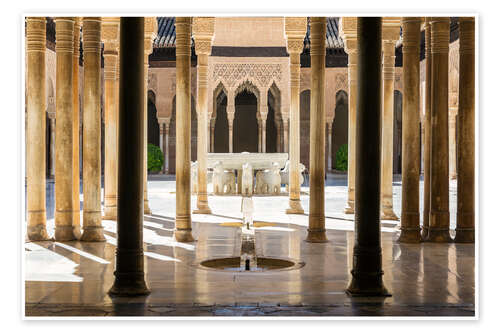
Why it matters: The centrepiece of the entire Alhambra. Twelve marble lions support the fountain, and 124 columns line the perimeter. The proportions aren't decorative — they follow Andalusian mathematical principles. This courtyard took over a decade to build.
What to notice: Look at the spacing between the columns. The gaps aren't uniform — they widen at the four entrances to create visual emphasis. Stand at the centre and turn slowly. Each side frames a different hall.
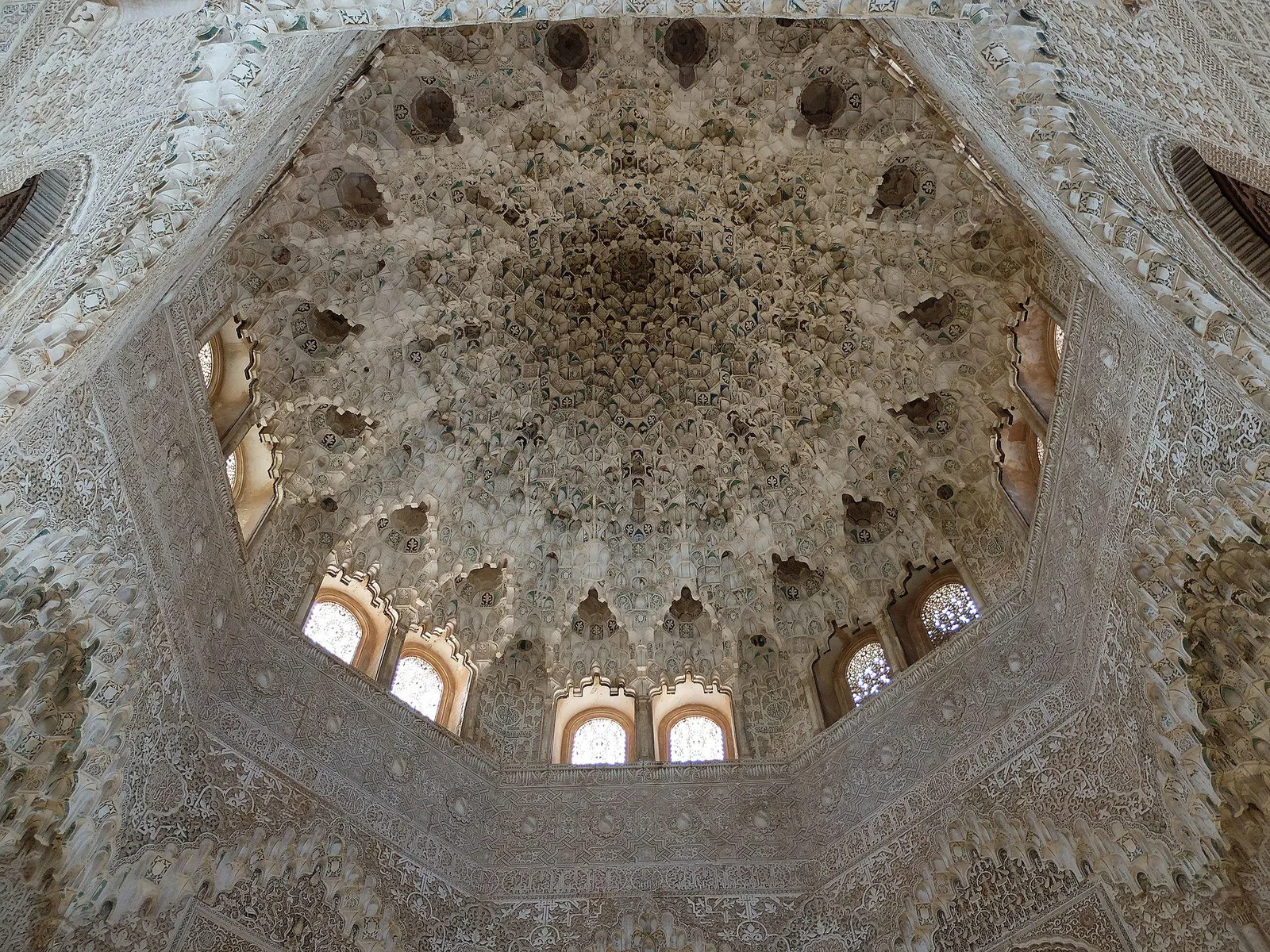
Why it matters: The muqarnas ceiling is made of over 5,000 individual cells, each catching light at a different angle as the day progresses. Visitors consistently describe this as the single most memorable moment inside the Alhambra.
What to notice: Stand directly under the centre of the ceiling and look straight up. The cells create a geometric pattern that seems to dissolve into light. Come back at a different hour if you can — the effect changes with the sun's position.
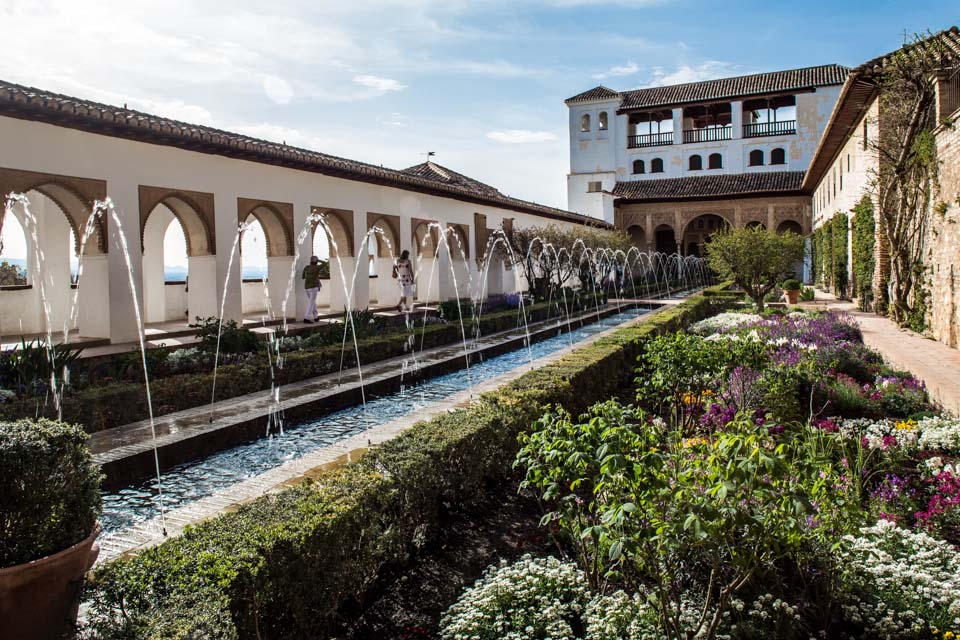
Why it matters: The Generalife was the sultans' escape from court life. This long water channel flanked by flower beds is the most photographed spot after the Court of the Lions. The arching water jets were added later but the channel is original.
What to notice: Walk to the far end and look back toward the entrance. The perspective narrows the courtyard and frames the Alhambra behind you. Late afternoon light makes the water glow.
How well did you look?
3 quick questions about what you just saw
Visit complete!
Share your visit or save it for later
Your collection