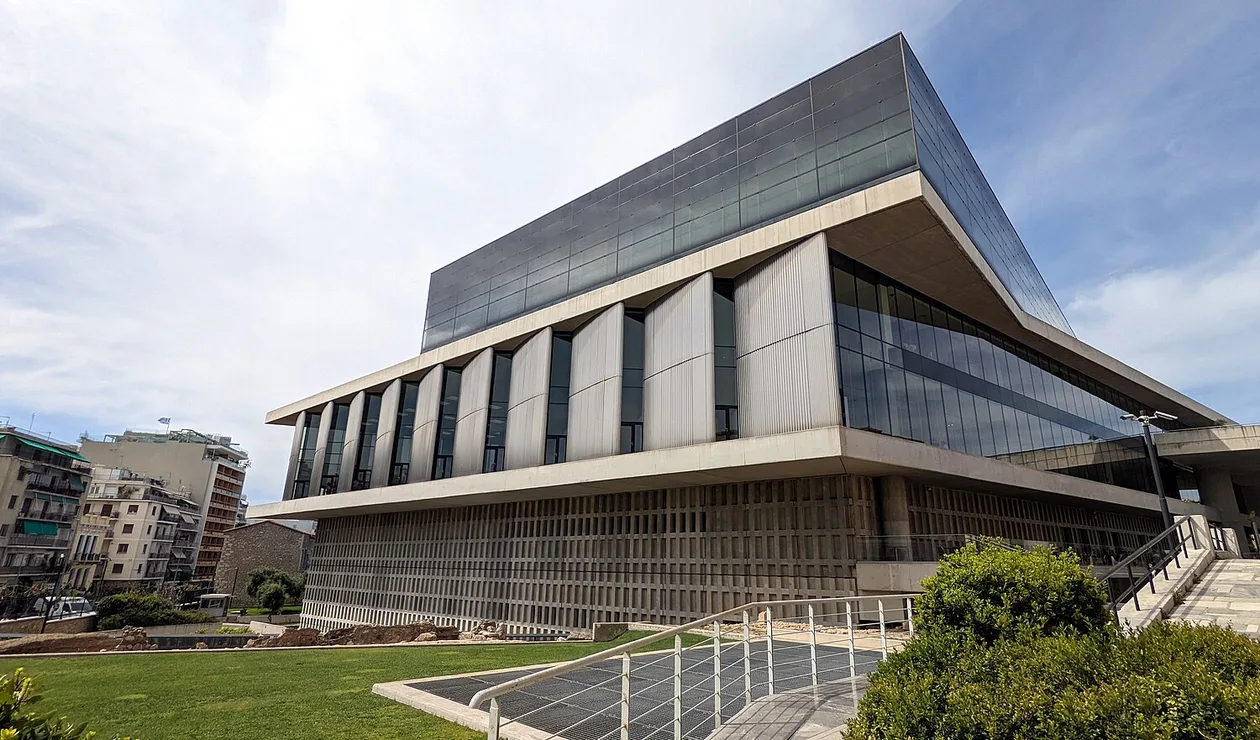
Five Caryatids. One Missing. The Parthenon Frieze Reassembled. The Elgin Marbles Gap.
Room by room through the ancient neighbourhood beneath your feet, the Archaic sculptures, and the third-floor gallery built specifically to make one argument: return what belongs in Athens.
Get your free guide
Enter your email to unlock the full room-by-room guide. One email unlocks all Athens museum guides.
Free · No spam · Unsubscribe anytime
The sixth Caryatid is in the British Museum. The Acropolis Museum displays five originals and one empty space with a plaster cast. That absence isn't a gap in the collection — it's the entire argument.
Start at the entrance. You're standing on a transparent walkway over the archaeological site below. This is where Athenians lived 2,400 years ago. Walk slowly. Most visitors rush through without looking down, but this is unique — you're literally seeing the ground where people once stood. The museum is built on top of this active dig site. Pause and look. This is why the museum exists at all.
The Caryatids are here on a raised platform. These six female figures once held up the porch of the Erechtheion (6th and 5th century BCE). Five originals are displayed; the sixth is in the British Museum (shown as empty space + plaster cast). Walk around them. Their drapery and proportions change completely depending on your angle. Notice how the fabric clings to the body, how the folds pool at the feet. Also on this floor: the Moschophoros (Calf Bearer), a youth carrying an animal carved around 570 BCE. The detail is extraordinary for its age. The rest of the floor holds sculptures from the Athena Nike temple, the Erechtheion, and Roman-era pieces.
The top floor is dedicated entirely to the Parthenon. The gallery is glass-enclosed, sky-lit, and rotated 23 degrees so it aligns with the actual Parthenon on the hill above. The original frieze fragments are displayed at the exact height and angle they occupied on the temple itself. Walk around them. You can see the Panathenaic Procession narrative that runs around the entire frieze. The empty gaps where the Elgin Marbles sit in London are left bare — no panels, no decorative filler, just emptiness. Plaster casts show where the originals would fit. This is intentional. The entire museum is an argument for their return.
Weekday mornings are quiet. Tour groups don't arrive until 10:30 AM. If you book a 9 AM slot, you'll have the Parthenon Gallery almost to yourself. Avoid 1 PM to 5 PM entirely — that's when every group tour peaks.
Pause on the Ground Level walkway. You're looking at an excavated ancient Athenian neighbourhood. Most visitors power through without noticing. Two minutes of attention here reframes why this museum matters — it's built on top of archaeology.
The raised platform lets you walk around them. The drapery and body proportions look entirely different depending on where you stand. Spend 5+ minutes. Notice how the fabric moves, how the head and shoulders relate to the hips. This is why the platform matters — it's almost impossible to appreciate from a fixed viewpoint.
Climb to the third floor last, after your energy is highest. The frieze tells the Panathenaic Procession story — walk around it. The museum's chronological order (Slopes → Archaic → Parthenon) builds to this finale. Don't skip ahead.
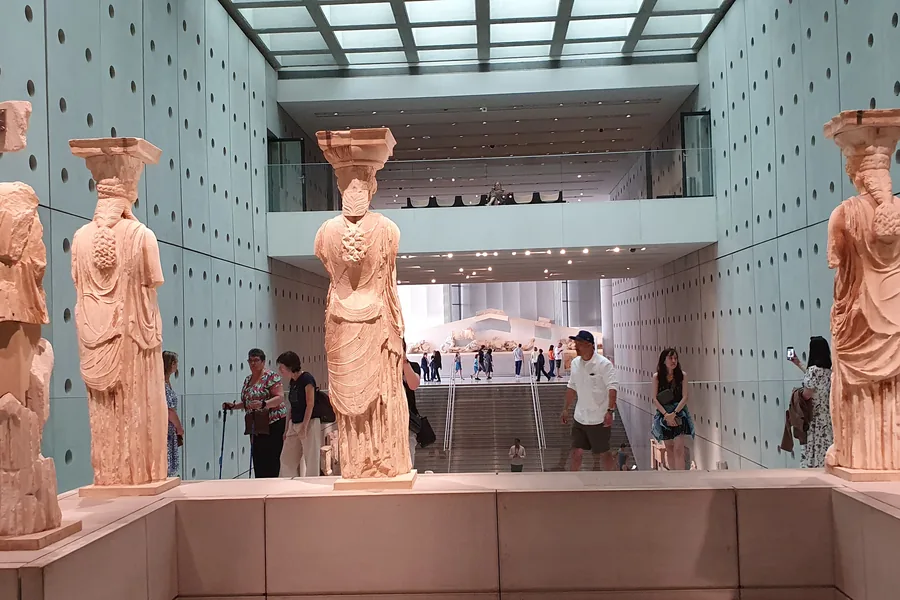
Why it matters: These six female figures once supported the south porch of the Erechtheion temple on the Acropolis. They represent the height of Classical Greek sculptural idealism. Only five originals remain in Athens; the sixth is in the British Museum. The Acropolis Museum displays them on a platform with an intentional empty space where the sixth would stand.
What to notice: The museum places them on a raised platform so you can walk around them and see how the drapery and proportions shift with every angle. The fabric clings and flows simultaneously. The twisted contrapposto posture (shoulders one way, hips another) makes them feel alive despite their architectural function. Spend 5+ minutes circling them. Notice how the carved folds of drapery change in light. The empty sixth pedestal isn't a gap — it's the argument the museum is making.
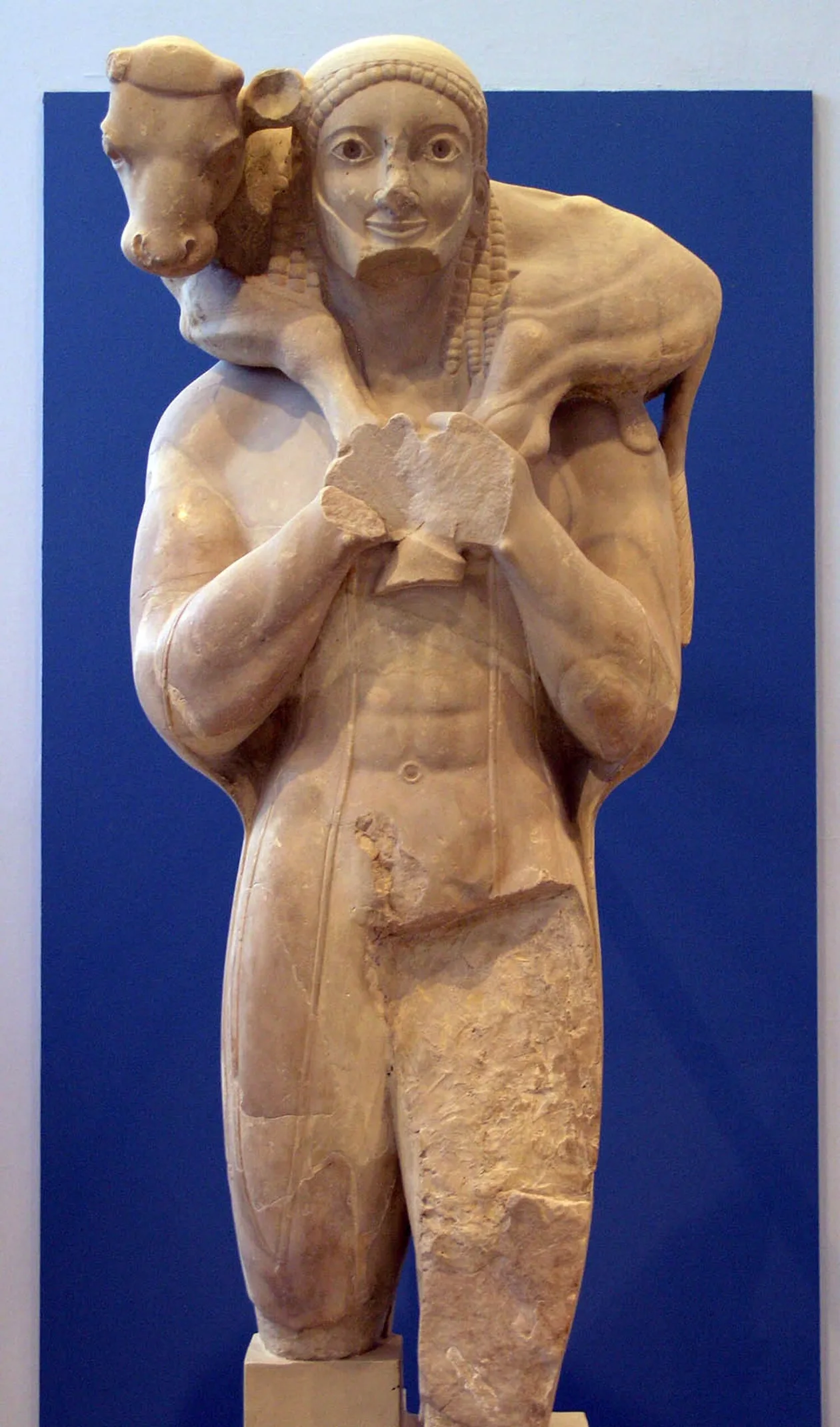
Why it matters: This marble sculpture depicts a youth carrying a calf, likely as a votive offering to a goddess. It's one of the finest examples of early Greek naturalism and is attributed to the sculptor Antenor. The exquisite detailing—the anatomy, the drapery, the expression—was revolutionary for 570 BCE.
What to notice: Despite its age, the carving shows remarkable understanding of human anatomy and emotion. The figure's calm expression and the easy way he carries the weight communicate both strength and tenderness. The calf's little legs dangle. The proportions are nearly perfect. This is where Greek sculpture begins to transcend geometric formality and approach realism. It's small, which somehow makes it more affecting.
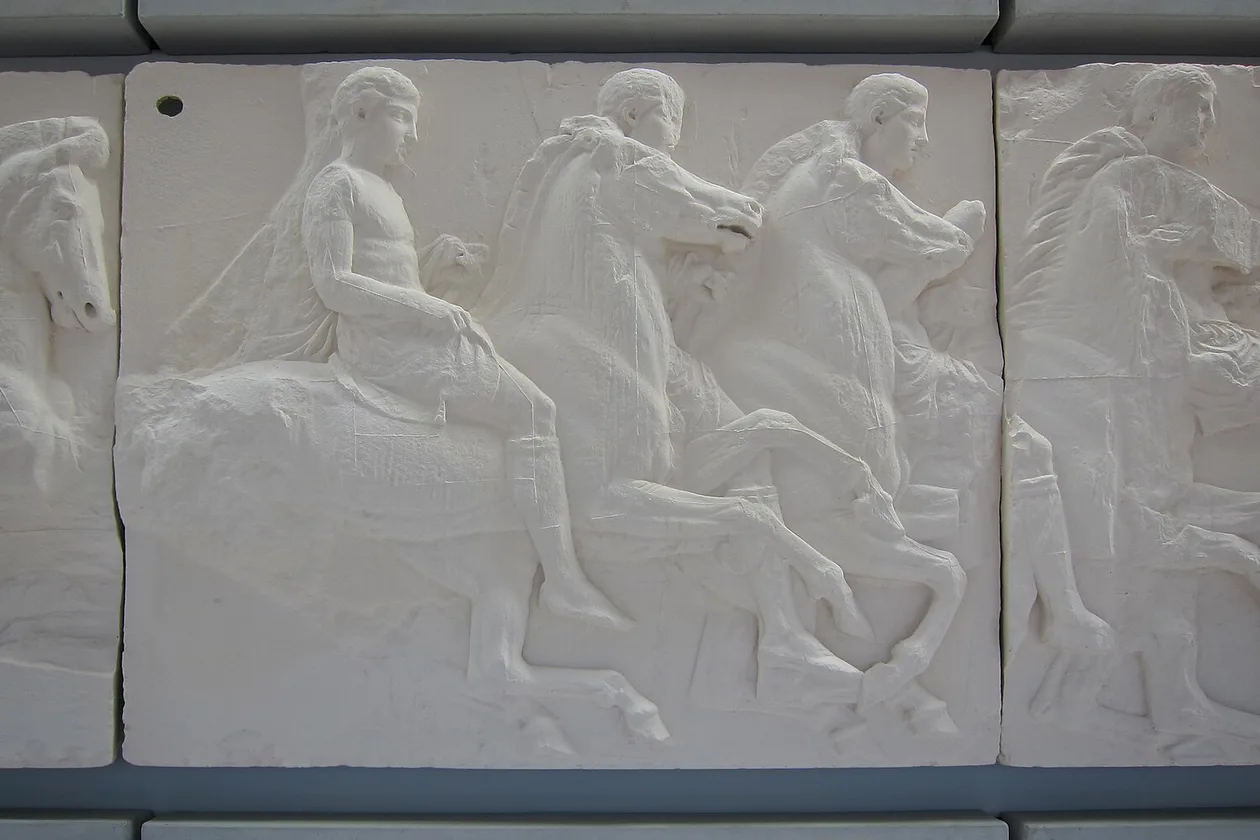
Why it matters: This is the complete architectural frieze that once ran 160 metres around the inner chamber of the Parthenon. It depicts the Panathenaic Procession—the annual festival that celebrated Athens and its patron goddess. The Acropolis Museum displays the original fragments at the same height and angle as they appeared on the temple.
What to notice: Walk around the frieze. You can follow the narrative: officials, musicians, young men on horseback, maidens, sacrificial animals, gods. The composition is impossibly dense yet perfectly balanced. The empty gaps where panels sit in the British Museum are left bare—no filler, no decoration, just emptiness. This is the museum's central statement. You can see exactly what's missing. That absence is more powerful than any replica could be.
How well did you look?
3 quick questions about what you just saw
Visit complete!
Share your visit or save it for later
Your collection