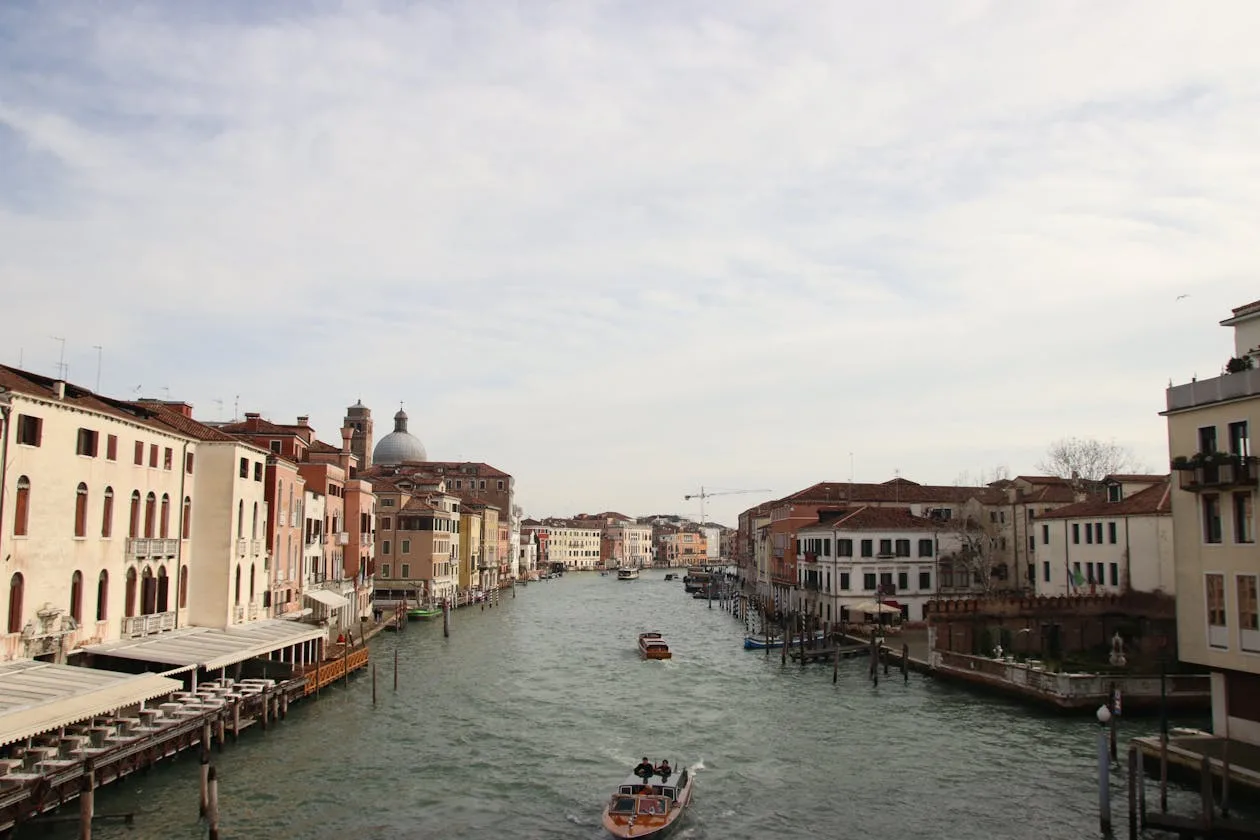
Venice in paint, room by room
The complete chronological route through Venetian painting — from Byzantine gold to Canaletto's canals
Get your free guide
Enter your email to unlock the full room-by-room guide. One email unlocks all Venice museum guides.
Free · No spam · Unsubscribe anytime
Most visitors walk past La Tempesta looking for something bigger. It's 82 × 73 cm — the size of a window. No one has agreed on what it depicts. Giorgione died before he could explain it.
Paolo Veneziano's gold-ground Madonnas in Room 1 are where Venetian painting begins. The rigid Byzantine hierarchy — gold sky, frontal saints — is already softening here. Give it ten minutes. Most visitors walk straight through.
Room 2 has Bellini's Pala di San Giobbe (1487) — the painted frame continues the architecture of the church it came from. Then Room 5: La Tempesta (small, left wall as you enter) and Titian's Pietà, which he never finished. His student Palma il Giovane completed it after his death from plague in 1576. The joins are visible if you look.
Room 10 is built around Veronese's Feast in the House of Levi — 6.6 metres tall, 12.8 wide, covering the entire far wall. The chronological sequence ends in Room 24 with Titian's Presentation of the Virgin (1534–38), the only painting in the museum still in its original location.
The Accademia is closed on Mondays. Tuesday to Sunday it opens 9:00–19:00, with ticket sales ending at 18:00.
The Doge's Palace pulls Venice's tourist queue. At 9am on a Tuesday or Wednesday, the Accademia is often near-empty — one of the quietest museum visits you can have in Italy.
The Venice Museum Pass (MUVE) covers civic museums. The Accademia is a state museum — separate ticketing at €15. There is no combination ticket.
Walk-in waits hit 20–30 minutes in peak season. Online booking adds €1.50 but saves the queue. Worth it from June through September.
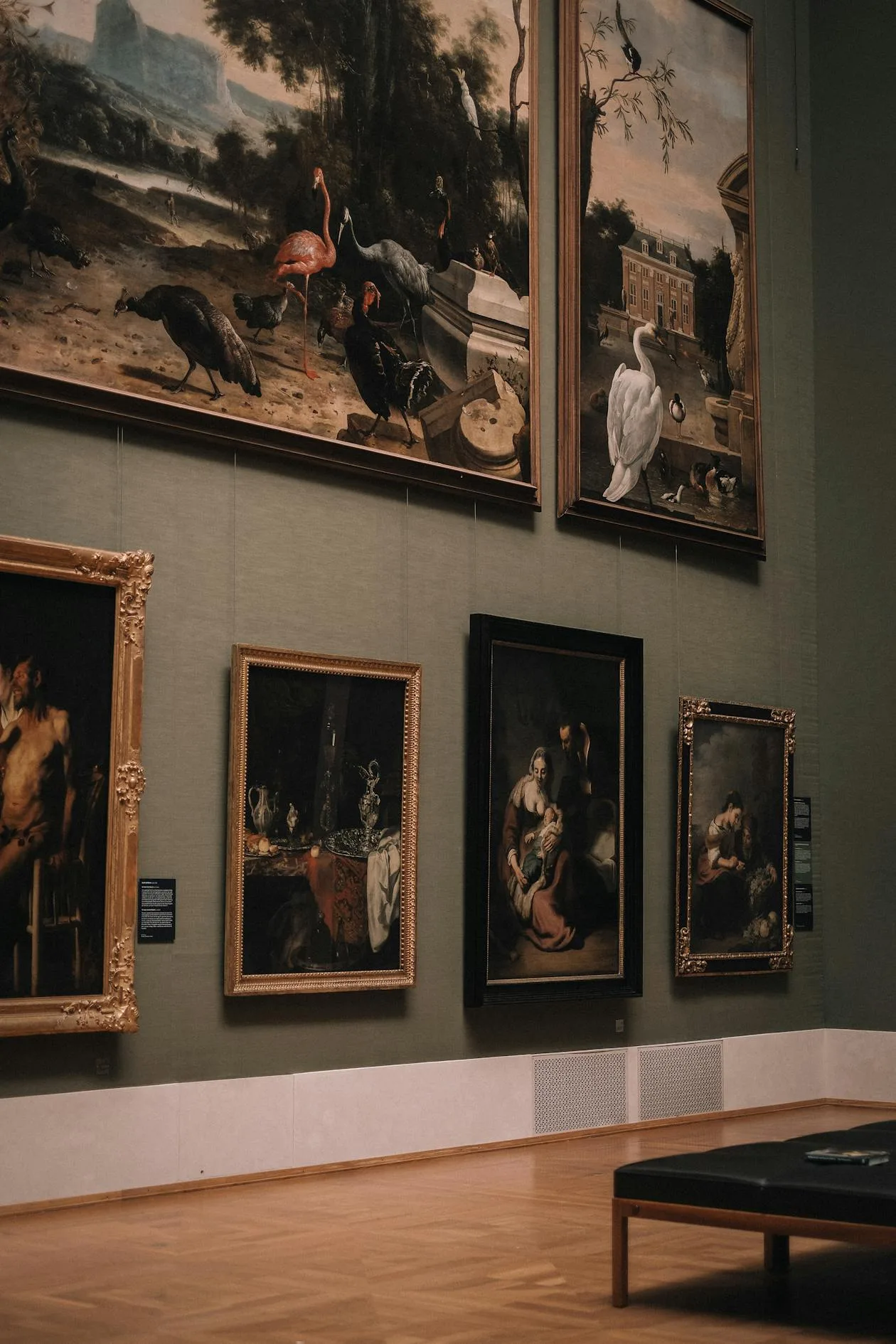
Why it matters: Painted as a Last Supper, renamed after the Inquisition objected to the dogs, dwarfs, and drunk soldiers Veronese painted into the crowd. He changed the title rather than the painting.
What to notice: Look at the architectural frame — three arches opening onto a Venetian loggia. Veronese didn't set the Last Supper in Judea; he set it in 1573 Venice, and that is precisely what the Inquisition found offensive.
Why it matters: The smallest major painting in the Accademia — 82 × 73 cm. No one has identified the two figures or agreed on what the scene depicts. The painting has been X-rayed twice; the results only deepened the mystery.
What to notice: It's on the left wall as you enter Room 5, set low and easy to walk past. The lighting storm in the background is the subject as much as the figures — Giorgione was interested in atmosphere at a time when most painters were interested in narrative.
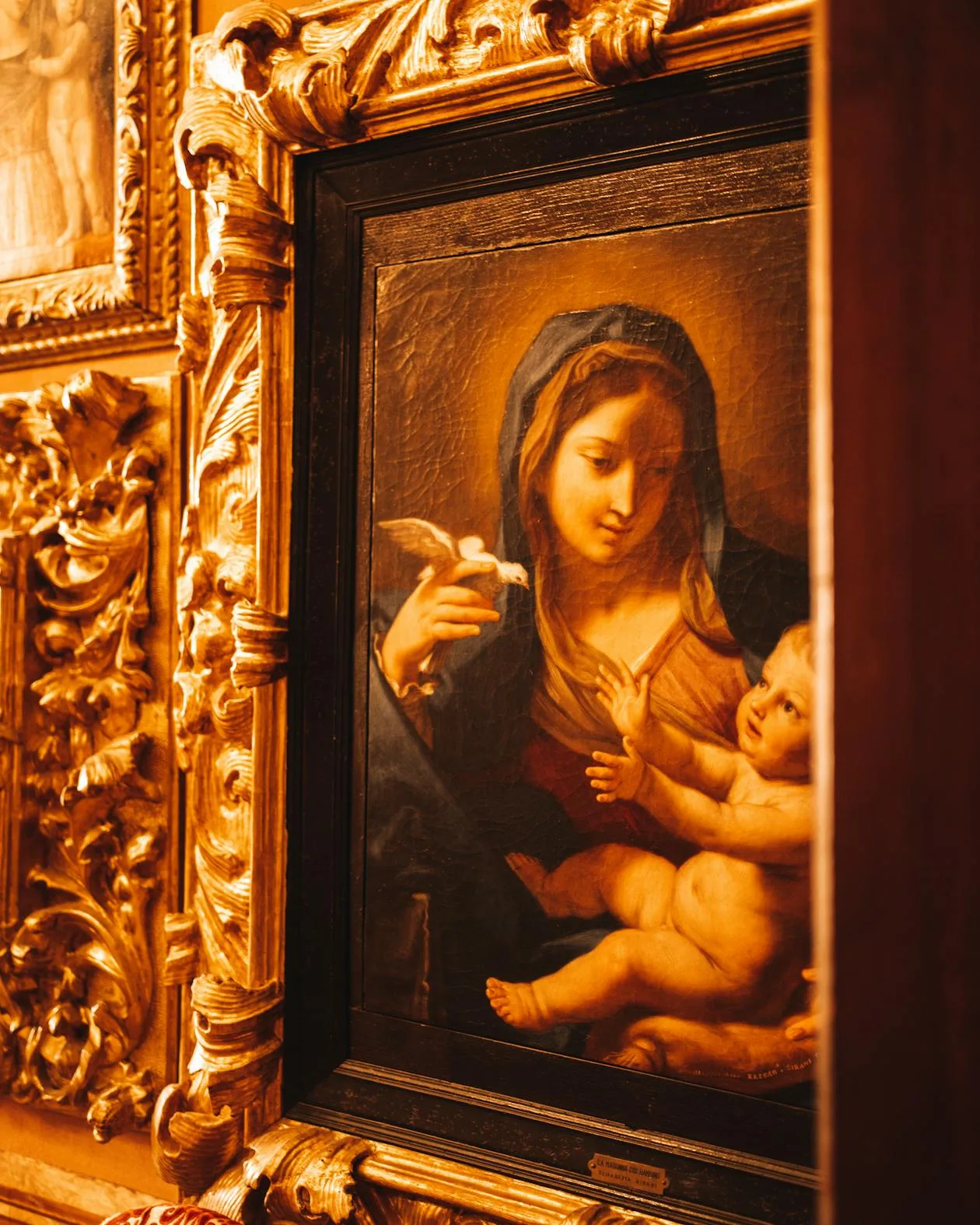
Why it matters: Titian painted this for the room it hangs in — the Sala dell'Albergo of the Scuola della Carità. It has never been moved. Every other major painting in the museum left its original location centuries ago.
What to notice: The old woman selling eggs at the base of the stairs is not a Biblical figure — she's a Venetian street seller Titian included because she was there. The painting is local documentary as much as it is devotional art.
How well did you look?
3 quick questions about what you just saw
Visit complete!
Share your visit or save it for later
Your collection